Can TMJ Pain Improve Without Surgery?
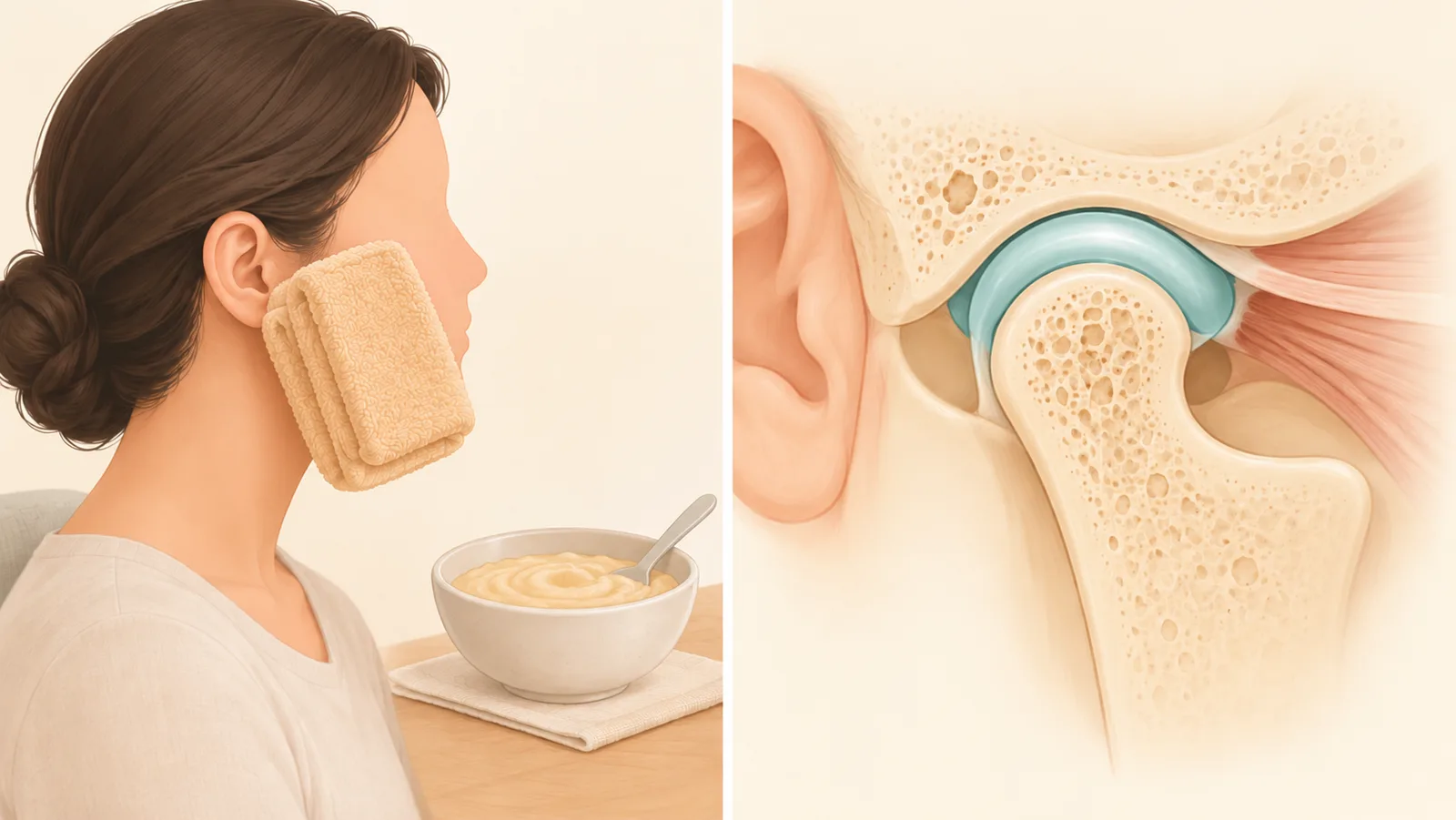
Yes, TMJ pain can improve without surgery. NIDCR says signs and symptoms of temporomandibular disorders (TMD) go away without treatment for many people, and experts recommend conservative, reversible care and avoiding treatments that permanently change the jaw joint, teeth or bite. Improvement is not guaranteed, and no single recovery timetable applies to everyone, because TMD covers different joint and muscle problems (NIDCR).
Key points
- Many TMD symptoms settle on their own or with simple, reversible care; the NHS describes TMD as usually getting better without treatment.
- Conservative care means options that do not permanently change the teeth, bite or joint: softer food, heat or cold, gentle massage, less clenching, physiotherapy and behavioural support where suited.
- Evidence is limited on which medicines work best and on whether oral appliances ease TMD pain, so these are individual decisions.
- Surgery is kept for selected joint problems or severe symptoms that have not responded to simpler care.
- If pain persists or worsens despite self-care, have it assessed. If you cannot eat or drink, or the jaw locks, get urgent help.
What does conservative TMJ care mean?
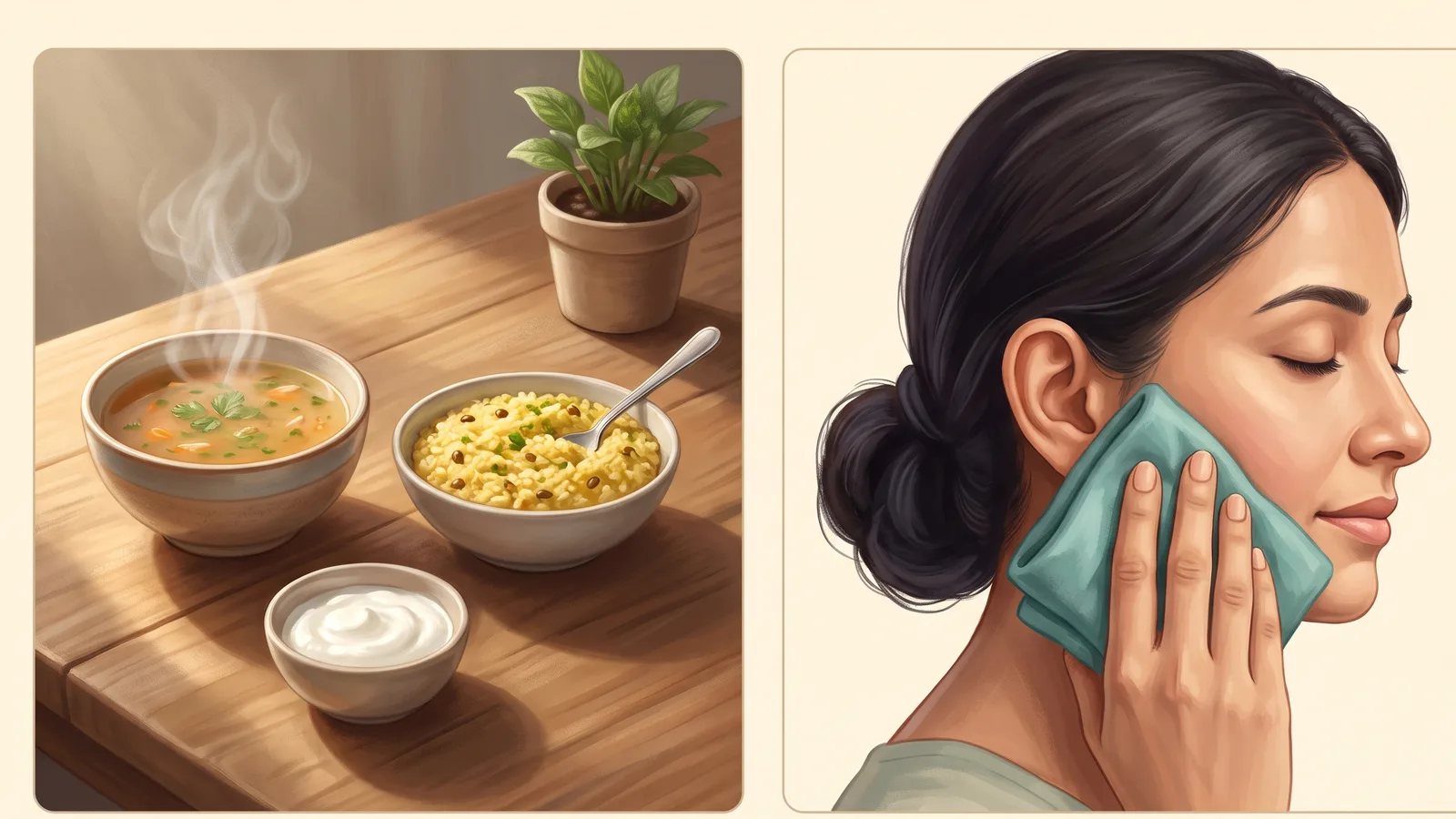
It means starting with options that do not permanently alter the jaw joint, teeth or bite. NIDCR describes simple steps such as soft foods, heat or cold, and less clenching as the usual first approach, and says many jaw joint and muscle problems are temporary and do not get worse (NIDCR). The NHS suggests soft food such as pasta, omelettes and soup (what to eat during a flare), an ice or heat pack wrapped in a tea towel, gentle massage of the sore muscles, and not chewing gum or clenching your teeth. Apart from when eating, the teeth should be apart (NHS).
These steps manage symptoms. They do not prove a diagnosis, and they are not a promise of cure.
What can be added if simple self-care is not enough?
If self-care does not help, NIDCR says a dentist or doctor can reassess the type of TMD and other possible causes before recommending physical therapy, behavioural care or an oral appliance (NIDCR).
| Option | What it is for | Points to know |
|---|---|---|
| Physiotherapy | Jaw movement and muscle pain | Manual therapy may improve function and pain; benefit varies |
| Behavioural or psychological support | Stress and clenching that make pain worse | Does not imply the pain is imaginary |
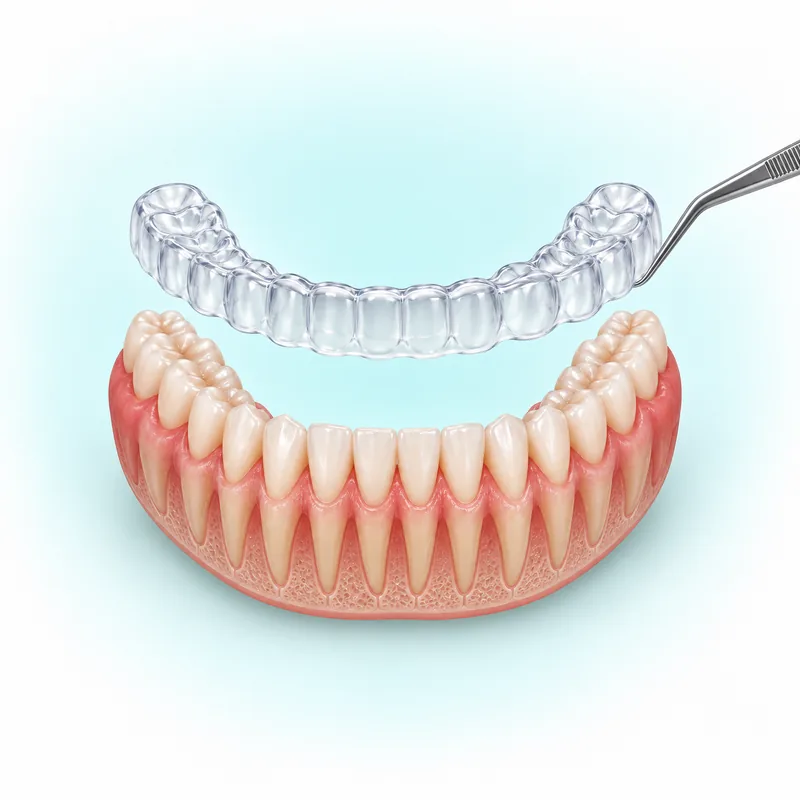
| Oral appliance (splint) | Selected cases after assessment | Evidence for pain relief is limited |
| Pain relief medicine | Symptom control | Evidence is limited; follow the prescriber |
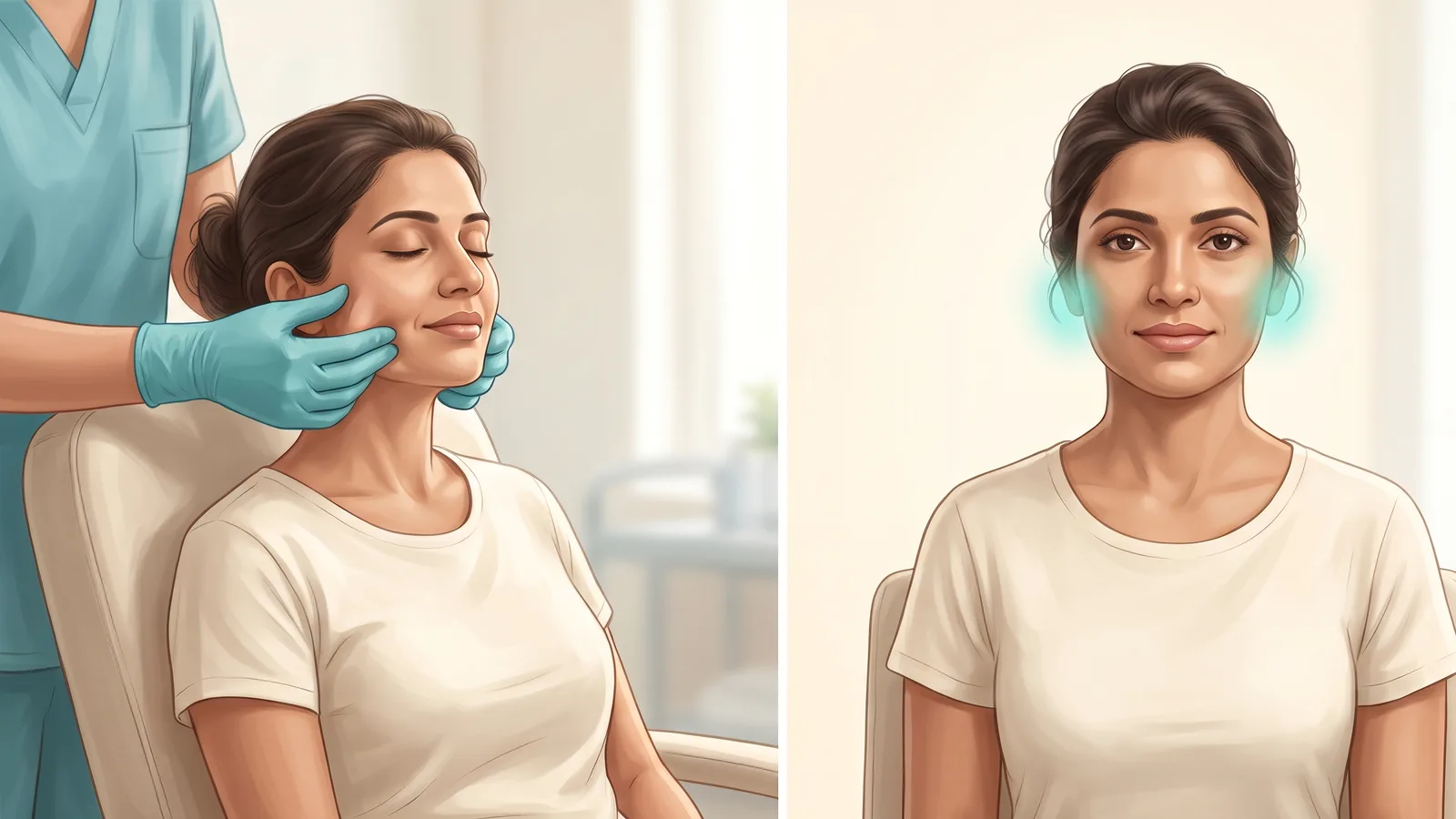
Physiotherapists can advise on jaw exercises and massage, and the exercises should suit the clinical diagnosis (NHS; NIDCR). Psychological support may help when stress and anxiety make the pain worse (NHS). For appliances, NIDCR says the benefit for TMD pain is uncertain (NIDCR). On medicines, NIDCR states that evidence is limited on which works best for TMD pain and some prescription options carry serious side effects, so the choice and duration need an individual discussion with a clinician (NIDCR).
Injections such as Botox are not a first treatment; see Botox for TMJ pain: evidence and risks. For assessed jaw-muscle pain, AAOP lists reducing chewing strain, heat or cold, gentle stretching or massage, relaxation and selected physical therapy as options a clinician may discuss. It is a list of possibilities, not a fixed package that suits everyone (AAOP). You can read more in our guides to jaw physiotherapy and TMJ exercises and night guards.
What should be avoided?
NIDCR advises avoiding treatments that permanently change the teeth, bite or joint, or involve surgery, where simpler care is available (NIDCR). Be cautious about any plan that begins with grinding or reshaping teeth, crowns to change the bite, or an appliance designed to change how your teeth meet, particularly for a click without pain, which NIDCR says needs no treatment (NIDCR). Avoid wide yawning and gum chewing while the jaw is sore (NHS).
How long does recovery take?
No source gives a timetable that applies to everyone. NIDCR says many TMDs last only a short time and go away on their own, although in some cases they become long-lasting, while the NHS gives no fixed duration. Because the cause may be the joint, the muscles or both, and several factors can contribute, how long you take depends on the problem. Instead of waiting for a set number of weeks, watch the trend: NIDCR says other treatments can be considered if simple steps do not help, and an NHS pharmacy factsheet says to seek a dental assessment if symptoms get worse (NIDCR; NHS; NHS pharmacy dental factsheet).
When is surgery considered?
NIDCR says open TMJ surgery is kept for joint damage that other procedures cannot fix, or severe symptoms that have not responded after simpler options, and that it permanently changes the joint with uncertain long-term outcomes (NIDCR). Joint washout (arthrocentesis) and camera-based joint procedures (arthroscopy) are other steps for selected disc or joint problems rather than isolated jaw-muscle pain, and Guy's and St Thomas' lists physiotherapy, symptom management and appropriately selected appliances as the non-surgical alternatives. Symptoms may persist or worsen after joint procedures, and benefit is not assured or necessarily permanent (Guy's and St Thomas' NHS Foundation Trust).
When is it urgent?
Seek urgent help if you cannot eat or drink, your jaw is locking or you have difficulty opening it fully, you have frequent severe headaches, pain or tenderness at the side of the head or scalp, or vision problems such as double vision or loss of vision. These can have causes outside the jaw. The pharmacy factsheet also lists chest and jaw pain that is worse on exertion as an alert sign (angina) and says temple pain with loss of vision needs urgent medical care, so neither should be assumed to be a jaw-muscle problem (NHS; NHS pharmacy dental factsheet).
If you are deciding which specialist to see, read orofacial pain specialist or oral surgeon: who should treat my TMJ?. If clenching or grinding is part of the problem, see morning jaw pain, clenching and grinding. If your jaw locks or will not open fully, see what to do about a locked jaw.
Non-surgical TMJ treatment in Gurgaon
Dr. Supreet Kaur Sawhney, MDS in Oral & Maxillofacial Surgery with more than 20 years of experience, manages TMJ problems at Dr. Supreet's Dental & Implant Centre in Sector 39, Gurugram. The care ranges from non-surgical management to arthrocentesis-related assessment, TMJ arthroscopy and open TMJ surgery when a diagnosis requires it, but the first question is usually whether simpler care is enough. See conservative TMJ treatment, the TMJ treatment overview or the broader jaw pain guide. To book, contact the clinic or call or WhatsApp +91 9650298009.