Oral Biopsy Assessment in Gurugram
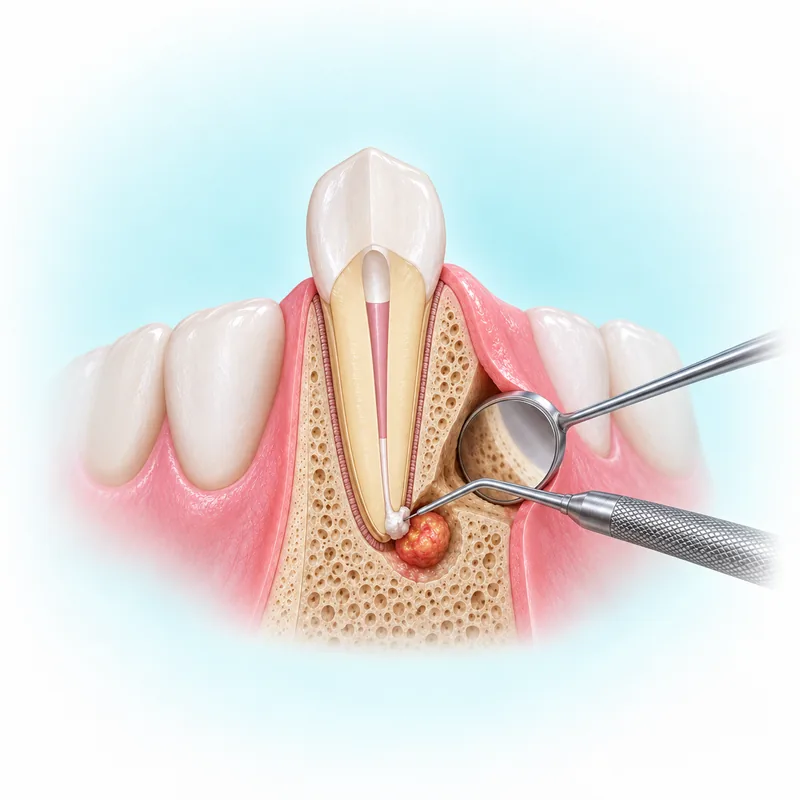
An oral biopsy takes tissue from an unusual area of the mouth so it can be examined under a microscope. Its purpose is to clarify the diagnosis and guide the next step; being advised to have a biopsy does not mean that the area is cancer. Dr. Supreet Kaur Sawhney provides oral-surgery assessment in Gurugram to help establish why sampling may be needed, which approach suits the area and how the result will be communicated.
Discussing tissue diagnosis with Dr. Supreet
Dr. Supreet is an MDS, Senior Consultant – Oral & Maxillofacial Surgeon and Senior Implantologist with 20+ years of experience. An assessment of a mouth lump or unusual patch should connect the examination findings with the reason for sampling. Bring any referral, previous report and a description of how the area has changed so the diagnostic question and next steps can be discussed.
Arrange assessment at Dr. Supreet's Dental & Implant Centre in Sector 39. The broader oral and maxillofacial surgery guide explains how the findings determine the appropriate treatment or referral route.
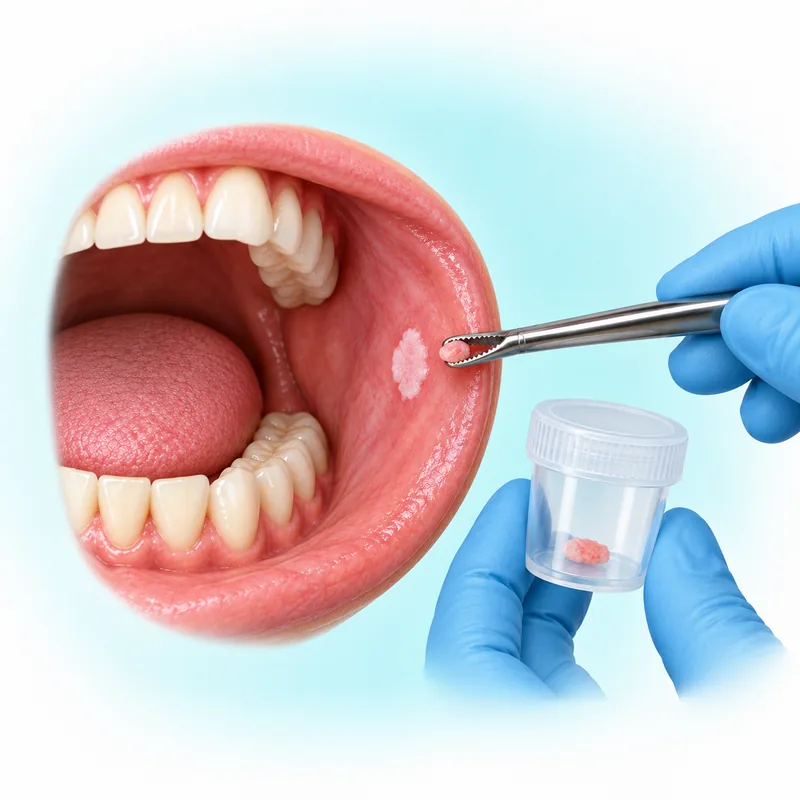
Why appearance alone may not settle the diagnosis
A clinician may recommend a biopsy of a lump or other unusual area of the mouth lining so a pathologist, a doctor who examines tissue, can assess it. Examination and the possible causes guide whether and when sampling is appropriate. The result may lead to reassurance, further assessment or treatment.
Biopsy remains the reference standard for diagnosing oral potentially malignant disorders, meaning tissue conditions that may carry a risk of cancer, and oral squamous cell carcinoma, a type of mouth cancer. This diagnostic role does not mean every mouth abnormality is cancer or that every person needs a biopsy.
In adult guidance, a negative cytology result—an assessment of sampled cells—does not remove the need for biopsy or specialist referral if an abnormality of the mouth lining persists or progresses. A persistent or changing area needs clinical review rather than reassurance based only on a previous negative cell test.
Sampling part of the area or removing a small lesion
An incisional biopsy samples part of an abnormal area. An excisional biopsy removes a whole small lesion, meaning the abnormal area. The clinician chooses after examining the site and considering the diagnostic or treatment need. Larger areas, changes at several sites or uncertainty about the cause can favour sampling first.
Complete removal at the first biopsy is not suitable for every lesion. Microscopic tissue assessment, called histology or histopathology, and subsequent treatment are separate decisions. Removing a sample does not automatically complete treatment for the underlying condition.
What happens during the procedure?
Many oral soft-tissue biopsies, which sample the fleshy mouth lining, use local anaesthesia to numb the area and may need stitches. The technique depends on the site and the abnormality; one anaesthetic or method of closing the wound does not apply to every biopsy. How the wound is closed can differ between tongue, lip or cheek sites and gum or palate (roof of the mouth) sites.
Temporary pain, soreness, swelling or minor bleeding can occur. Sampling near small nerves carries a small risk of altered sensation. These effects are possible rather than inevitable, and the site, size, health factors and exact procedure determine the risks that should be explained before consent.
Protecting the wound and knowing when to call
If local anaesthesia has been used, avoid biting numb mouth tissues until sensation returns. Protect the wound from hard food and vigorous rinsing initially, and follow the team's cleaning advice. Exact food, rinse and medicine instructions depend on the biopsy site and the treating team.
If bleeding starts again and does not stop after firm pressure as advised, contact the clinical team promptly. Persistent bleeding needs assessment; do not simply wait for the result appointment.
Receiving the result is part of the plan
The team should explain how the histopathology result, the microscopic tissue report, will be given. It may be discussed at a review or communicated in writing; a return visit is not automatically required for everyone. What follows depends on the diagnosis and the clinical findings, rather than on one fixed schedule for all mouth biopsies.
Before leaving, understand how to obtain the result and what to do if the area persists or changes. Tissue diagnosis may support reassurance, further investigation or a treatment plan; the report needs to be understood alongside the examination.
Arrange an oral-biopsy assessment in Gurgaon
Dr. Supreet's Dental & Implant Centre is at 395 P, Sector 39, Near Medanta Hospital, Gurugram, Haryana 122001. Bring your referral or previous results for a discussion of the sampling question, appropriate care setting, site-specific risks and result pathway. An estimate follows a defined individual plan.