Wisdom Tooth Surgery in Gurugram
Wisdom tooth surgery in Gurugram is not a routine answer to every third molar. Dr. Supreet Kaur Sawhney, MDS, is a Senior Consultant – Oral & Maxillofacial Surgeon and Senior Implantologist with 20+ years of experience. Her assessment weighs symptoms, position, cleaning access, damage to neighbouring teeth, infection risk and the relationship to nearby anatomy before monitoring or removal is discussed.
A wisdom tooth can be present without being a problem
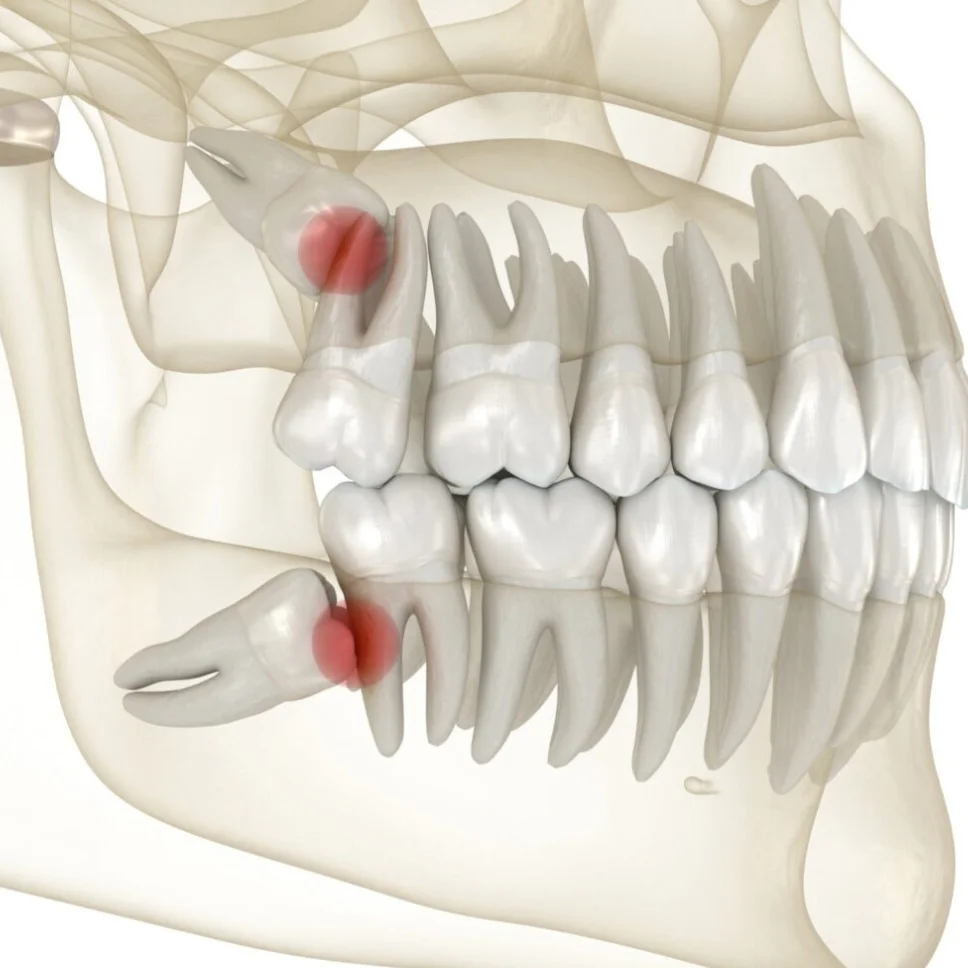
Wisdom teeth are the last molars at the back of the mouth. Some erupt into a useful, cleanable position. Others remain partly or fully impacted because there is insufficient space or the angle of the tooth directs it into bone or a neighbouring tooth. The presence of an impacted tooth is a reason to assess it, not a stand-alone instruction to remove it.
Monitoring and removal are different decisions
Monitoring means the tooth is reviewed when its current condition and risk profile support observation. It is not neglect: the patient should understand what symptoms or changes should prompt a new review, and how cleaning access affects risk. Removal may be considered when the tooth causes recurrent infection, decay, damage to the adjacent tooth, food trapping, cystic change, pain or a foreseeable problem that outweighs the burden of surgery.
Read does every wisdom tooth need removal? for a fuller monitoring-versus-removal discussion.
What the consultation needs to establish
Dr. Supreet may ask about pain, swelling, bad taste, limited opening, fever, repeated antibiotic use, food trapping or difficulty cleaning. The examination considers the gum over the tooth, nearby tissues, the condition of the second molar and the way the tooth is positioned. Appropriate dental imaging can show the roots, bone, neighbouring tooth and, when it is a lower wisdom tooth, its relationship to the nerve canal.
The final decision also includes medical history, medicines, tobacco use, previous healing problems, anxiety, the patient’s ability to attend follow-up and what happens if the tooth is left in place. A scan can inform the conversation but cannot replace it.
Why a lower wisdom tooth may need careful planning
Lower third molar roots can lie close to the nerve that supplies sensation to the lip, chin or tongue. This does not mean that nerve injury will occur, but it is one reason an assessment should explain the anatomy and material risks clearly. Upper wisdom teeth have different relationships and risks. The tooth’s position, not the word “wisdom”, determines the planning question.
What removal can and cannot promise
When removal is indicated, possible benefits include resolving a recurrent source of infection, protecting a neighbouring tooth or eliminating a tooth that cannot be cleaned or restored. Limitations include swelling, discomfort, bleeding, infection, restricted opening, dry socket, damage to nearby structures and the possibility that symptoms have another cause. Healing and time away from work or study vary by patient.
There is no universal online recovery timetable or guarantee that removal will prevent every future symptom. The consent discussion should cover the proposed approach, alternatives, expected aftercare and when to seek help.
When wisdom-tooth symptoms need urgent attention
Rapidly increasing facial or neck swelling, difficulty breathing or swallowing, uncontrolled bleeding, high fever with deterioration or severe facial trauma require urgent hospital assessment. Do not wait for a routine appointment or a WhatsApp response. A planned wisdom-tooth page is not an emergency service.
Specialist care in Gurugram
Dr. Supreet’s MDS in Oral & Maxillofacial Surgery is relevant when a wisdom tooth is deeply impacted, close to important anatomy or part of a wider oral-surgical problem. She provides consultations and treatment at three clinic locations and five associated hospitals. Patients from Gurgaon, other parts of Haryana and New Delhi can request an appointment by calling or WhatsApping +91 9650298009.
Confirm the offered venue, date and time before travelling. Her general personal working window is 10:00 am–8:00 pm, but the listed clinics and hospitals do not share one published schedule.
Monitoring is active care, not a forgotten tooth
When a wisdom tooth is monitored, the patient should know how to keep the area clean, which symptoms matter and when another review may be useful. A tooth can change position, develop decay or affect the neighbouring molar even after a quiet period. On the other hand, immediate removal also has a burden and does not make sense solely because the tooth exists.
For a patient who is anxious about removal, a consultation can separate the fear of an unknown operation from the actual risk of the tooth. For a patient who wants removal quickly, it can identify whether the adjacent molar, nerve relationship, infection or another finding changes the plan. Both conversations deserve the same careful explanation.
The decision can change as the mouth changes
Monitoring is not a lifetime declaration that removal will never be needed. A tooth that is currently cleanable may become harder to access if it erupts further, the adjacent molar develops decay or the gum repeatedly becomes inflamed. Conversely, a patient who was advised to remove a tooth years ago may need a fresh assessment rather than an automatic repeat of the old plan.
It is helpful to record the reason for the original recommendation and the warning signs that were discussed. Bring previous images when available. A current review can then compare the tooth’s position, roots, neighbouring molar, symptoms and medical circumstances. Decisions should follow current evidence, not only an old label such as “impacted”.
Aftercare questions belong before the decision
Ask how ordinary swelling might affect eating or opening, which activity changes are usually advised, how the area should be kept clean and which symptoms require prompt review. The answer depends on the tooth and patient; there is no honest universal recovery promise. Understanding aftercare can also reveal whether the timing is practical for work, study or travel.
If a patient is considering monitoring, ask about the signs that would change the plan and how the adjacent molar will be protected. If removal is advised, ask what the consent discussion covers and whether the proposed care setting matches the complexity. These questions keep the decision grounded in the individual tooth rather than in internet urgency.
A second opinion should answer the reason, not only the name
If another clinician has recommended removal, bring the recommendation and ask what finding led to it. The discussion can then focus on the tooth’s position, the neighbouring molar, symptoms, nerve or sinus relationship and the alternatives. If removal is the right choice, the patient should understand why; if monitoring is reasonable, the review plan should be equally clear.
A clear plan reduces avoidable anxiety
Patients often fear the unknown more than the word “surgery”. Knowing why removal is proposed, what monitoring would involve, how important anatomy is assessed and which symptoms need help makes the decision more manageable. That explanation is part of specialist care, whatever the final choice.
Ask how the plan fits your next few weeks
Patients may need time away from work, study or travel. The clinician can explain the expected care and warning signs without promising a universal recovery timetable.
What affects wisdom-tooth surgery cost?
Cost depends on the tooth’s position, imaging, access, proximity to important structures, infection or other dental treatment, the confirmed care setting and reviews. Ask what the estimate covers and what follow-up is advised. Use the contact page or consultation-location directory to plan a specialist discussion.