Does Every Wisdom Tooth Need to Be Removed?
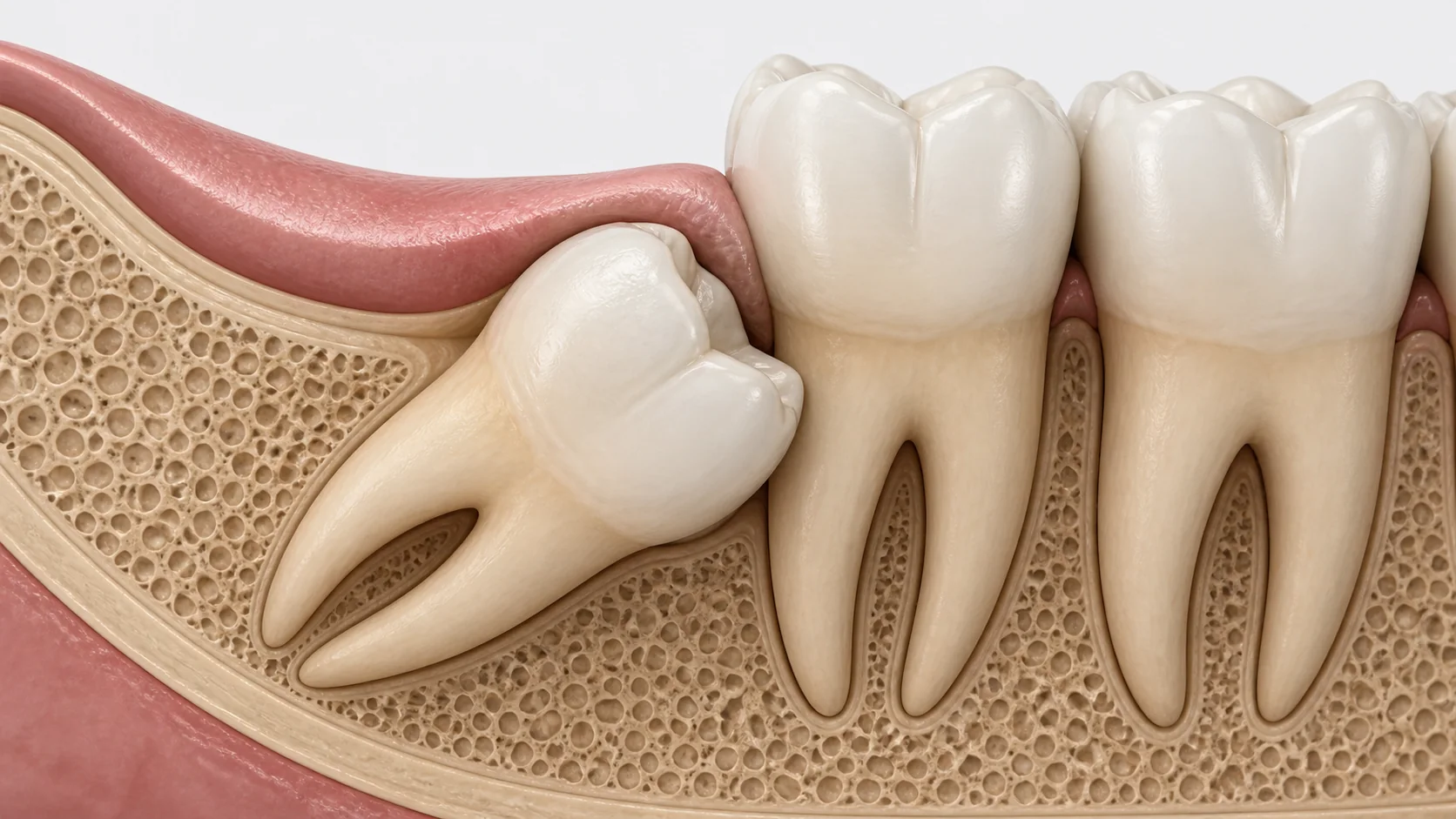
Short answer: No. A wisdom tooth may be monitored when it is healthy, useful, cleanable and not creating a meaningful risk. Removal may be discussed when there is recurrent infection, decay, damage to the neighbouring molar, cystic change, difficult cleaning, symptoms or a position likely to cause trouble. The decision is clinical, not automatic.
Why “wisdom tooth” is not a treatment plan
Wisdom teeth are the third molars at the back of each jaw. They may erupt normally, remain partly covered by gum, or stay impacted in bone. Two people can have similarly positioned teeth but different levels of risk because their cleaning ability, gums, neighbouring teeth, symptoms and general health differ.
An X-ray may show an impacted tooth, but the image is only one part of the decision. The patient’s experience and the condition of the tooth beside it matter too.
Monitoring has a purpose
Monitoring is reasonable in selected cases when the tooth is not causing significant disease and the risks of immediate removal are not justified. It should include an explanation of what to watch for, how the tooth can be cleaned, and when a review or new image may be appropriate. Monitoring is not the same as forgetting about the tooth.
Removal may become more persuasive if the tooth repeatedly causes swelling or infection, traps food, develops decay, damages the second molar, forms a cystic change, cannot be cleaned, or contributes to another planned treatment. A patient should ask what specific finding makes removal advisable now.
Symptoms that deserve assessment
Arrange a planned review for recurrent pain, swelling, bad taste, bleeding around the back molar, food trapping, difficulty opening the mouth, sensitivity or a change in the adjacent tooth. Fever, rapidly worsening swelling, breathing or swallowing difficulty or uncontrolled bleeding is a different situation and needs urgent appropriate care.
The page on wisdom-tooth surgery in Gurugram explains how a specialist assessment connects symptoms, position and treatment options.
The lower wisdom tooth and the nerve question
Lower wisdom-tooth roots can lie near a nerve that supplies sensation to the lip, chin and tongue. Proximity does not mean that a nerve problem will happen, but it is a reason for careful imaging, explanation of material risks and discussion of alternatives when relevant. Upper wisdom teeth have different anatomical relationships and should not be assumed to carry the same risk.
What a balanced consultation covers
Dr. Supreet Kaur Sawhney may consider the tooth’s eruption and angle, gum coverage, decay, infection, neighbouring-tooth health, cleaning access, roots, bone, nerve or sinus relationship, medical history, medicines and previous healing. The patient’s ability to attend follow-up and tolerance for surgery are also relevant.
Removal can resolve a recurrent local problem or protect an adjacent tooth in suitable circumstances. It can also bring swelling, pain, bleeding, infection, dry socket, restricted opening, damage to nearby structures or an incomplete response. Monitoring avoids surgery but carries the need for continued review and the possibility of later disease.
Questions worth asking before choosing
Ask: What finding makes removal advisable? What might happen if I monitor? How close are the roots to important anatomy? What are the alternatives? What aftercare and review are expected? Which symptoms should trigger urgent help? A patient who understands those answers can make a more informed choice than someone who is told simply that the tooth is “impacted”.
A decision tree for a worried patient
First ask whether there is an active problem today: swelling, infection, decay, damage to the neighbouring tooth or difficulty opening the mouth. If yes, the immediate clinical question is how that problem should be assessed and controlled. If no, ask what the tooth’s position and condition mean for future cleaning and risk. That is where monitoring may be considered.
Next ask whether the tooth is useful and cleanable. A normally positioned molar that participates in chewing is different from a partly erupted tooth that repeatedly traps food. Then ask what the image shows about the roots, bone, adjacent molar and important anatomy. Finally, discuss the patient’s health, medicines, healing history and ability to attend review.
This sequence avoids two common errors: removing a tooth simply because it is called a wisdom tooth, or ignoring it because it is painless today. A specialist consultation is not a demand for surgery; it is a way to make the decision proportionate to the actual risk.
Questions that make monitoring safer
If monitoring is chosen, ask how often the tooth should be reviewed, whether a new image may be useful later and which findings would change the recommendation. Ask how to clean the back of the mouth without injuring the gum, and whether the adjacent second molar needs particular attention. A monitored tooth still deserves a plan.
If removal is chosen, ask what makes surgery worthwhile now, what the nearby anatomy means, how the risks will be managed and what the patient should do if pain or swelling persists. The answer may be different for a lower tooth close to a nerve than for an upper tooth with a different relationship to nearby structures.
The decision is also affected by timing. A patient about to begin orthodontic or restorative work, a patient with an active infection and a patient preparing to travel may need different coordination. The right choice is the one that fits the current diagnosis, not the one that sounds most decisive.
Why a fresh review may be better than an old instruction
Teeth, roots, gums and medical circumstances change. An image from several years ago may not show the current relationship between the wisdom tooth and its neighbour. A patient may also have changed medicines, developed a healing risk or begun having repeated symptoms. A fresh assessment does not automatically reverse an earlier recommendation; it checks whether the reason still applies.
The same principle protects patients who were told to “wait and see”. Monitoring may have been sensible then, but a new episode of infection or a change in cleaning access can alter the balance. Patients should bring old records when available and explain what has changed rather than asking an online answer to decide in isolation.
The choice should still make sense five years later
Think beyond the day the replacement is fitted. Will the patient be able to clean beneath a bridge or around an implant? Can a denture be adjusted if the ridge changes? What happens if a supporting tooth develops a problem? What reviews will be needed? These questions do not predict failure; they show why maintenance belongs in the first comparison.
An old image is not a current decision
If a wisdom-tooth X-ray is old, ask whether the tooth, neighbour or symptoms have changed. A fresh examination can confirm that monitoring remains sensible or explain why the balance now favours removal. The point of review is to avoid both unnecessary surgery and delayed care.
The final choice belongs to a current clinical assessment
Online information can prepare the questions, but it cannot see the tooth or measure the risk. A current examination is the point at which monitoring, removal or another referral becomes a personal recommendation.
Dr. Supreet is an MDS Oral & Maxillofacial Surgeon and Senior Implantologist with 20+ years of experience. She sees patients at confirmed clinic and hospital settings in Gurugram and New Delhi. Call or WhatsApp +91 9650298009 to request an assessment and confirm the venue.