Dental Implant vs Bridge vs Denture: Which Tooth-Replacement Option May Fit?
Short answer: A dental implant, fixed bridge and removable denture solve tooth loss in different ways. An implant uses jawbone support, a bridge relies on supporting teeth, and a denture is removable. The suitable option depends on the gap, gums, bone, bite, health, priorities and ability to maintain the replacement—not on a universal ranking.
Replacing a tooth is a functional decision as well as an appearance decision. Before comparing prices or materials, ask what will support the replacement, what will need preparation, how it will be cleaned and what happens if the mouth changes later.
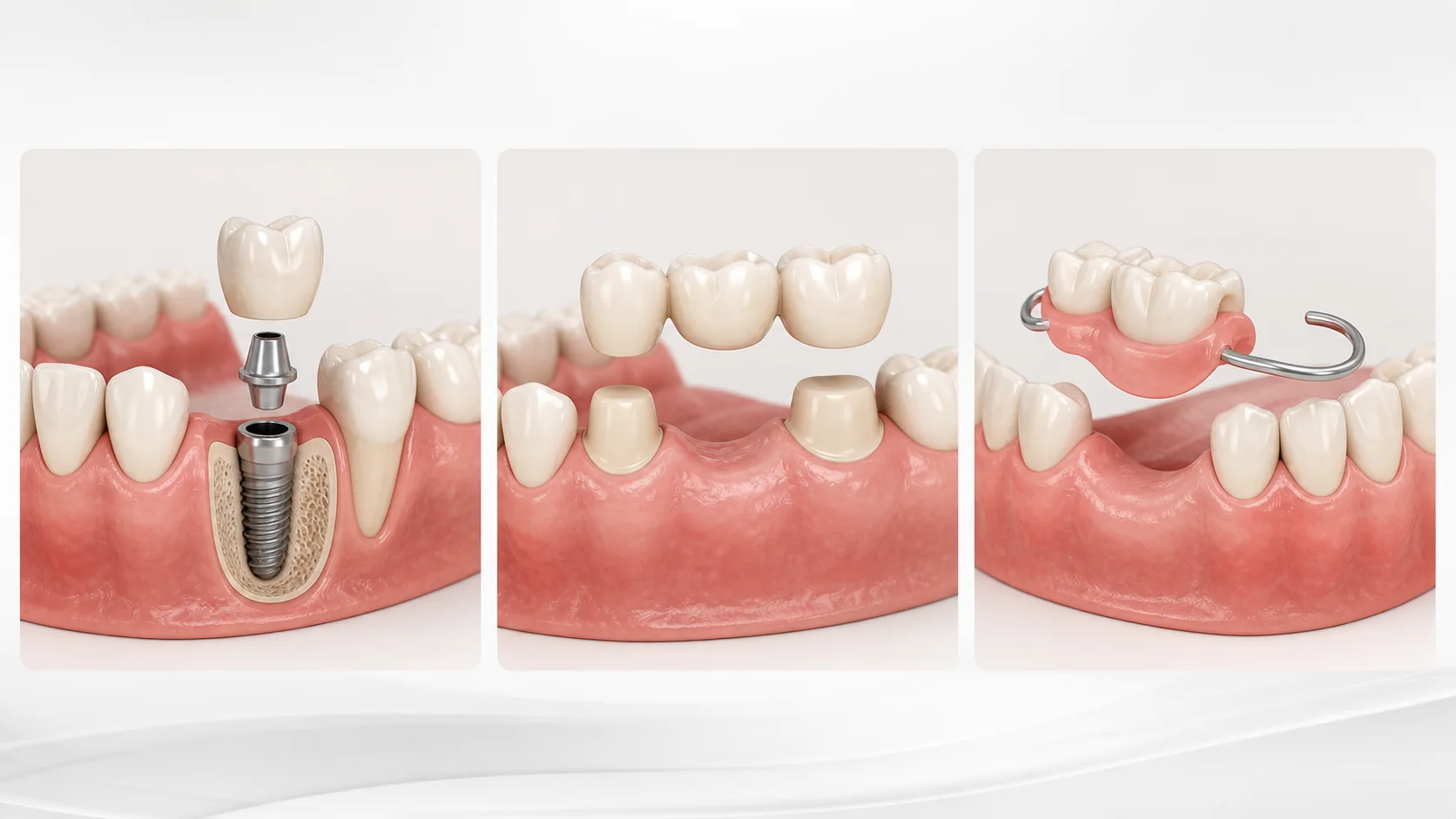
Three replacement categories, explained plainly
An implant-supported replacement uses an artificial root in the jawbone to hold a crown, bridge or denture. It involves surgery and healing. Bone volume, gum health, nearby anatomy, medical history and maintenance affect suitability.
A fixed bridge fills a gap by using neighbouring teeth or another designed support. A conventional bridge normally requires the supporting teeth to be prepared. The health, structure and gum support of those teeth matter more than the word “fixed”.
A removable denture replaces some or all teeth with an appliance that the patient removes for cleaning. It avoids implant surgery in its conventional form, but fit, stability, adaptation and the changing shape of the supporting ridge need ongoing attention.
None of these descriptions is a recommendation. They are starting points for an examination.
A decision table for the questions patients actually ask
| Question | Implant-supported replacement | Fixed bridge | Removable denture |
|---|---|---|---|
| What carries the load? | An implant in jawbone and the restoration above it | Supporting teeth or a designed support | Gum tissues, the ridge, remaining teeth and sometimes dental implants |
| Does it involve surgery? | Yes; additional site preparation may be considered | Not implant surgery, although the teeth may need treatment | Not for a conventional denture; an implant-retained design is different |
| What happens to adjacent teeth? | A single implant may avoid preparing healthy neighbours | Supporting teeth usually carry the bridge and may be prepared | Adjacent teeth are not normally crowned solely to replace the gap |
| Is it removable by the patient? | A fixed crown or bridge is not; some implant dentures are | Usually not | Yes, for cleaning and as advised |
| What does the bone do? | Bone quantity and anatomy are central to placement | The supporting teeth and their bone are central | Ridge shape affects fit and stability |
| What does maintenance involve? | Cleaning around the restoration and implant plus professional review | Cleaning under and around the bridge and supporting teeth | Cleaning the appliance, mouth and remaining teeth; fit reviews |
The table shows broad differences, not the right answer for one person.
When an implant may be worth discussing
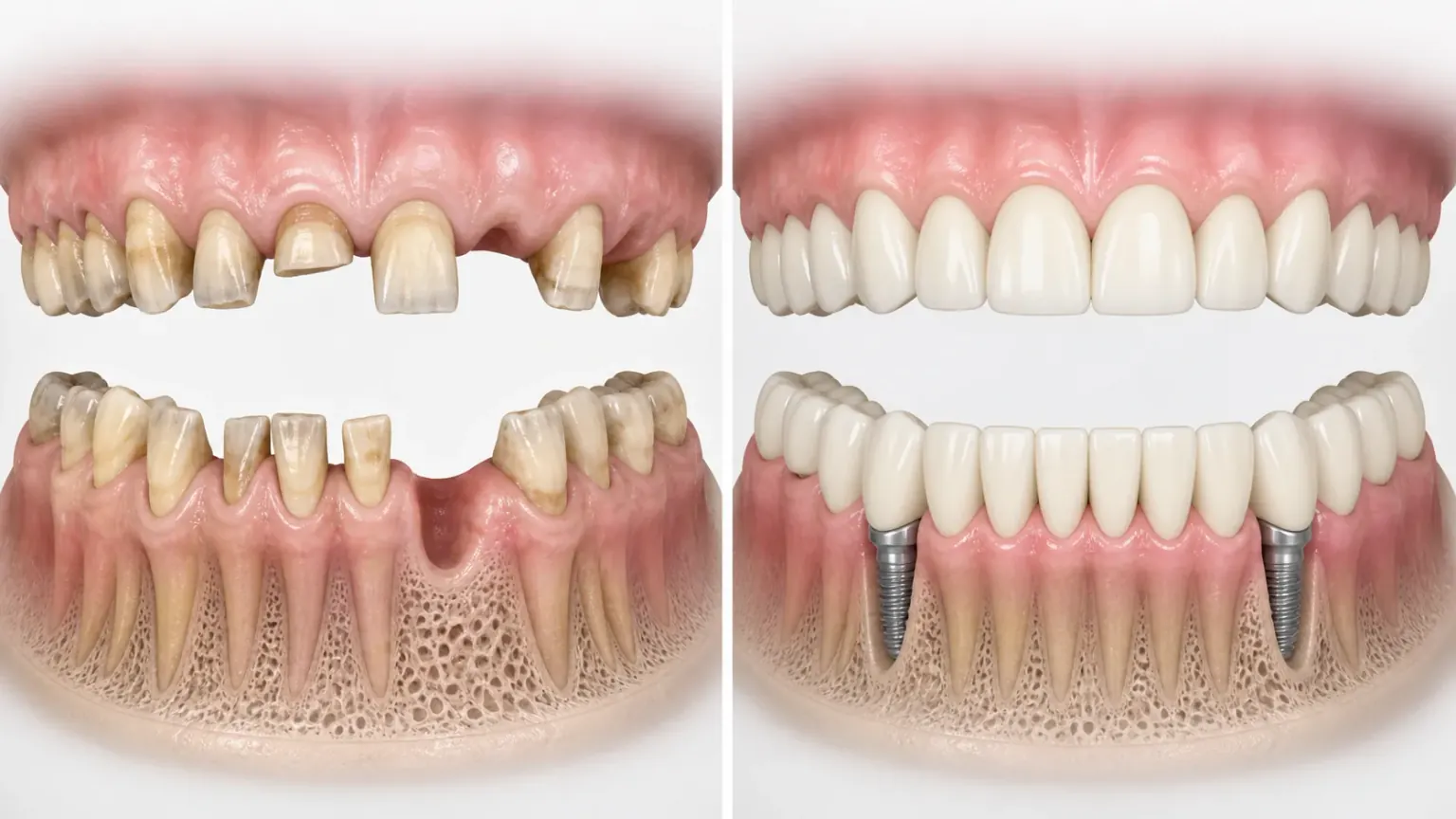
An implant may be considered when one or more teeth are missing, the gums and bone can support the proposed design, and the patient accepts surgery and continuing maintenance. A single implant can avoid using neighbouring teeth as bridge supports. Dental Implants can also support a bridge or denture when several teeth are missing.
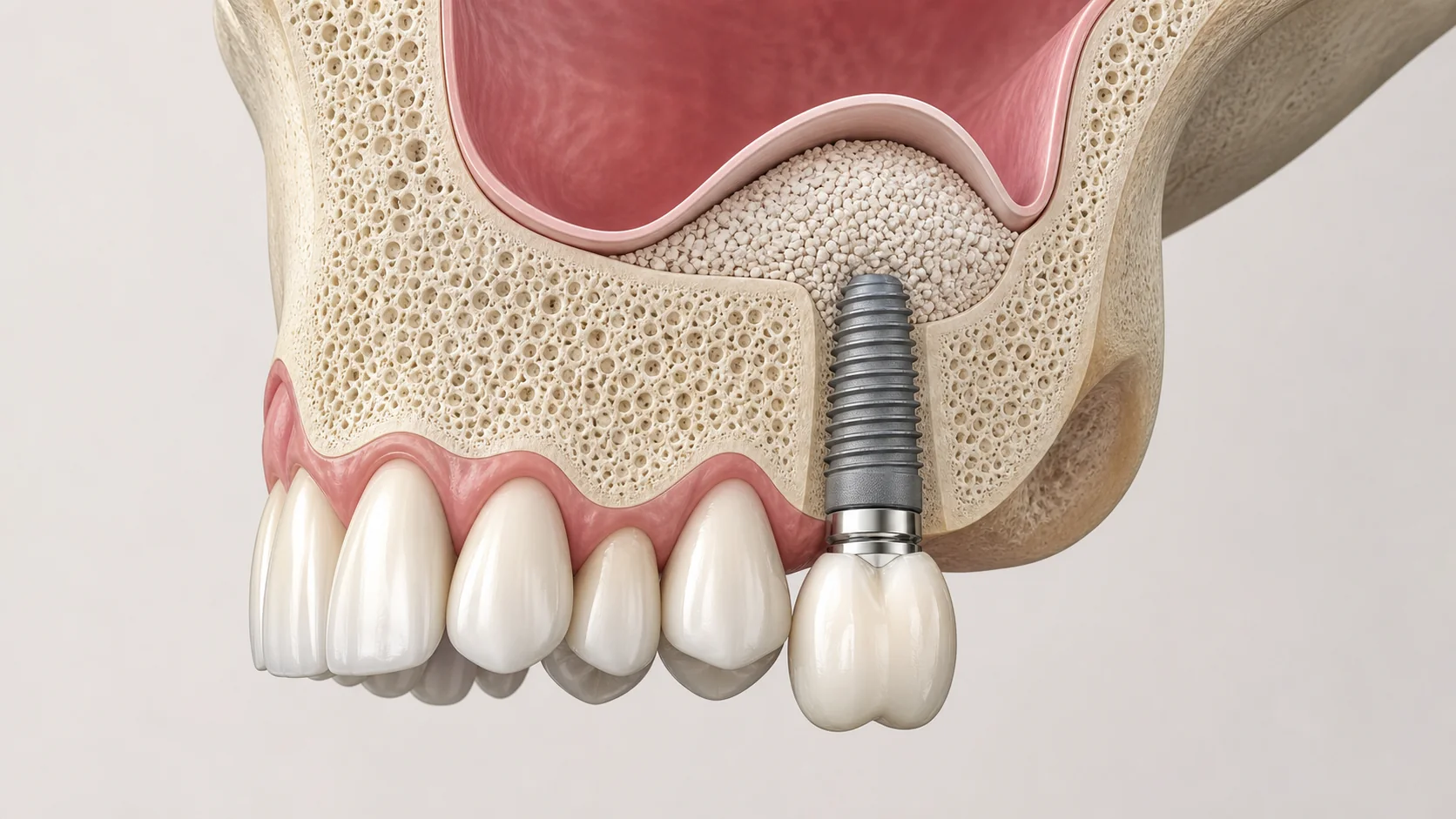
That advantage has limits. Active disease, inadequate bone, difficult bite forces, smoking, medical healing factors or an inability to clean around the restoration can change the recommendation. Bone grafting or a sinus lift may be discussed in selected sites; the separate graft guide explains why it is not routine.
When a bridge might make sense
A bridge may be reasonable when the teeth beside the space are strong enough to support it or already need substantial restoration. It can avoid implant surgery and provide a fixed replacement. The trade-off is that the supporting teeth become part of the plan, so their roots, gum support, existing fillings, bite and long-term prognosis must be considered.
Healthy, unrestored neighbours may make tooth preparation a more significant concern. Heavily restored neighbours may produce a different balance. A bridge is not a second-class choice; it is a different engineering and maintenance decision.
When a denture may be the sensible route
A partial or complete denture can replace several teeth without placing an implant at every missing space. It may suit a patient who prefers a removable option, is not suitable for surgery, needs a broad replacement or wants to limit treatment complexity. Fit and stability can change as the mouth and ridge change, so adjustment and review are part of the plan.
An implant-supported denture is not the same as a conventional denture. It adds surgical suitability, bone and maintenance questions to the discussion.
What a clinician checks before comparing the options
Dr. Supreet Kaur Sawhney may assess the missing space, neighbouring teeth, gum health, bone, infection, bite forces, clenching, medical history, medicines, tobacco use, cleaning habits and the intended restoration. The patient’s priorities also matter: fixed versus removable, treatment burden, timing, appearance, chewing and future maintenance.
The full-mouth rehabilitation guide is especially relevant when several spaces, worn teeth or an unstable bite are involved. A single-gap decision and a whole-mouth decision should not be treated as the same problem.
Cost is a comparison factor, not a ranking system
Implant cost can include records, surgery, healing, any indicated bone care, the crown or bridge and follow-up. Bridge cost depends on the number of units, supporting teeth and laboratory design. Denture cost varies with partial or complete design, materials, remaining teeth, adjustments and whether dental implants are involved. A low headline number may simply leave out parts of care.
A useful way to compare the options at home
Make three columns headed “support”, “daily care” and “future change”. Under support, note whether the replacement relies on bone, neighbouring teeth, gum tissues or a combination. Under daily care, ask how the area will be brushed, flossed, removed or reviewed. Under future change, consider what happens if a supporting tooth needs treatment, the ridge changes, a restoration wears or the patient’s health changes.
This exercise does not choose the treatment. It prevents a patient from comparing only the visible tooth or the initial price. A replacement that is easy to fit but difficult to clean may not be the best practical fit; a treatment that takes longer may offer a different balance of surgery, stability and future repair.
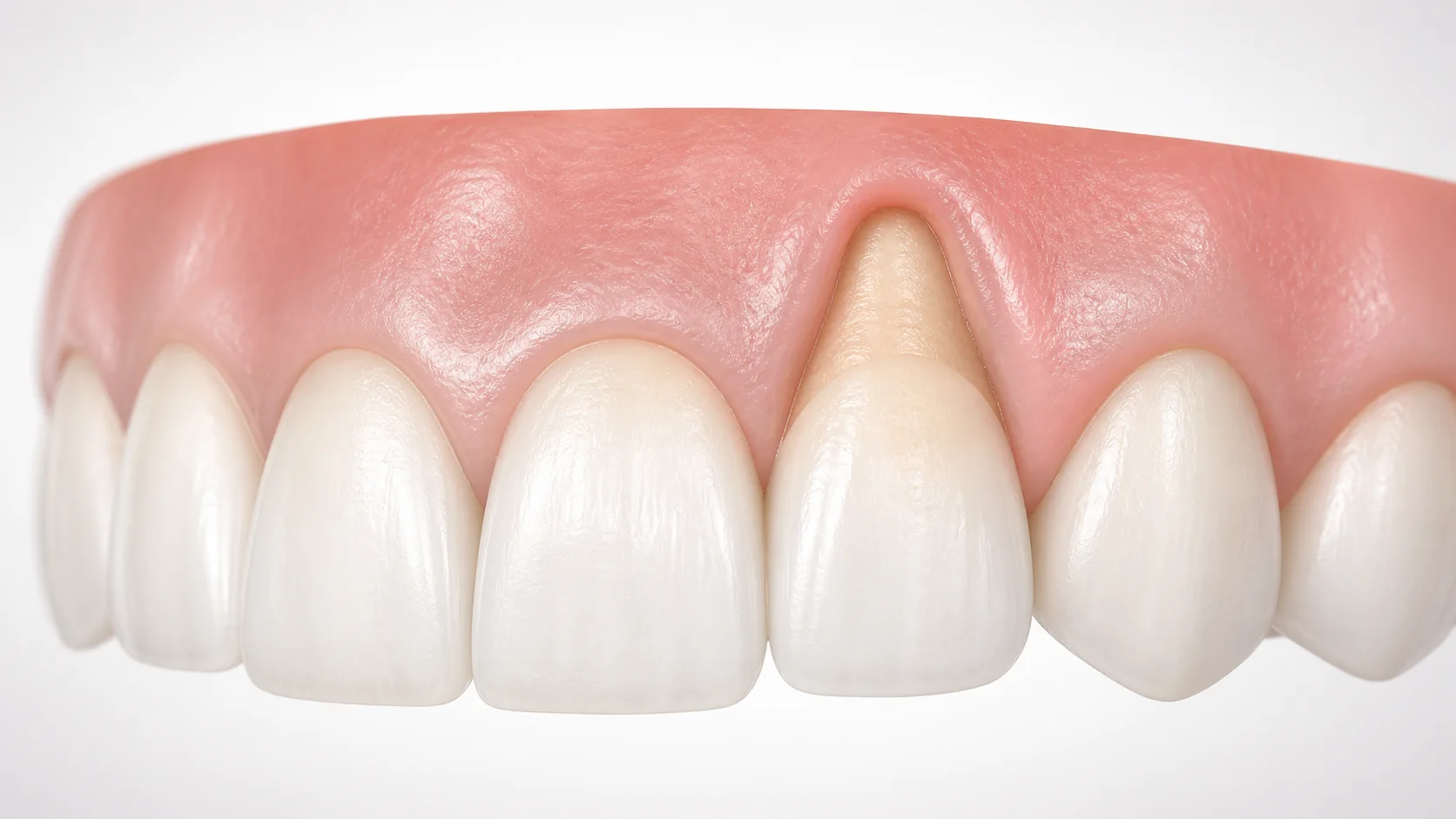
The decision should also include whether a suitable natural tooth can be preserved. Extraction is irreversible, while an implant is a surgical commitment. A bridge or denture can be entirely reasonable when its support and maintenance suit the patient. There is no virtue in selecting the most elaborate option if a simpler choice meets the clinical and functional goals.
The “best” option depends on the mouth you have
Searchers often type “best dental implant”, “best bridge” or “best denture” because they want certainty. A safer question is which option offers a reasonable balance of support, treatment burden, maintenance and future repair for this patient. A bridge that is sensible when the neighbouring teeth already need crowns may be a poor choice when those teeth are sound. A removable denture may be practical for one person and frustrating for another. An implant may provide useful independence from adjacent teeth but still be unsuitable if disease, bone or medical factors are not controlled.
The comparison should also include the possibility of preserving a failing natural tooth. Root-canal treatment, a crown, monitoring or removal can lead to different replacement decisions. Once a tooth is removed, the patient has accepted an irreversible step; it should not happen solely because an online page made an implant look more modern.
A consultation should end with a decision map
The patient should leave knowing which options are suitable, what records are still needed, whether preparation is required, how the replacement will be maintained and which risks matter. A decision map is more useful than a promise of a particular material or a fixed timeline. It also leaves room for the plan to change if examination or healing reveals something unexpected.
A practical preparation list for the appointment
Bring any recent images, reports, referral notes and details of earlier treatment. Write down whether the gap is recent, whether a tooth was extracted because of infection or fracture, and whether the neighbouring teeth have fillings or crowns. A patient who has already been offered an implant can ask for the proposed restoration design and the reason a bridge or denture was not chosen.
It is also useful to list medical conditions, medicines, smoking or tobacco use, clenching, allergies and previous healing problems. These details are not a formality: they can influence surgery, healing and the ability to maintain the replacement. A consultation that includes them is more reliable than advice based on a photograph of the missing space.
Dr. Supreet is an MDS Oral & Maxillofacial Surgeon and Senior Implantologist with 20+ years of experience. She provides consultations and treatment at confirmed clinic and hospital settings in Gurugram and New Delhi. Call or WhatsApp +91 9650298009 to discuss the concern and confirm the venue. This article is education, not a diagnosis.