Clinical portfolio

Real Clinical Cases

Explore selected clinical treatment cases from Dr. Supreet Kaur Sawhney's practice, covering oral and maxillofacial surgery, dental implants, full-mouth rehabilitation, gum treatment, wisdom tooth care and aesthetic dentistry. Treatment suitability, planning and results vary by patient and require professional assessment.

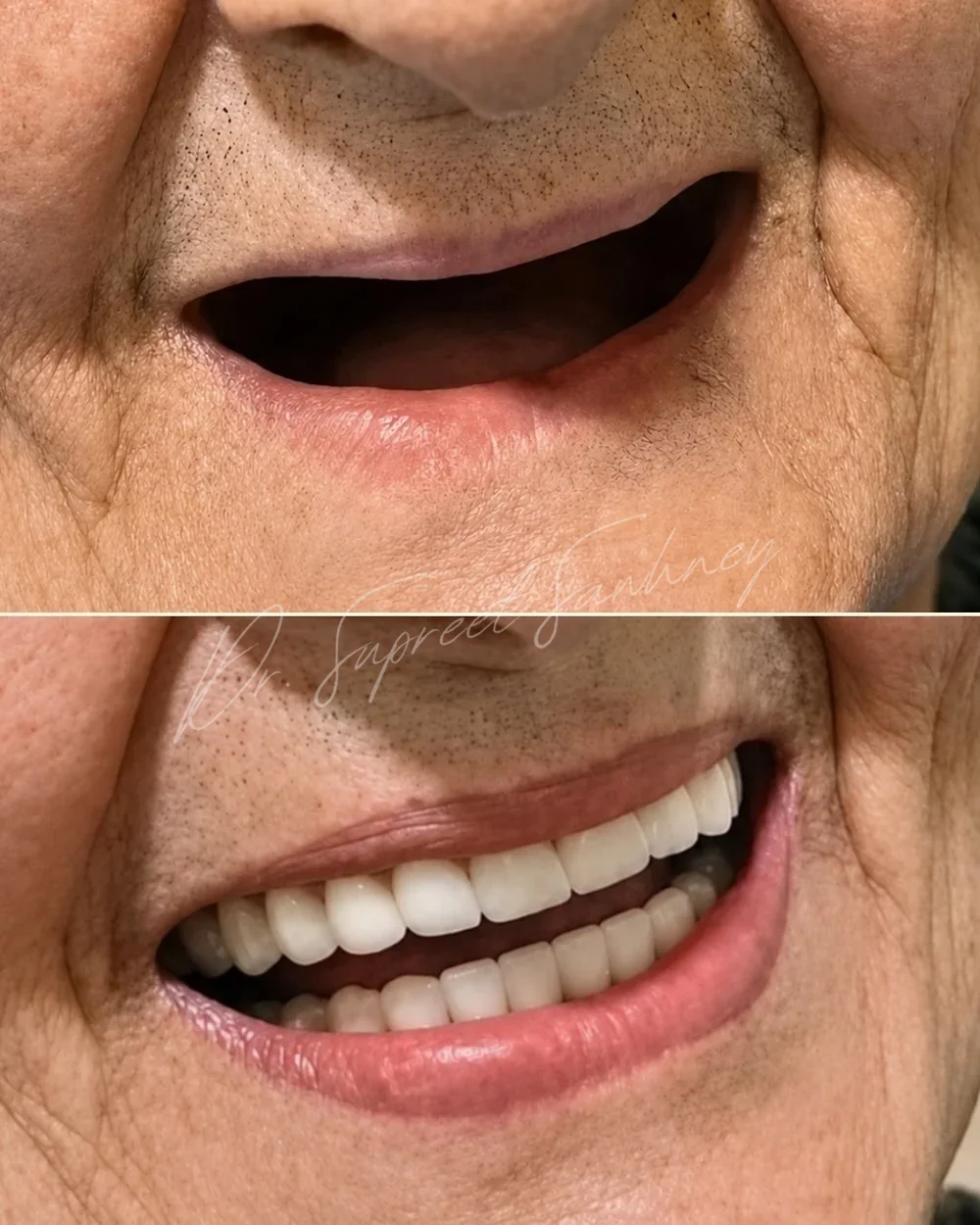
Before-and-after patient smile photographs following mandibular implant-retained overdenture rehabilitation

Mandibular Implant-Retained Overdenture Case

This edentulous full-mouth rehabilitation case documents a four-implant mandibular overdenture, visible implant abutments and patient photographs before and after denture insertion. A mandibular implant-retained overdenture remains removable, while the implant attachments can improve retention in selected cases. Whether this approach is appropriate depends on bone, oral tissues, medical factors, cleaning ability, the opposing dentition and the patient’s restorative and maintenance needs.

View case details
Before-and-after intraoral photographs from a full-mouth fixed rehabilitation case

Full-Mouth Fixed Rehabilitation Case

This full-mouth fixed rehabilitation case includes frontal and lateral intraoral records before treatment and completed retracted smile photographs. Full-mouth rehabilitation coordinates teeth, restorations, implant support where used, gums and the bite rather than treating each tooth in isolation. The appropriate plan can range from preservation and staged care to more extensive restoration, depending on diagnosis, remaining tooth structure, bone support, function and long-term maintenance requirements.

View case details
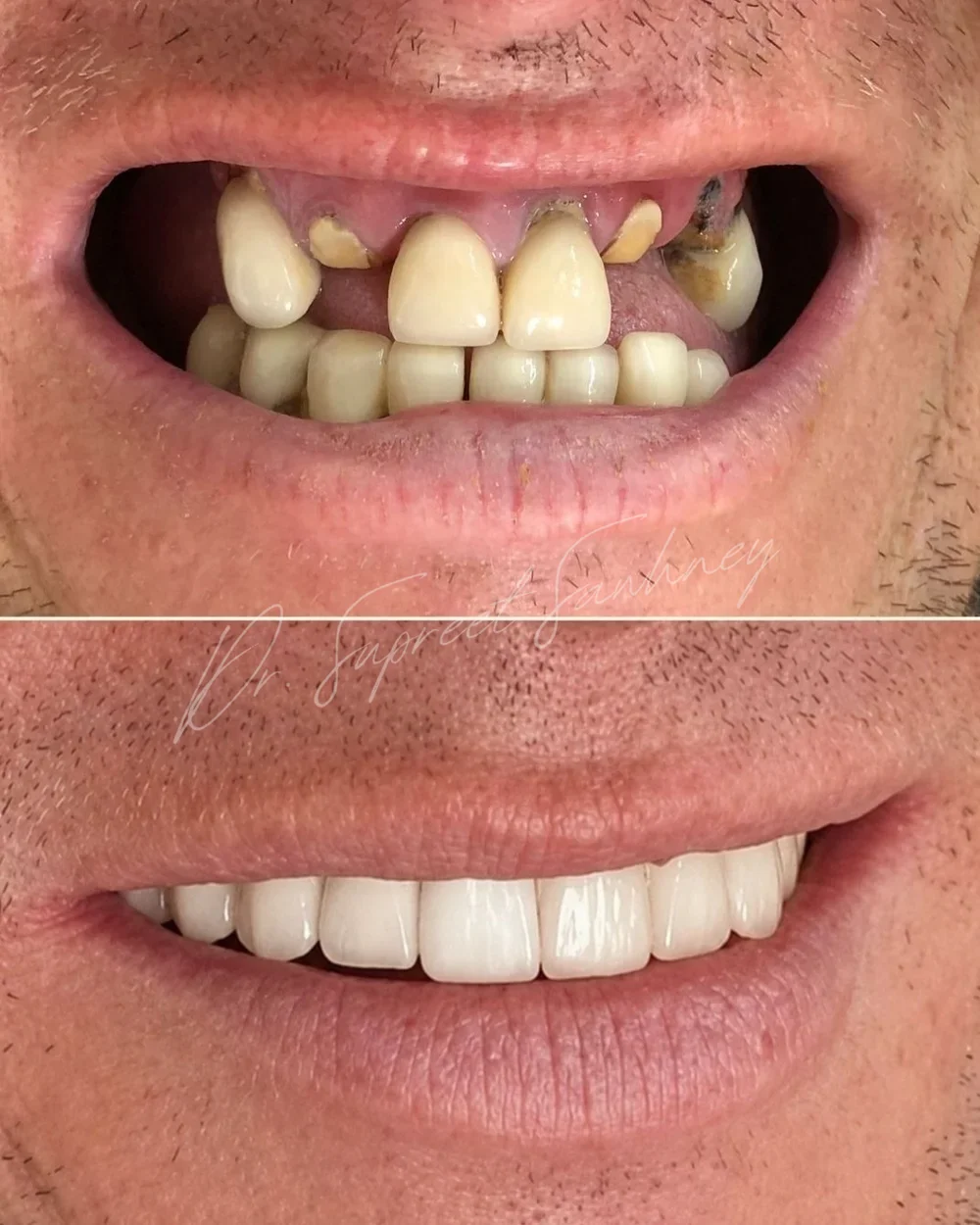
Before-and-after smile photographs documenting restoration of missing and fractured maxillary anterior teeth

Anterior Aesthetic Rehabilitation Case

This anterior aesthetic rehabilitation case is documented with close-up smile photographs before and after restoration of missing and fractured maxillary anterior teeth. Treatment planning for the visible front teeth considers the cause of tooth loss or damage, remaining tooth support, gum condition, bite, facial appearance and the restorative options that are clinically suitable. The photographs show one completed case and should not be interpreted as a guarantee of the same treatment or result for another patient.

View case details
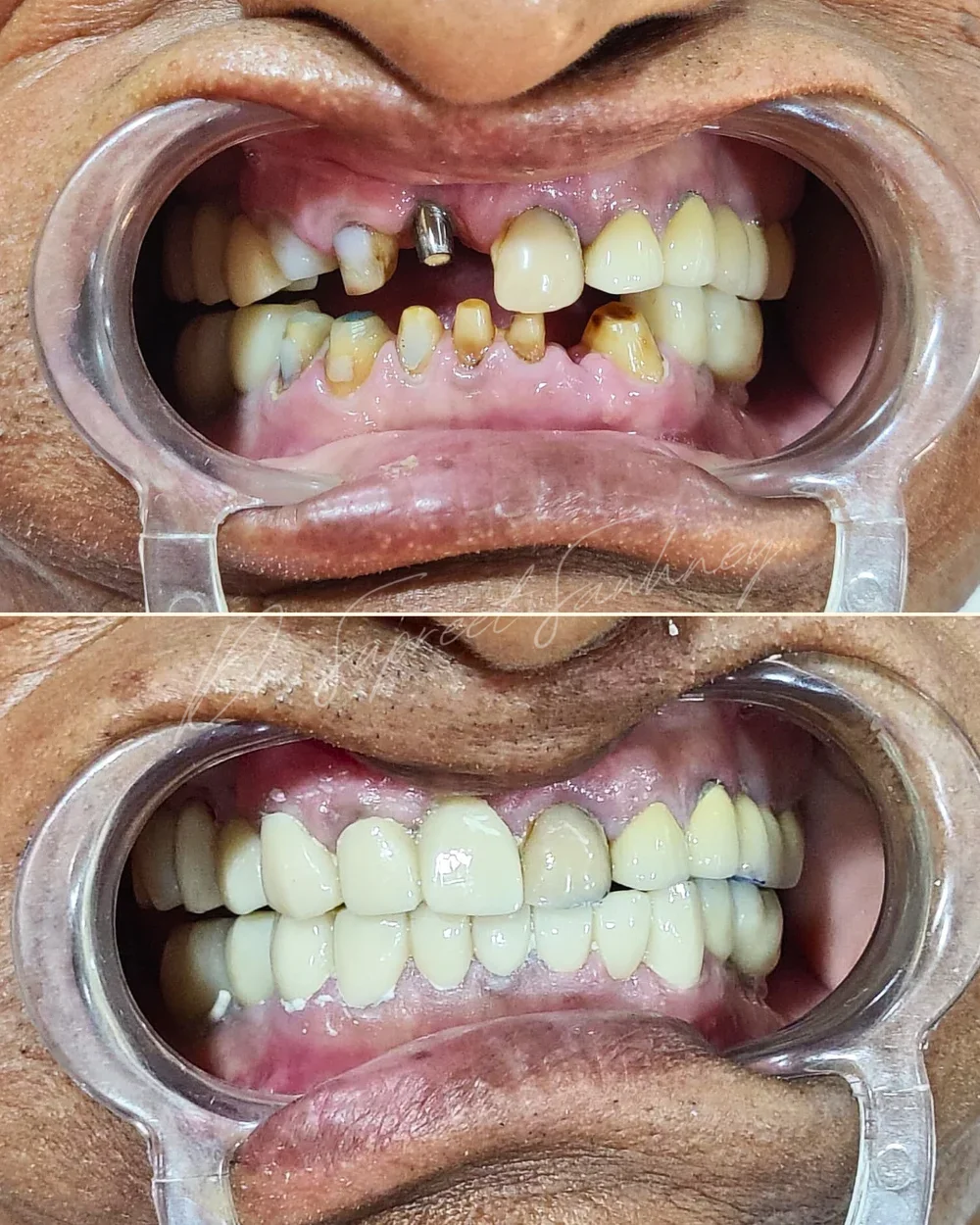
Before-and-after frontal intraoral photographs from a multiple-implant restorative rehabilitation case

Multiple-Implant Restorative Rehabilitation Case

This multiple-implant restorative rehabilitation case includes a maxillary working cast, serial intraoral photographs and a periapical radiograph of the implant-supported restoration. When several teeth are missing or heavily restored, implant-supported treatment is planned around the remaining teeth, bone support, gum health, bite and the design that can be maintained long term. The images document one clinical situation and are not a promise of a similar result for every patient.

View case details
Frontal retracted intraoral photograph following posterior mandibular implant treatment

Posterior Mandibular Implant Placement Case

This posterior mandibular implant placement case includes pre- and post-placement periapical radiographs, intraoperative photographs and the instrumentation used during surgery. Implant placement is planned from the proposed restoration backwards, with attention to the edentulous site, adjacent roots, available bone, the bite and the final crown or bridge design. Surgical images are clinical documentation of this case and may be unsuitable for some viewers.

View case details
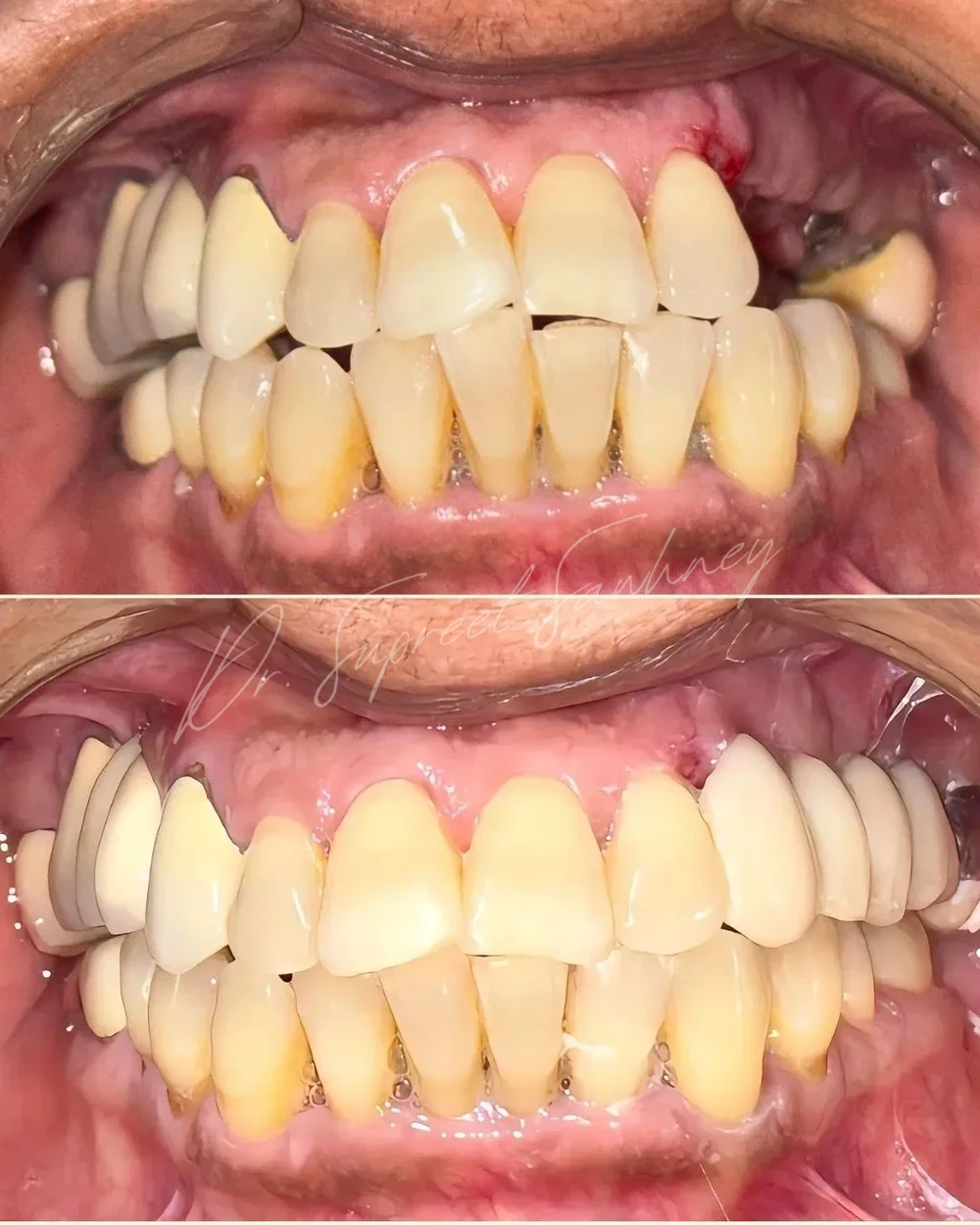
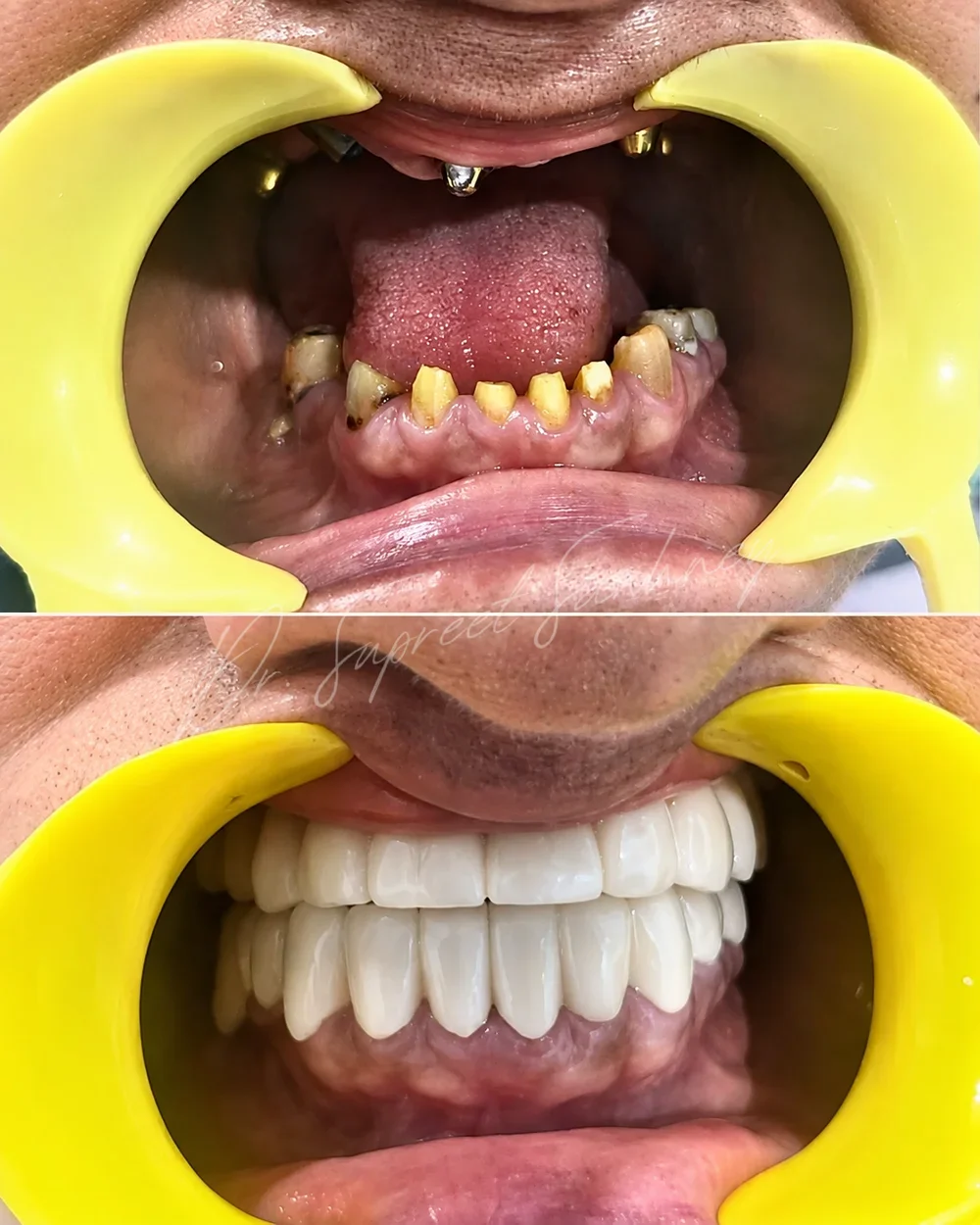
Before-and-after frontal intraoral photographs from a full-arch implant-supported rehabilitation case

Full-Arch Implant-Supported Rehabilitation Case

This full-arch implant-supported rehabilitation case is shown with frontal retracted intraoral photographs before and after restorative treatment. Full-arch rehabilitation is not a one-size-fits-all procedure: the plan may depend on which teeth can be preserved, the condition of the gums and bone, implant support, bite relationship and the patient’s ability to clean and maintain the final restoration. These photographs document one treated case and do not guarantee a comparable outcome.

View case details
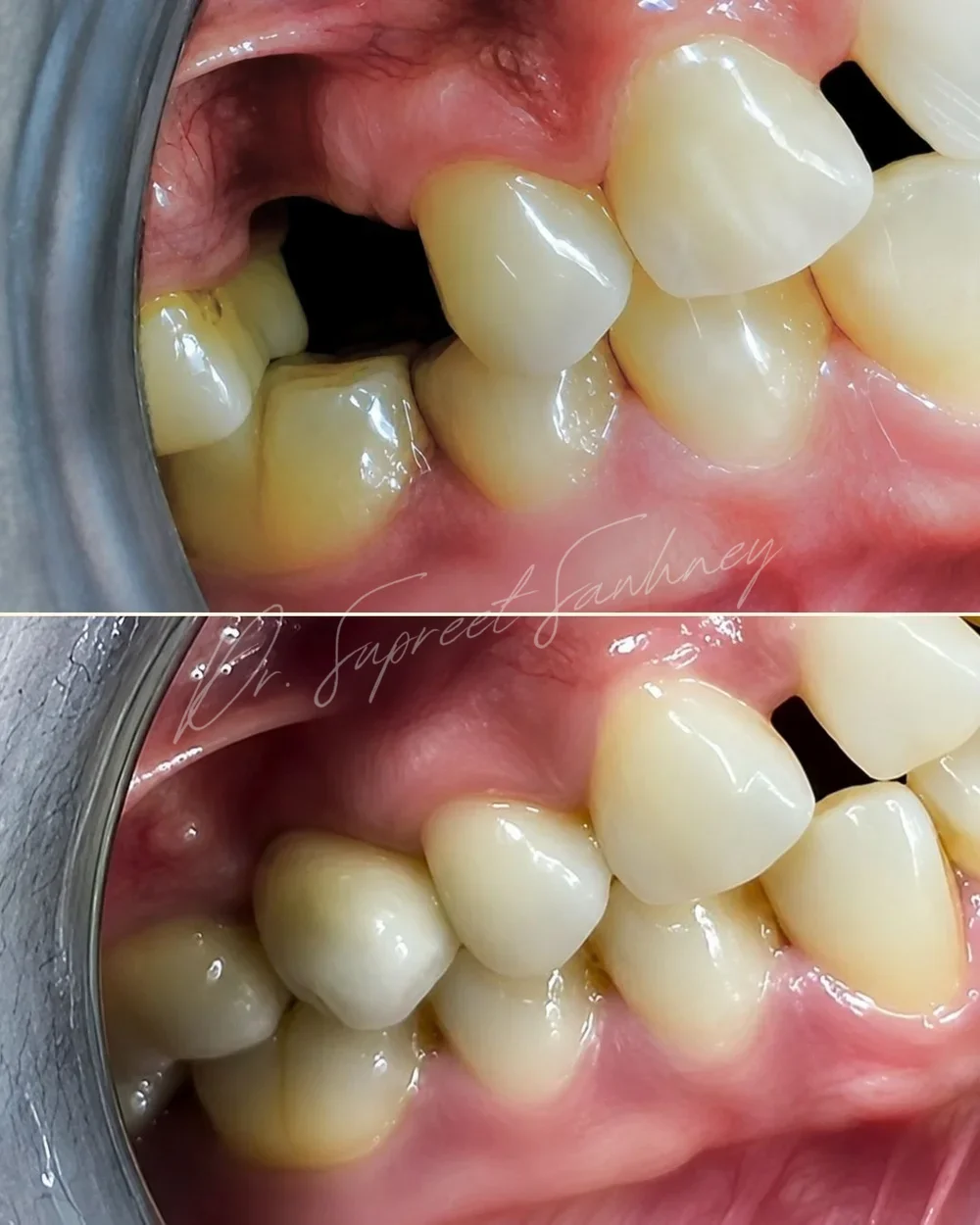
Before-and-after lateral intraoral photographs of a posterior maxillary implant crown restoration

Posterior Maxillary Single-Implant Crown Case

This posterior maxillary single-implant crown case is documented with intraoral records, a periapical radiograph, the crown-abutment assembly and a working cast. Replacing a back tooth with an implant-supported crown requires assessment of the available bone, nearby teeth, the upper-jaw sinus where relevant, bite forces and cleaning access. Final implant and crown design are selected only after case-specific clinical and radiographic planning.

View case details
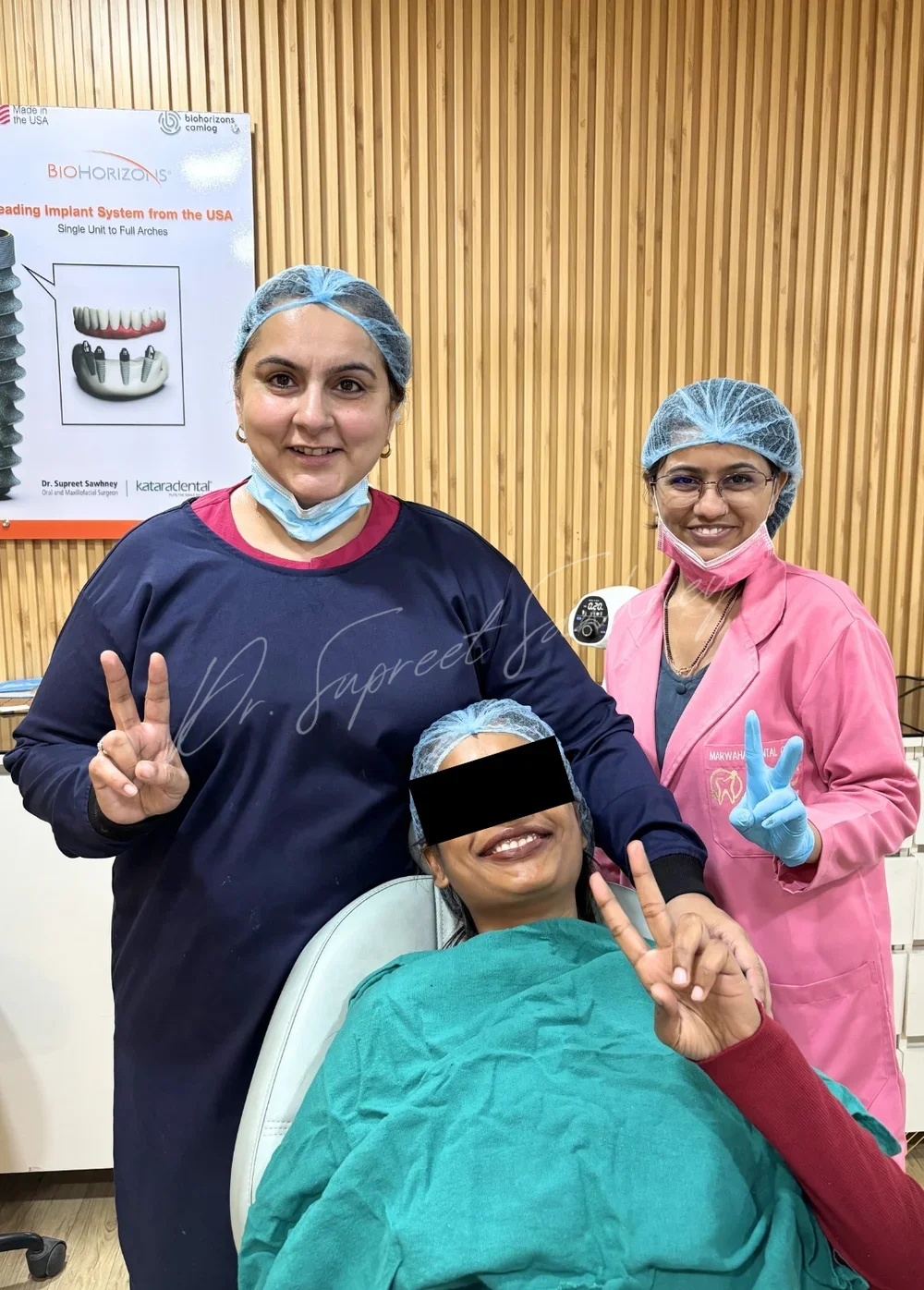
Patient seated with Dr. Supreet Sawhney and a clinical team member after treatment

Posterior Mandibular Single-Implant Case

This posterior mandibular single-implant case includes periapical radiographs of an edentulous site and the placed implant, together with a patient-and-team photograph. A single implant may be considered to replace a missing tooth where the bone, gums, bite, adjacent teeth and general health support that plan. The radiographs are clinical records of this case; they do not predict the treatment plan or outcome for another patient.

View case details
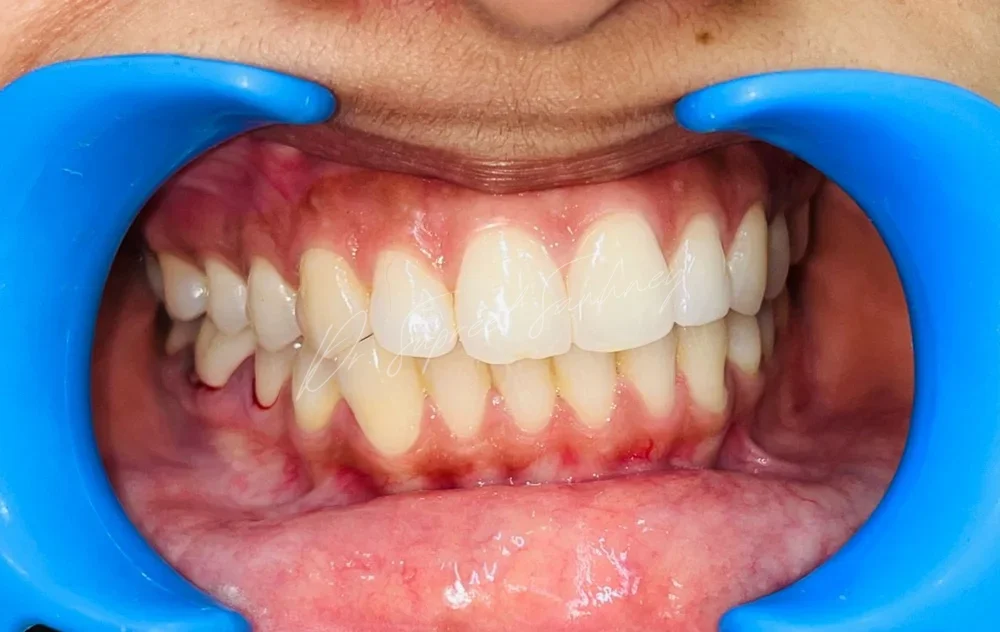
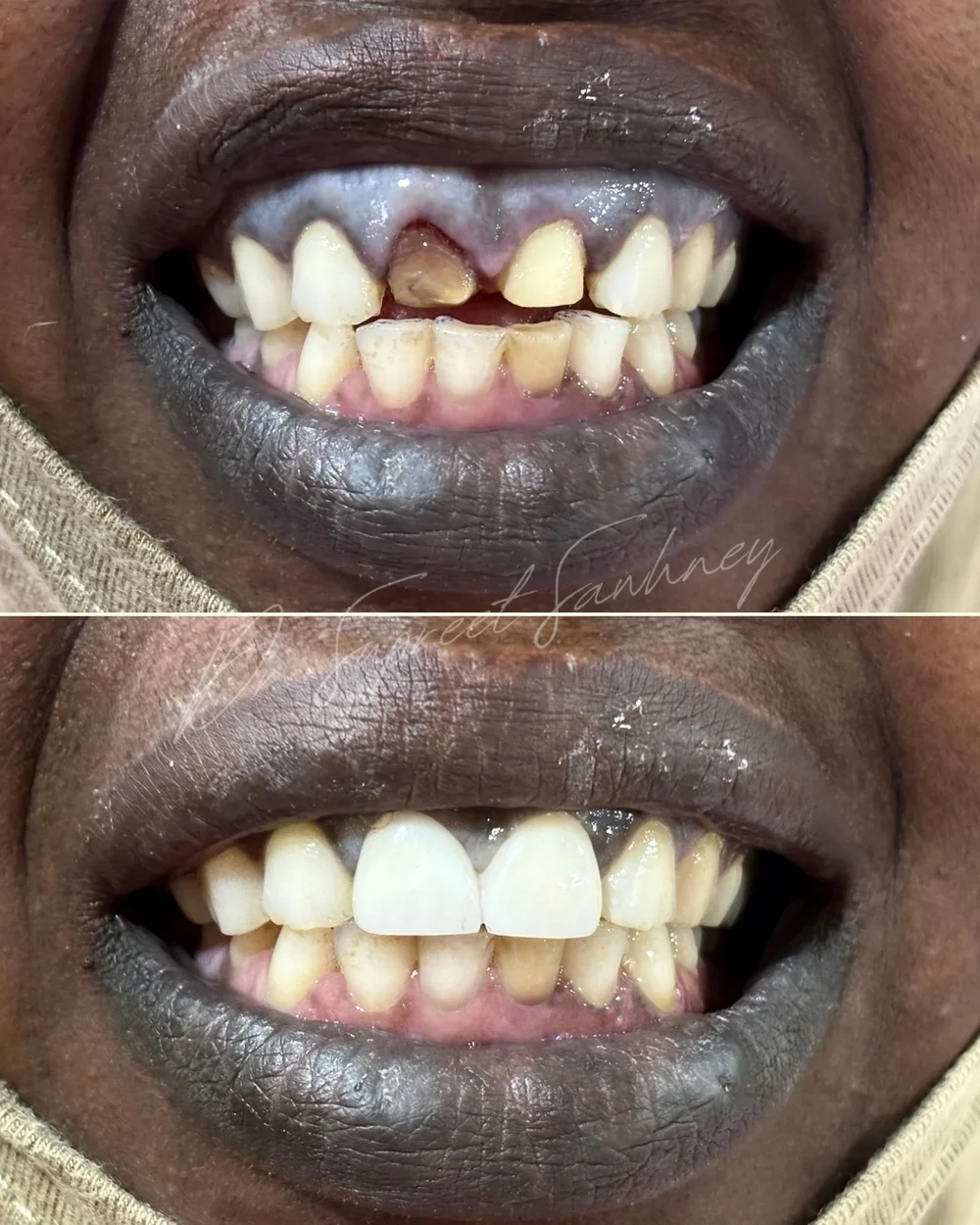
Before-and-after smile photographs documenting rehabilitation of fractured maxillary incisors

Anterior Smile Rehabilitation: Fractured Incisors

This anterior smile rehabilitation case documents fractured maxillary incisors and the restored anterior teeth in close-up clinical photographs. Anterior rehabilitation may involve careful assessment of tooth structure, gum levels, bite, shade, spacing and the condition of adjacent teeth before a restorative approach is selected. The goal is to create a result that is appropriate for the individual mouth and can be maintained; no single case photograph can determine another person’s treatment needs.

View case details