Connective-Tissue Grafting in Gurugram | Dr. Supreet
Connective-tissue grafting in Gurugram may be discussed when recession has exposed the root of a natural tooth. Dr. Supreet Kaur Sawhney, MDS, Senior Consultant – Oral & Maxillofacial Surgeon and Senior Implantologist with 20+ years of experience, can assess the tooth, surrounding gum and likely cause before a surgical option is considered. A graft may reduce sensitivity or improve coverage in selected cases, but complete root coverage is not assured.
What this graft is intended to address
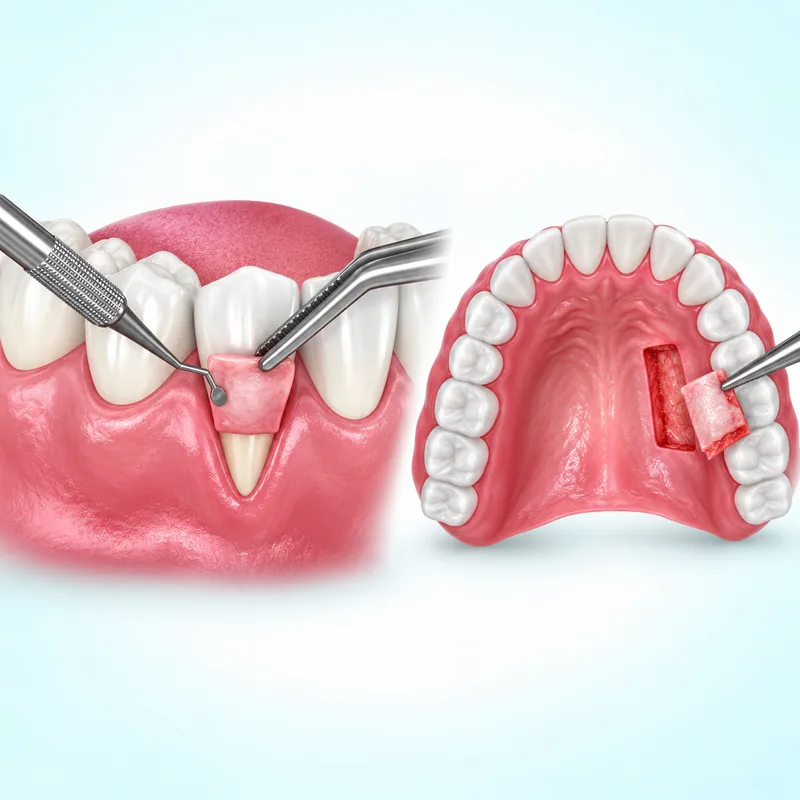
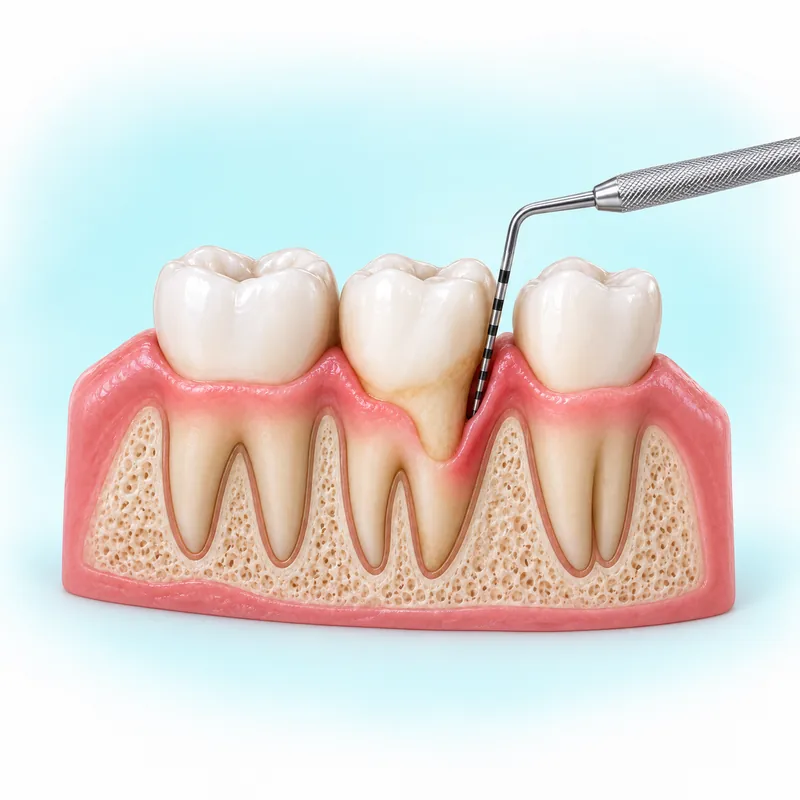
Gum recession means the gum edge has moved away from part of a tooth, leaving more of its root exposed. A connective-tissue graft transfers tissue, commonly from beneath the surface of the palate (the roof of the mouth), to an area around a natural tooth root. It may be considered when recession-related sensitivity or appearance is a concern, after other causes of sensitivity have been assessed.
This page concerns natural-tooth root recession. It does not describe grafting around a dental implant, where the site and treatment aim differ. The parent gum grafting and gum surgery guide discusses the wider assessment of gum changes. The article gum recession and gum grafting explains common patient questions.
How suitability is assessed
A consultation considers whether recession is stable or changing, whether periodontal disease (gum disease) is controlled, the thickness of the gum, tooth position and brushing trauma. More than one factor may contribute. A stable area may sometimes be monitored instead of operated on, depending on examination and symptoms. Classification of a recession defect can help describe the amount of attachment loss (loss of the gum’s supporting attachment to the tooth) between neighbouring teeth, but that label alone does not predict complete root coverage.
The goal matters too: reducing sensitivity, changing the visible gum line, or adding tissue where it is thin are different expectations to discuss. The likely benefit depends on the site and the cause; grafting cannot replace control of ongoing inflammation or damaging brushing habits.
Donor tissue and the procedure
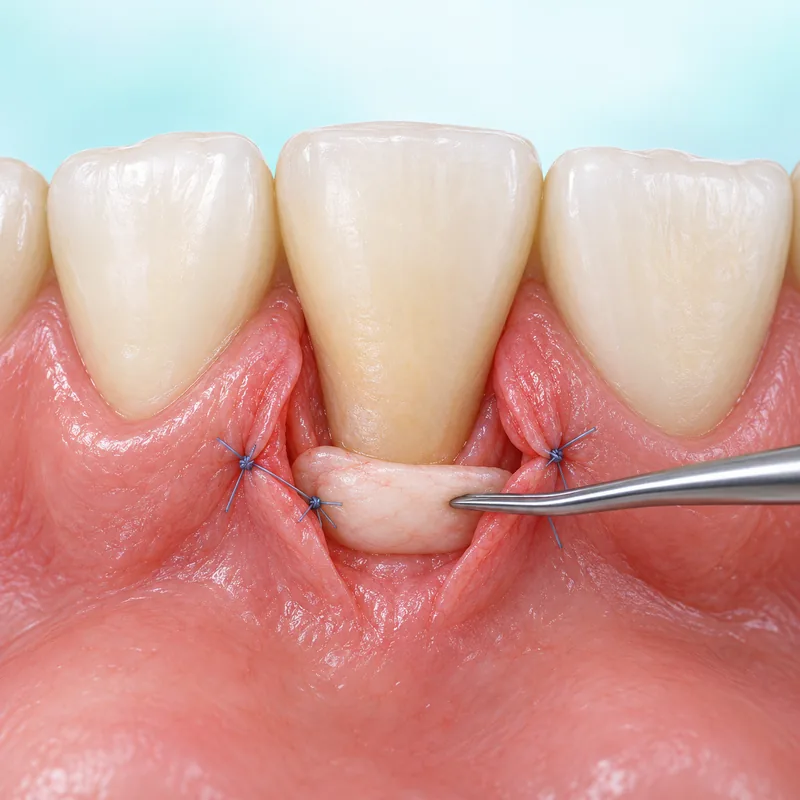
Connective tissue is a layer beneath the surface of the palate. It can be taken from there and placed beneath prepared gum tissue at the recipient site. A local patient leaflet describes a tunnel technique, in which a space is prepared under the gum, but this is one example; the approach and donor source vary with the treated site. Other patient information describes local anaesthesia (numbing the treated area), preparation of the recipient area, graft placement and stitches (sutures) to hold tissue in place. This general outline does not specify the technique the clinic would use.
When tissue is taken from the palate, both the donor area and the treated gum need site-specific instructions. Avoid pulling the lip or disturbing the healing graft, and follow the treating team's cleaning plan. Gentle effective brushing and continuing maintenance help protect the tissue after healing, while early cleaning near a new graft may be different. The donor tissue source, whether a substitute is suitable, and what healing may involve should be part of the consent discussion; graft options depend on the indication and assessment.
Limits, healing and when to seek advice
Possible complications include bleeding, infection, an altered appearance or the need for further surgery. A graft can also fail if it loses its blood supply and the transferred tissue is lost; this is a possible failure pattern, not a conclusion based on appearance alone. Healing and final tissue appearance develop over weeks to months and vary between people. General patient information gives an average recovery of about one to two weeks after natural-tooth gum graft surgery, with longer recovery possible when multiple areas are treated. That average is not a promise or a measure of when the tissue has fully matured.
Contact the treating service if you develop fever, pus or concern that graft tissue has been lost. If bleeding does not stop after firm pressure, prompt contact with a dental or urgent-care service is advised; follow the treating team's own instructions. The plan should also include long-term cleaning and review, since surgery does not remove the need to manage the cause of recession.
Discussing the options with Dr. Supreet
Dr. Supreet's MDS and Oral & Maxillofacial Surgery background and implant experience support a consultation focused on the specific tooth, gum condition and intended improvement. Ask what a graft is expected to change, whether monitoring is reasonable, where donor tissue would come from, and how both sites should be cared for. The decision is individual; no single technique or amount of coverage is suitable for everyone.
Dr. Supreet's Dental & Implant Centre is at 395 P, Sector 39, near Medanta Hospital, Gurugram (Gurgaon), Haryana 122001. Contact the clinic or call +91 9650298009; view the Sector 39 clinic location.