Implant-Retained Overdentures in Gurugram
An implant-retained overdenture is removable: you take the denture out for cleaning while the implants remain in the jawbone. That makes the daily routine different from fixed implant teeth, even though both use implants. Dr. Supreet Kaur Sawhney provides implant assessment in Gurugram to help you compare these options and understand whether an existing denture could be adapted or a new replacement is needed. Not every denture can be converted.
Assessing a removable implant denture with Dr. Supreet
Dr. Supreet is an MDS, Senior Consultant – Oral & Maxillofacial Surgeon and Senior Implantologist with 20+ years of experience. An overdenture consultation connects implant suitability with the denture you will wear, remove and clean. Bring your current denture and any records so its condition, fit and design can be considered alongside the proposed implant support.
At Dr. Supreet's Dental & Implant Centre in Sector 39, the discussion can address your preferences, practical cleaning routine and the continuing care a removable replacement needs.
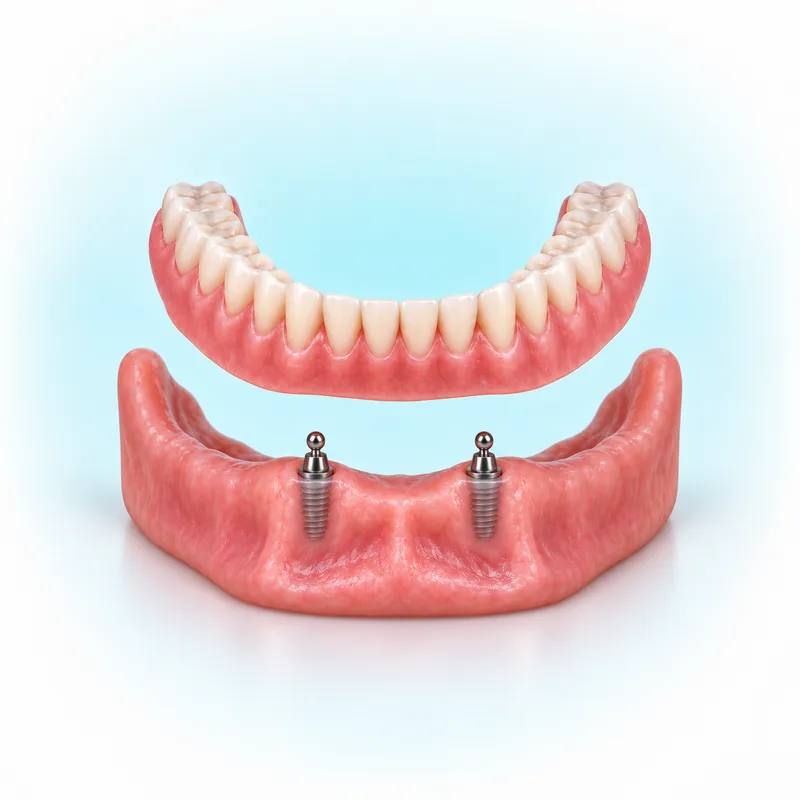
Removable teeth can be a considered choice
Removable dentures replace missing teeth and can assist eating, speech and appearance. In an implant-retained design, the implants stay in bone while the denture is removable. This is distinct from a fixed whole-arch implant replacement that you do not take out yourself.
For complete tooth loss, choosing fixed or removable implant teeth involves anatomy, clinical needs and patient preferences. A removable implant restoration is not automatically an inferior choice. In the limited comparisons reviewed by the International Team for Implantology (ITI), completely toothless patients reported easier hygiene with removable implant teeth. This is a finding about their experience, not a universal cleaning advantage or proof of better implant survival. Satisfaction and survival of implants or replacement teeth are different outcomes.
The full-arch implant guide puts fixed and removable choices in the broader whole-jaw decision. The implant, bridge and denture comparison explains the main replacement categories.
Can your current denture be used?
An existing denture can sometimes be adapted for implant retention if its condition and design are suitable. That requires an assessment; adding implants does not automatically make every old denture usable.
Medical conditions, medicines and general health also influence implant suitability and healing. Planning may involve X-rays and impressions, which record the shape of the mouth, selected to answer the clinical question. Bone building may be needed when there is insufficient support for the planned implants, but it is not necessary in every case. A removable plan does not guarantee graft avoidance or a fixed treatment timetable.
Daily cleaning includes the denture and the mouth
The removable denture needs daily removal of soft buildup (plaque) using a soft brush and a cleanser that will not scratch the denture, following instructions for its actual materials. The gums and tongue still need cleaning even when no natural teeth remain, and the implants need regular cleaning and professional follow-up.
Choose cleaning methods with the dental team. Very hot water and strong bleach can damage some denture components; advice depends on the materials, rather than one chemical being suitable for every denture. Do not reshape or repair the denture yourself.
These are instructions for a removable denture. A fixed implant replacement is not something you should attempt to remove for cleaning.
Loose attachments and sore areas need assessment
The parts that retain an overdenture can wear or break and may need replacement. A loose denture can also reflect changes in the supporting tissues, rather than attachment wear alone. The dentist should examine both the fit and the parts that hold the denture to the implants instead of assuming which part has failed.
New removable dentures can initially feel bulky or loose, cause soreness or increase saliva. Persistent problems need assessment. Follow-up appointments check fit and allow sore areas to be adjusted professionally; do not try to solve them by reshaping the denture.
Implant surgery still carries risks
Implant surgery can injure nearby teeth, nerves or other structures; risks depend on the sites and procedure. Infection or failure to join the bone can result in implant loss. Smoking can impair healing and longer-term outcomes.
Soreness, swelling, bruising and minor bleeding may follow surgery, with recovery varying. Cleaning around the operated area must follow the surgical team's instructions for the healing stage; the usual denture routine may need an individual plan during healing.
Report pain or perceived implant looseness promptly. Contact the treating team if swelling, discomfort or another problem worsens in the days after surgery. Persistent bleeding is different from a little initial oozing: if it remains uncontrolled, seek urgent local emergency care.
Arrange an overdenture assessment in Gurgaon
Dr. Supreet's Dental & Implant Centre is at 395 P, Sector 39, Near Medanta Hospital, Gurugram, Haryana 122001. Bring your denture, records and a list of medicines. Assessment can clarify the removable and fixed alternatives, whether adaptation is realistic, maintenance needs and an estimate based on the individual plan.
Read the broader dental implant guide, request an appointment or call +91 9650298009.