Single-Tooth Dental Implant in Gurugram
When one tooth is missing, the choice is about how to restore that particular gap and what the neighbouring teeth and jawbone can support. A single-tooth dental implant uses one implant body in the jawbone to support a replacement crown. Dr. Supreet Kaur Sawhney, MDS, is a Senior Consultant – Oral & Maxillofacial Surgeon and Senior Implantologist with more than 20 years of experience. Her consultation can help assess whether an implant suits this site and which alternatives merit consideration.
This page is about replacing one tooth. For several missing teeth or broader implant planning, see dental implants in Gurugram.
What replaces the missing tooth?
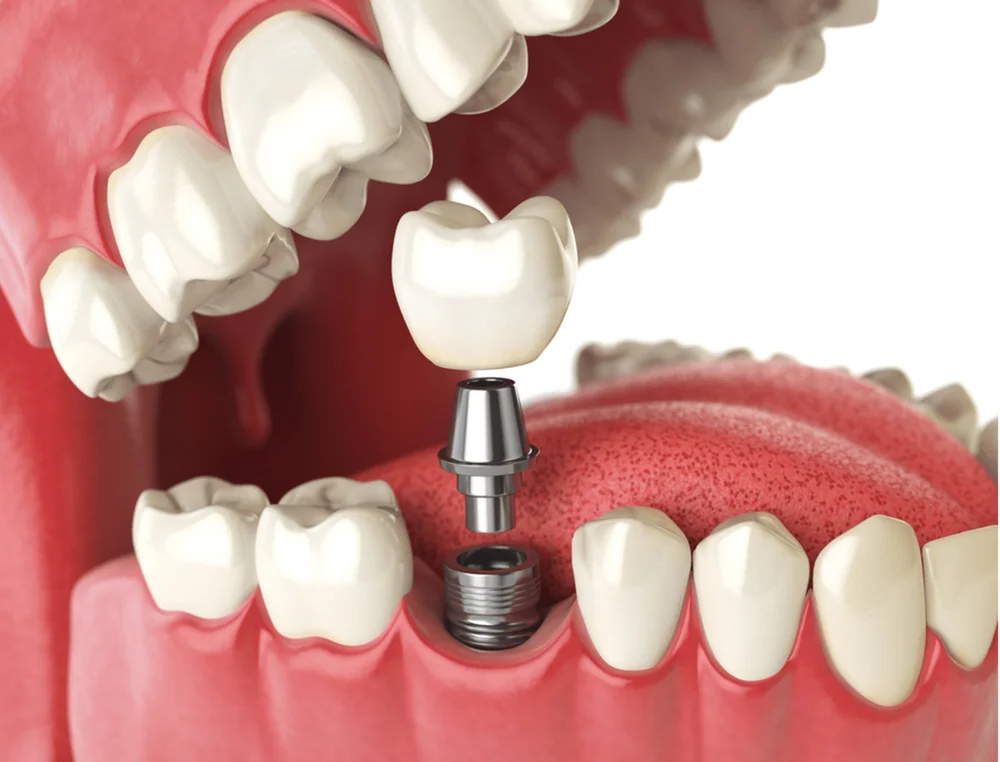
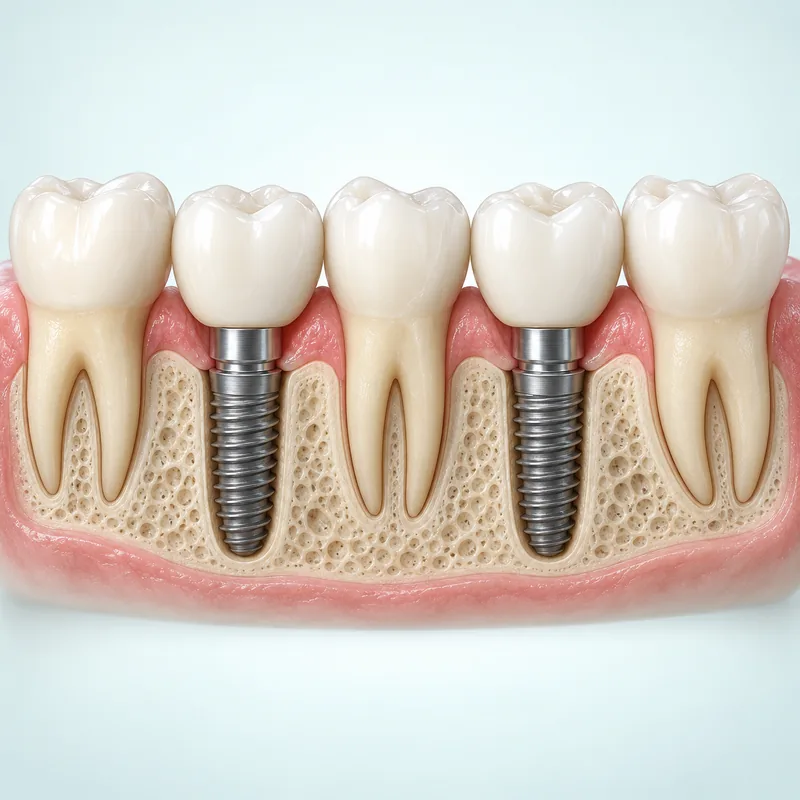
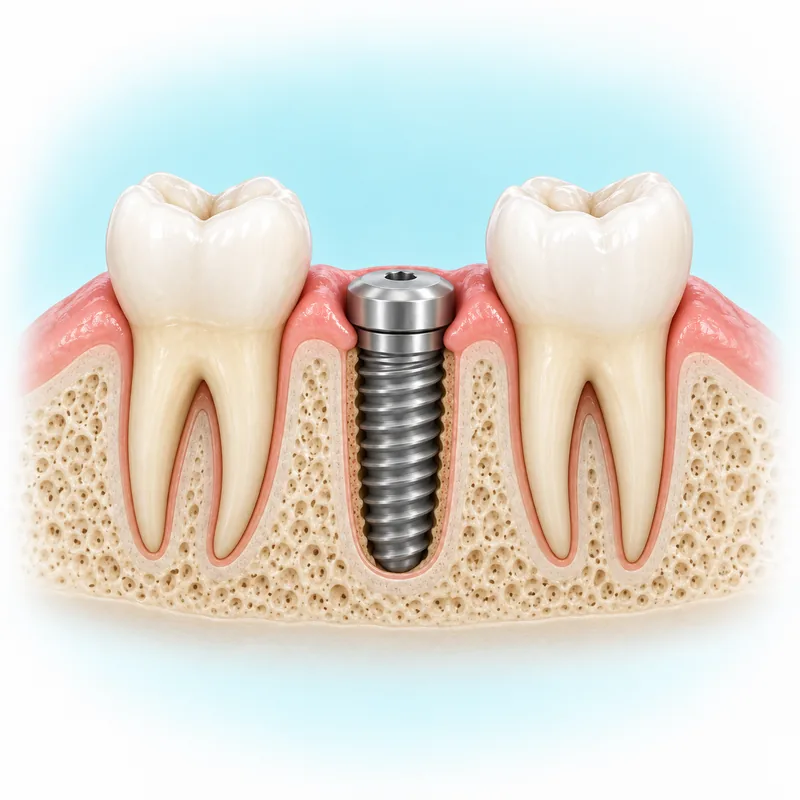
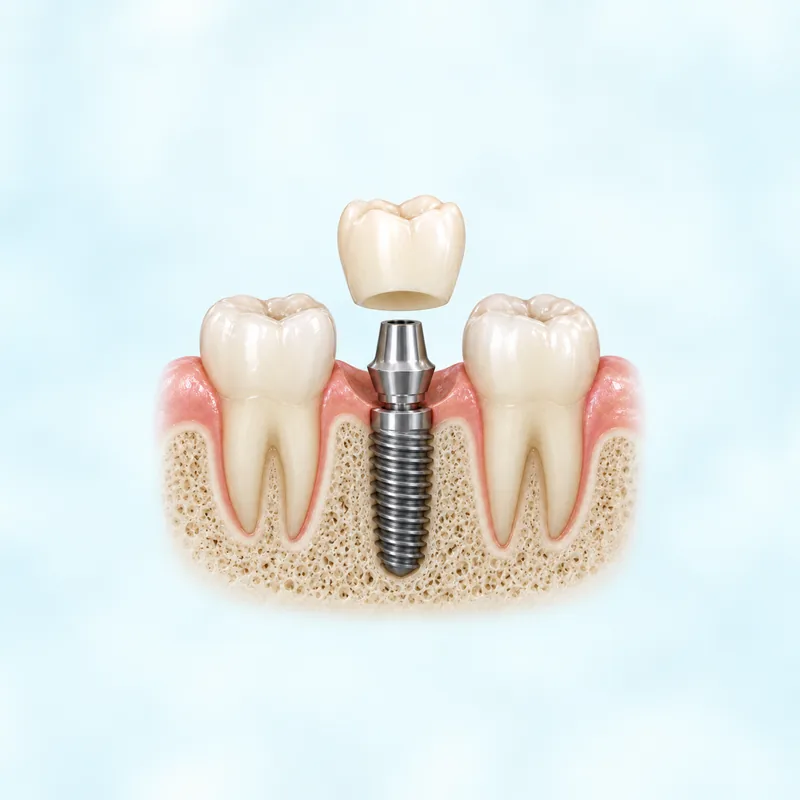
The implant body sits in the jawbone. An abutment connects it to the crown, which restores the visible part of the tooth. This is a one-tooth replacement; the crown is supported by its implant rather than by a conventional bridge spanning the neighbouring teeth.
For suitable local and general conditions, an implant crown can avoid preparing adjacent teeth for a conventional bridge. That can be a relevant tradeoff when comparing the options, but it does not by itself establish that an implant is the right choice. A bridge, a different denture design or no replacement remain possible alternatives, depending on the person's circumstances and functional needs.
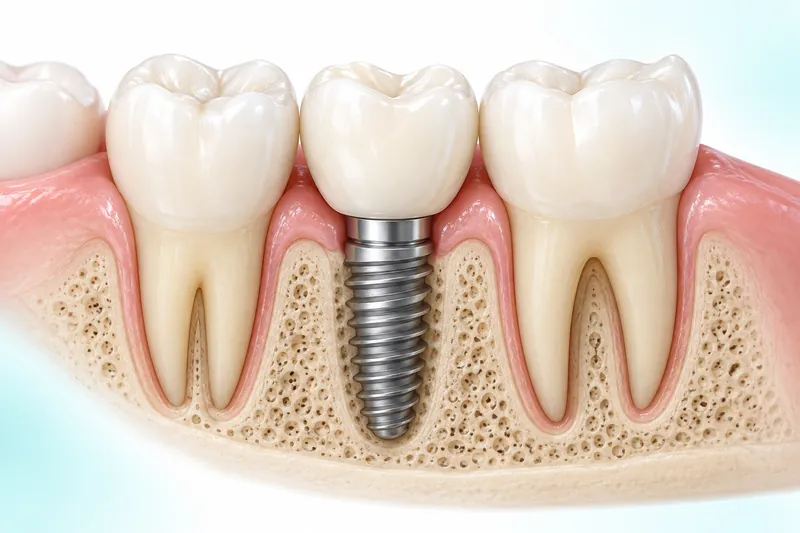
Discussing replacement for one tooth
The consultation can help you understand whether replacing this gap with an implant is appropriate, what alternatives deserve consideration, and what health and site factors need attention before deciding.
The practice is Dr. Supreet's Dental & Implant Centre, 395 P, Sector 39, near Medanta Hospital, Gurugram (Gurgaon), Haryana 122001. View the Sector 39 clinic location, other consultation locations, or contact the clinic to ask about an appointment. Call or WhatsApp +91 9650298009.
What an assessment needs to establish
Planning considers your general health, medical conditions and medicines alongside the tooth site. Radiographs (X-rays) and impressions (moulds of the mouth) may be part of planning when they help answer the clinical questions. If there is not enough bone to support the proposed implant, bone augmentation (building up the jawbone) may be considered; it is not needed in every case.
Smoking can impair healing and longer-term implant outcomes, so include it in the discussion. For routine tooth replacement, clinicians also consider whether jaw growth is complete. That is a suitability consideration, not a fixed age cut-off or a rule for every reconstructive situation.
An online description cannot determine suitability for your mouth. Ask which alternatives fit the condition of the site and neighbouring teeth, what additional care may be needed, and how the proposed crown and implant will be maintained.
Risks, healing and follow-up
Soreness, swelling, bruising or minor bleeding can occur after implant surgery, and individual recovery varies. Surgical risks depend on the site and procedure; they can include damage to adjacent teeth, nerves or other surrounding structures. Infection or a failure of the implant to join with bone can lead to implant loss. Discuss how the risks apply to the proposed site before consenting.
Follow the treating team's instructions for cleaning around the operated area, since advice depends on the stage of healing. After restoration, daily hygiene and regular professional follow-up remain necessary. An implant cannot develop tooth decay, but the tissues around it can become diseased, so it still needs ongoing care.
Contact the treating dental team promptly if the implant feels loose or there is pain. Worsening swelling, discomfort or another problem in the days after surgery also needs a call to the team. Bleeding that does not stop after surgery needs urgent assessment. If it remains uncontrolled, seek appropriate local emergency care; this is different from a small amount of initial oozing.