Periodontal Flap Surgery in Gurugram | Dr. Supreet
If a deep gum pocket remains after initial periodontal care, the next question is whether it can be managed without surgery or needs direct access for cleaning. Dr. Supreet Kaur Sawhney, MDS, Senior Consultant – Oral & Maxillofacial Surgeon and Senior Implantologist with 20+ years of experience, can assess the gum measurements, bleeding, bone support and response to earlier care before discussing options. Flap surgery is considered for selected residual pockets, not as the first step for every case.
Why reassessment comes before surgery
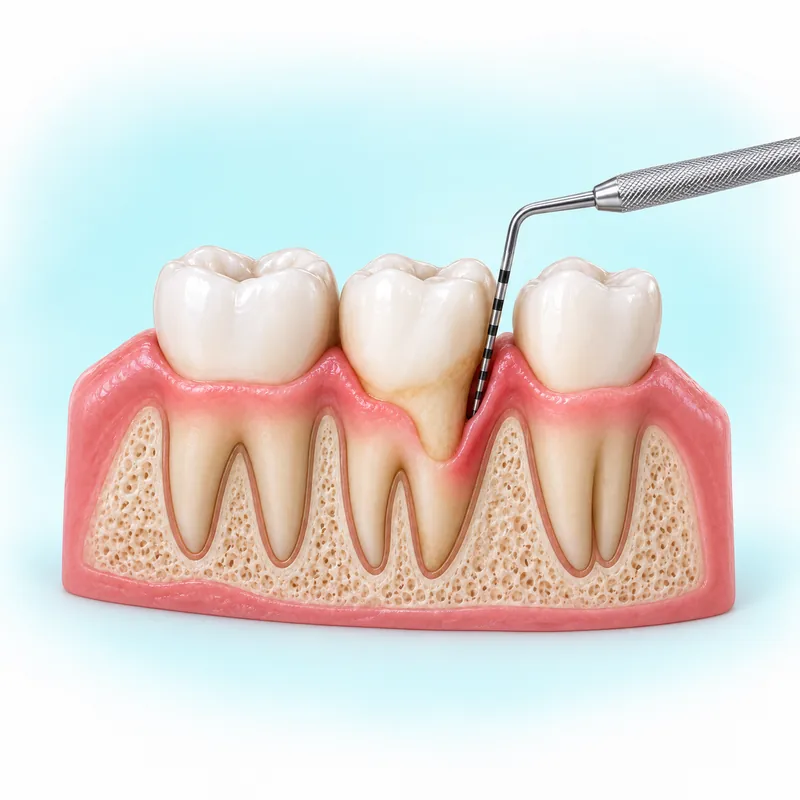
Periodontitis is gum disease that damages the attachment and bone supporting teeth. A periodontal pocket is a space between the tooth and gum that can deepen as support is lost. Assessment may include pocket depth, bleeding, attachment loss and X-ray findings of bone changes; a clinician also considers the full diagnosis and other possible causes.
Initial care centres on plaque control, relevant risk-factor management and professional cleaning below the gum line where indicated. Smoking and diabetes control may form part of risk management, but do not replace periodontal treatment. If nonsurgical treatment does not adequately control the disease, surgery is one option to discuss after reassessment. After these steps, access-flap surgery may be considered for residual pockets of at least 6 mm in the guideline's stated stage III (advanced periodontitis, an advanced form of gum disease) context. This is a conditional recommendation, not an automatic threshold for surgery; oral hygiene, risks, consent and the individual defect matter.
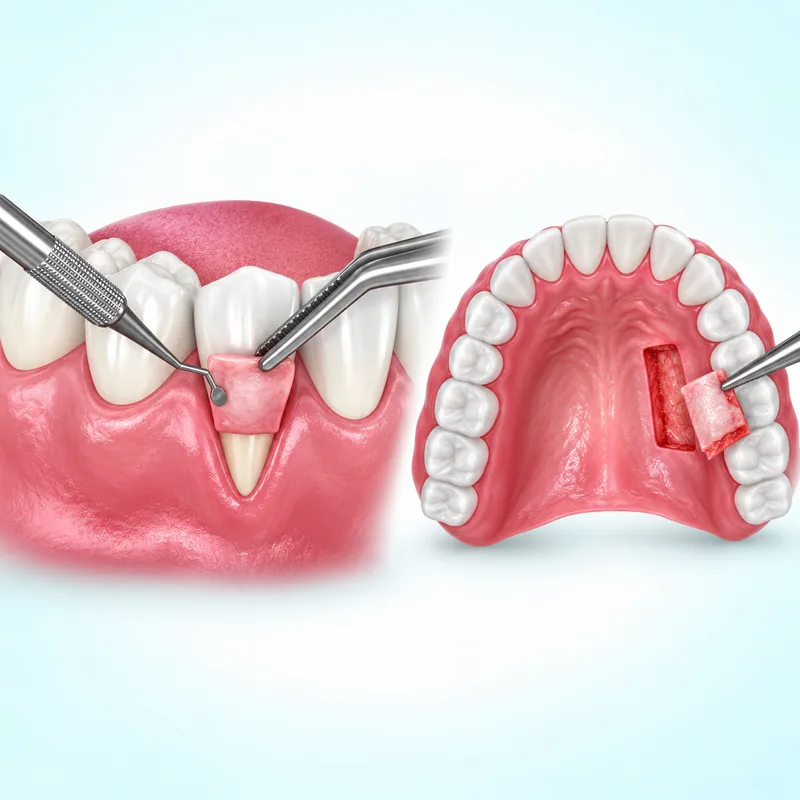
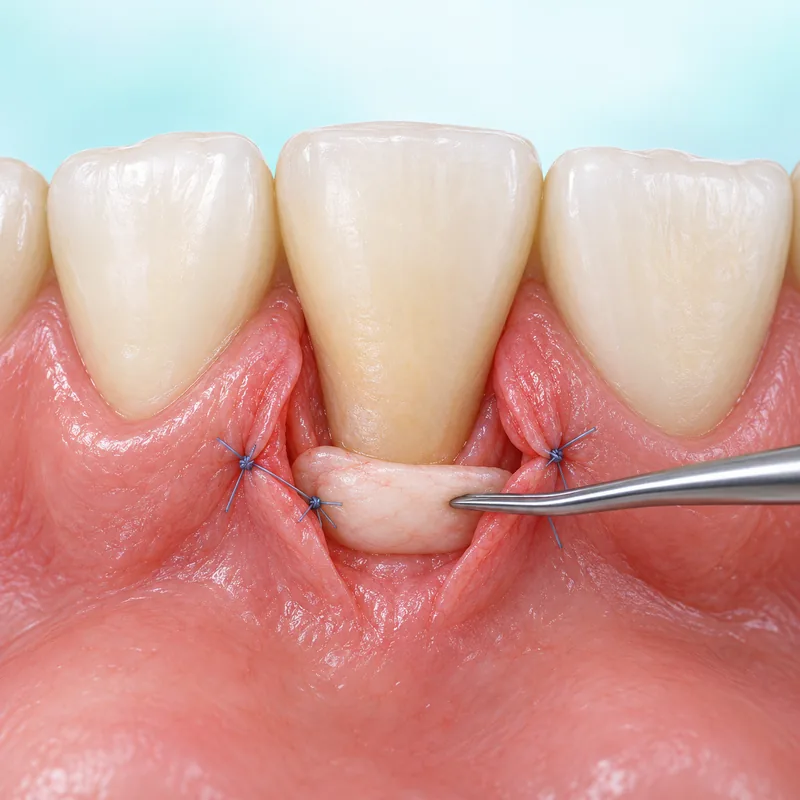
The parent gum grafting and gum surgery guide covers the broader range of gum concerns. This page focuses on access to a remaining periodontal pocket after initial care. A connective-tissue graft, by contrast, transfers tissue to selected exposed natural-tooth roots; it is not the pocket-cleaning procedure described here. Read gum recession and gum grafting for that separate decision.
What access-flap surgery involves
In open-flap periodontal surgery, local anaesthetic (medicine that numbs the treated area) is usually used, the gum is gently lifted from the tooth, and the exposed root and pocket area are cleaned to remove disease-associated deposits. The gum is then returned to position and secured with stitches, also called sutures. The flap provides access; it does not promise that every pocket will disappear or that lost bone will regenerate. The exact approach depends on the site and defect.
Risks, aftercare and maintenance
Possible effects of periodontal surgery include pain, bleeding, swelling, gum recession, sensitivity or an unsuccessful result. Their likelihood varies with the procedure and patient. While stitches are present, follow the surgeon's cleaning plan for the treated area and attend the planned review. The cited patient instructions include temporarily avoiding direct brushing at the operated site; this should not be applied to every tooth, and medication or rinse advice is individual.
If bleeding does not stop after firm pressure, contact a dental or urgent-care service promptly and follow the treating team's own pressure and emergency instructions. Once the treated site is ready for routine cleaning, daily brushing and cleaning between teeth help control plaque and recurrence; technique can be tailored to the patient. Long-term maintenance remains important even after surgery.
A discussion with Dr. Supreet
Dr. Supreet's MDS and Oral & Maxillofacial Surgery background and implant experience support a consultation that links the gum findings to tooth stability, cleaning and the wider oral-health plan. Ask which pockets remain after initial care, what non-surgical options remain, what the proposed flap is intended to address, and how the operated site should be cleaned and reviewed. The recommendation depends on examination and response to prior treatment.
Dr. Supreet's Dental & Implant Centre is at 395 P, Sector 39, near Medanta Hospital, Gurugram (Gurgaon), Haryana 122001. Contact the clinic or call +91 9650298009; view the Sector 39 clinic location.