Socket Preservation in Gurugram | Dr. Supreet
Socket preservation in Gurugram (Gurgaon) is a discussion about what to do at the time a tooth is removed when a future implant is being considered. Dr. Supreet Kaur Sawhney, MDS, Senior Consultant – Oral & Maxillofacial Surgeon and Senior Implantologist with 20+ years of experience, can assess the extraction site, the proposed replacement and the options before you decide whether additional care is appropriate. Socket preservation is not a promise that an implant will later be possible.
What socket preservation is intended to do
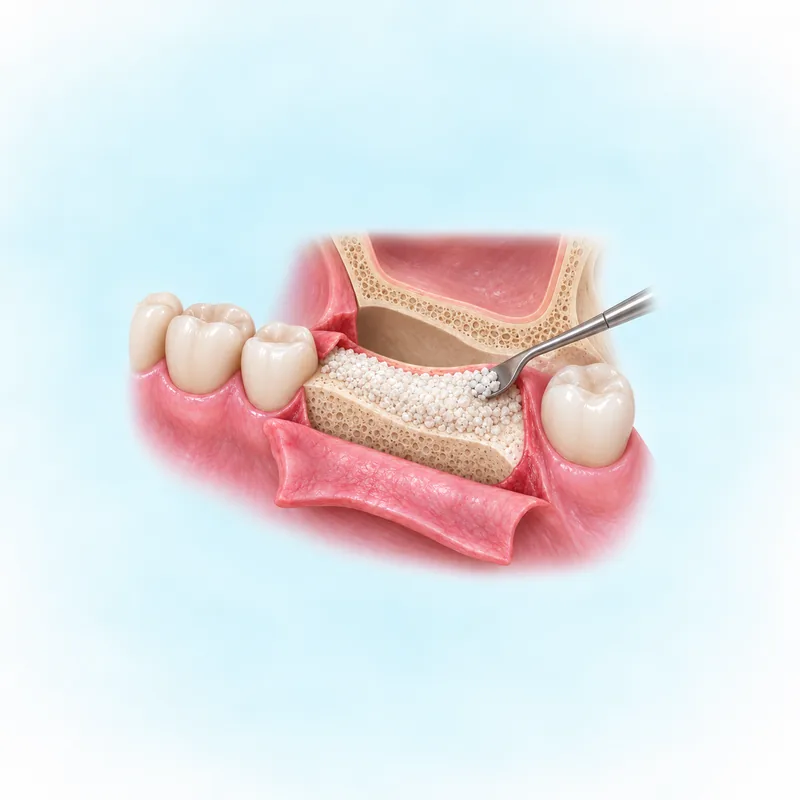
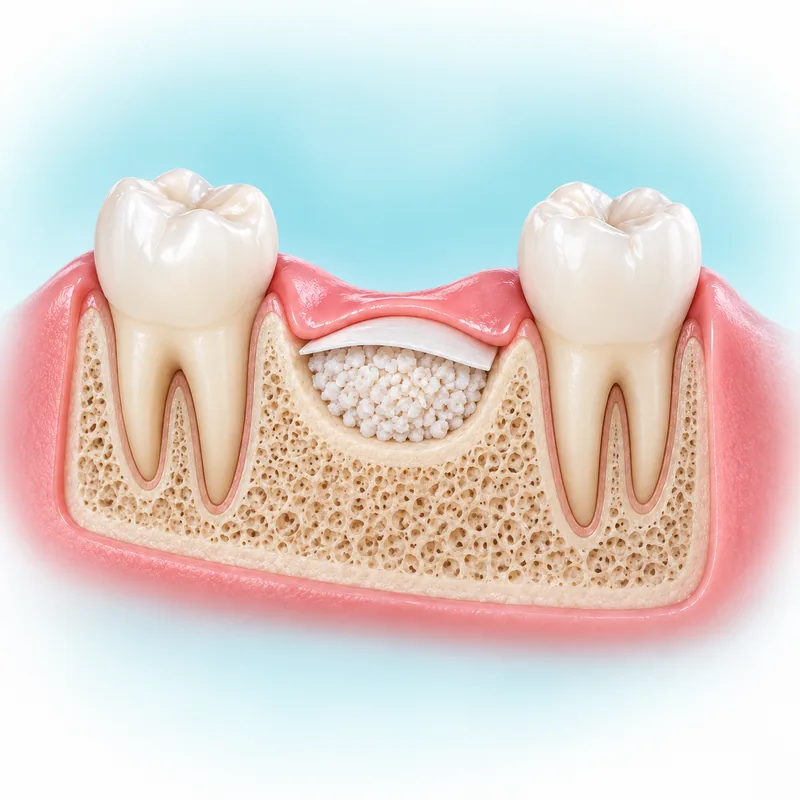
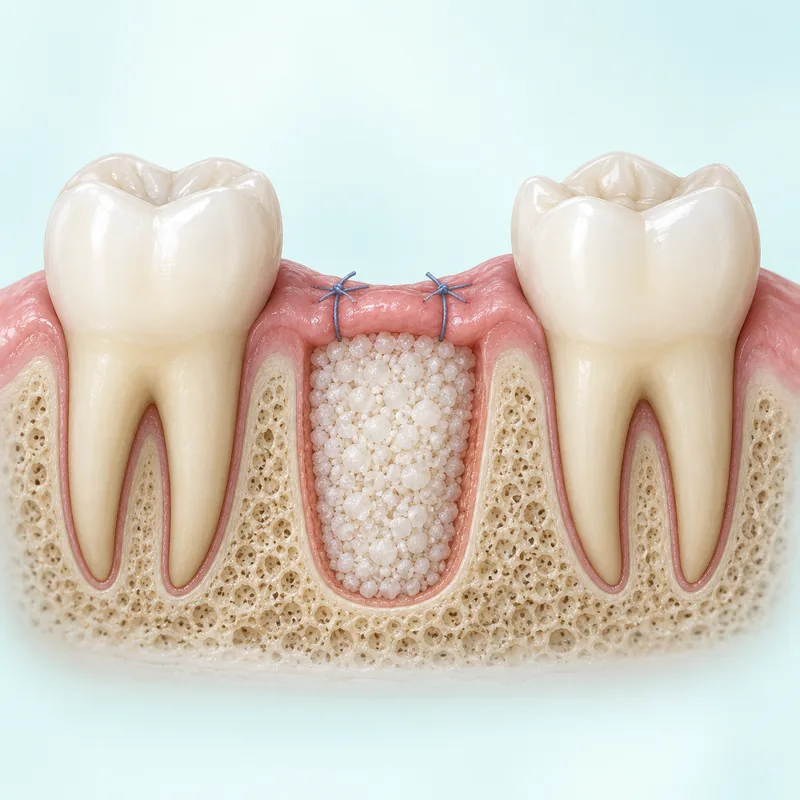
An extraction socket is the space left in the jaw after a tooth is removed. Socket or alveolar ridge preservation places graft material in that fresh socket to reduce the narrowing and reshaping that can occur as the area heals. In plain terms, it aims to limit some loss of the bony ridge that may matter for a planned replacement tooth. Bone remodelling (the body's ongoing change to bone after extraction) still occurs; preservation reduces but does not stop that change.
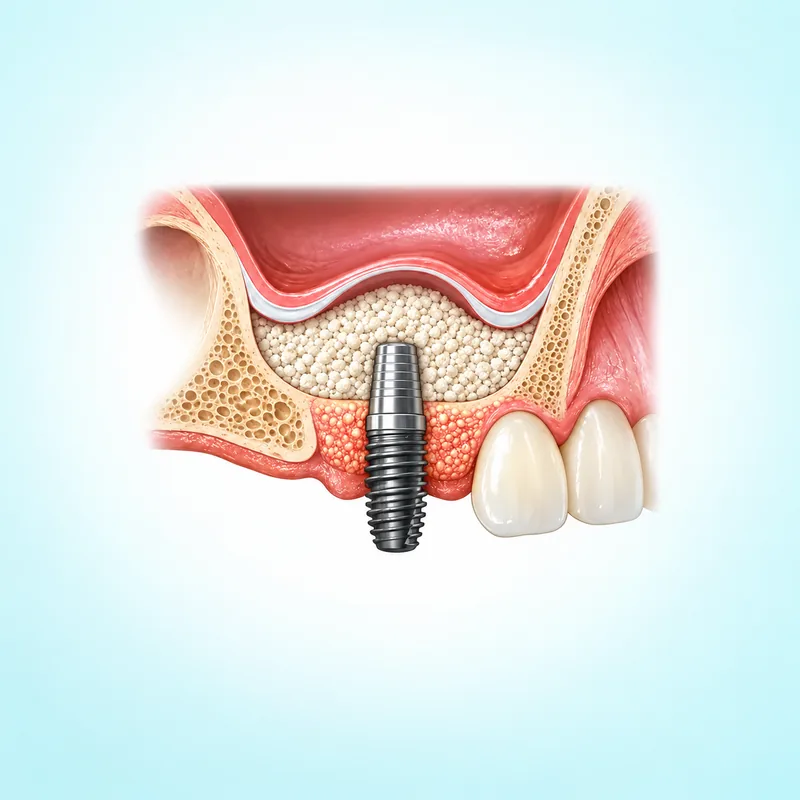
This is different from rebuilding a ridge that has already healed and become deficient. The two procedures can use some of the same materials, but socket preservation treats a fresh extraction site while later ridge augmentation addresses an established bone deficiency. The parent bone grafting and sinus-lift guide explains how site-development choices fit into implant planning. The article why bone grafting or a sinus lift may be discussed before implants covers the wider decision.
When preserving the socket may be discussed
The possible benefit depends partly on the socket's shape and the thickness and condition of its facial bone wall (the bony wall on the lip or cheek side). These features affect how much ridge change might occur, so the expected benefit is site-specific rather than guaranteed. Unassisted healing is also an option. An evidence review of selected extraction sockets and methods—especially sites outside the molar (back-tooth) region—found that sites without preservation generally lost more ridge width than preserved sites. This group-level comparison is not a prediction for an individual socket and does not confirm later implant suitability.
Assessment should connect the extraction decision to the intended restoration. Medical conditions, medicines and smoking are relevant to implant-site graft planning. If a graft is proposed, ask which graft and sealing products may be used and whether they are human-, animal- or synthetic-derived. Product choice depends on the site and plan; the cited hospital leaflet describes one site's options and does not establish that one origin is universally better.
What the procedure and healing may involve
A general bone-graft outline may include local anaesthetic to numb the gum, cleaning the site and placing graft material; sedation (medicine to help you relax) may be added when planned. Socket methods differ, and a membrane or another type of seal may be used, but no one sealing approach is required in every case. The specific steps and anaesthesia plan need to be explained for the proposed site; this description does not state which technique the clinic will use.
After placement, bone maturation may take several months before later implant treatment, with timing depending on the graft and site. Even after healing, there may still be too little bone for the intended implant, and additional grafting may be considered before or during implant placement. Follow the treating team's site-specific instructions. General bone-graft guidance may include soft foods early on and avoiding disturbance of the surgical area, but it is not a fixed diet or rule for every socket procedure.
Infection, exposure of a membrane, or loss of graft particles can occur; complication reporting varies across studies, so no single personal risk rate is implied here. Worsening pain, swelling or drainage should be reassessed, although these symptoms alone do not prove graft failure. If you are considering socket preservation, discuss the expected benefit for your anatomy, the material origins, unassisted healing, possible further grafting and what happens if the site does not support the planned implant.
A consultation with Dr. Supreet
Dr. Supreet's MDS and Oral & Maxillofacial Surgery background and implant experience are relevant when the extraction site and a possible later implant need to be considered together. The consultation can clarify the clinical question, the replacement being planned, and whether preservation, unassisted healing or another option merits discussion. Assessment is individual and does not commit you to grafting.
The clinic is Dr. Supreet's Dental & Implant Centre, 395 P, Sector 39, near Medanta Hospital, Gurugram, Haryana 122001. Contact the clinic or call +91 9650298009 to enquire; view the Sector 39 clinic location.