Periodontal Bone Grafting in Gurugram
Periodontal bone grafting places graft material into a selected defect in the bone supporting a natural tooth. It is different from building up a jaw ridge to support a dental implant. The defect, disease control and treatment response determine whether grafting is suitable; it cannot promise complete bone restoration. Regenerative treatment means an operation intended to rebuild some supporting tissue and bone lost around a tooth; complete restoration is not guaranteed. Dr. Supreet Kaur Sawhney, MDS, is a Senior Consultant – Oral & Maxillofacial Surgeon and Senior Implantologist with more than 20 years of experience. A periodontal assessment in Gurugram can explain what the bone defect shows and whether regenerative treatment is worth discussing.
Sources (2)
This is a natural-tooth support procedure. It differs from soft-tissue grafting for an exposed root or from ridge augmentation for an implant; the gum grafting and gum surgery guide describes those broader recession and soft-tissue questions.
Which defects may be considered
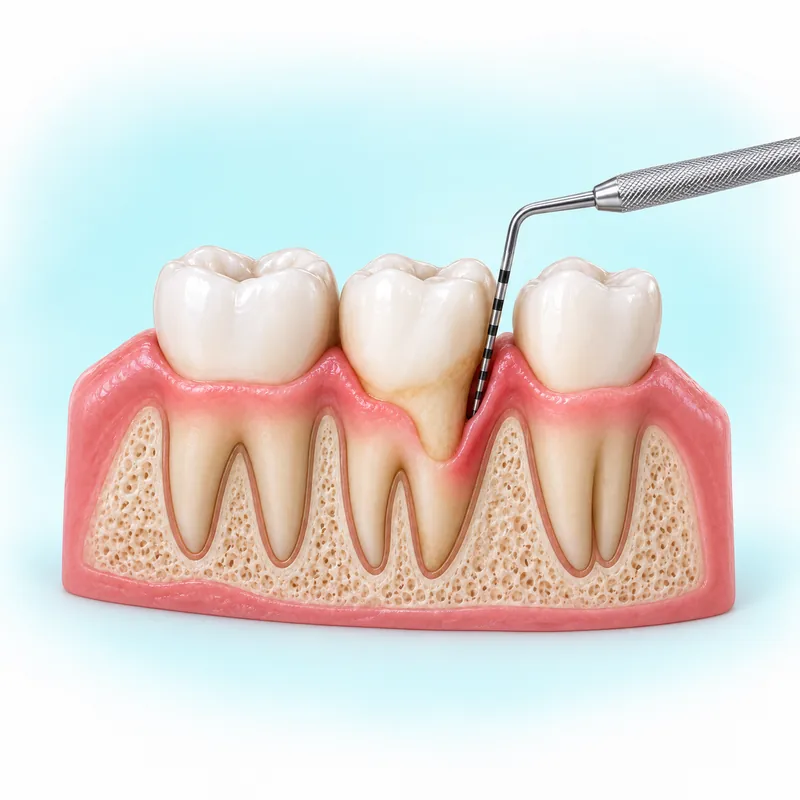
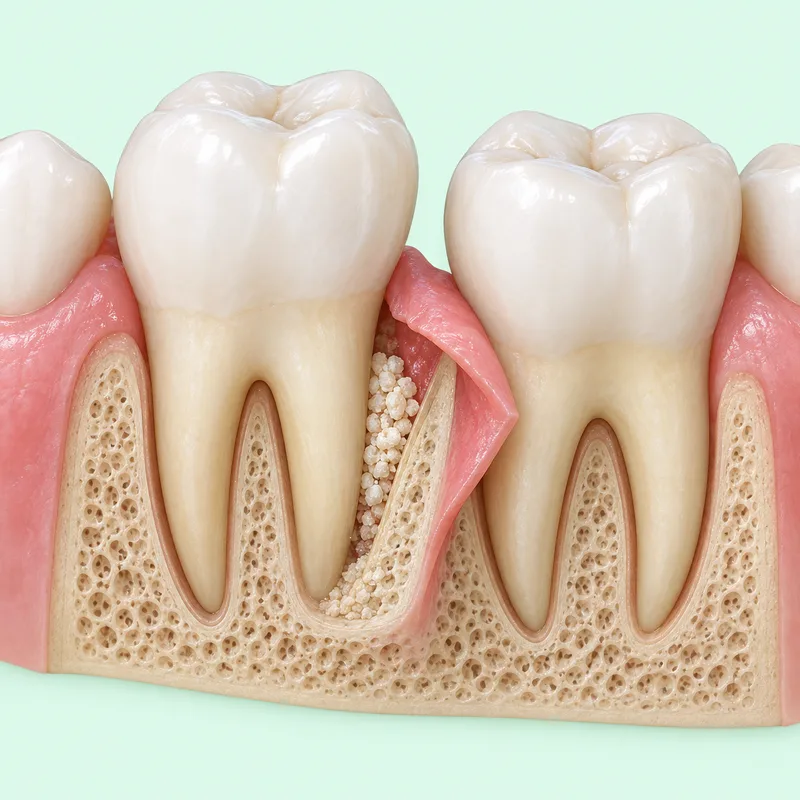
Periodontal regenerative procedures aim to recover some supporting bone and tissue in selected defects. In stage III guidance (a clinical disease-severity category), regenerative surgery is recommended for suitable remaining deep pockets with an intrabony (within-bone) defect at least 3 mm deep. An intrabony defect is a bone defect extending within the supporting bone around a tooth; not every site with bone loss has this shape or is suitable for a graft.
Sources (2)
Assessment may include loss of the attachment (tissue connection supporting a tooth), the depth of pockets (spaces between gum and tooth), bleeding and bone loss on appropriate images. Initial nonsurgical treatment and reassessment matter before surgery.
What the operation and material choice may involve
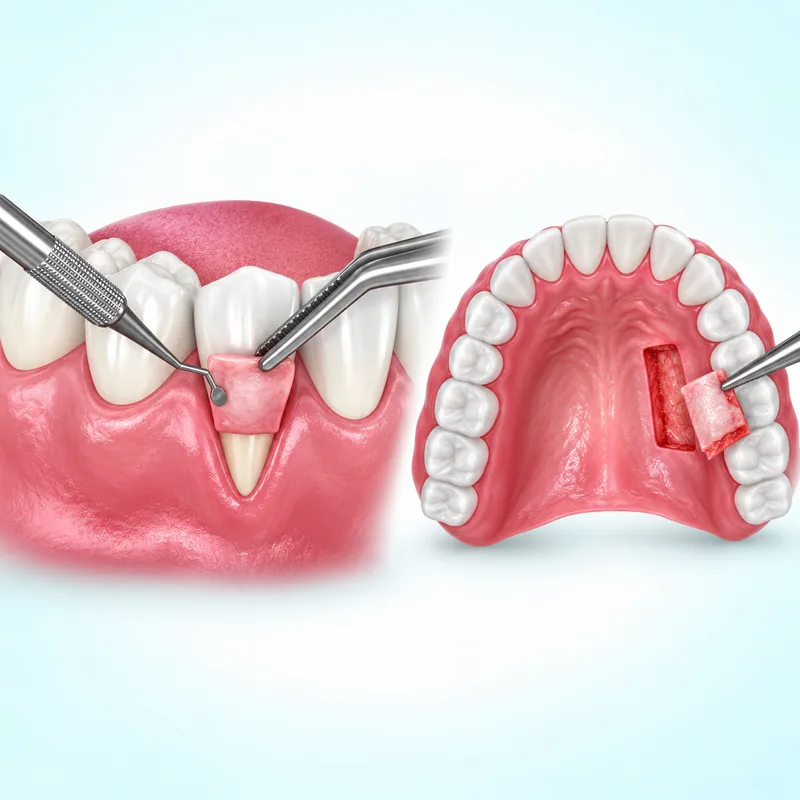
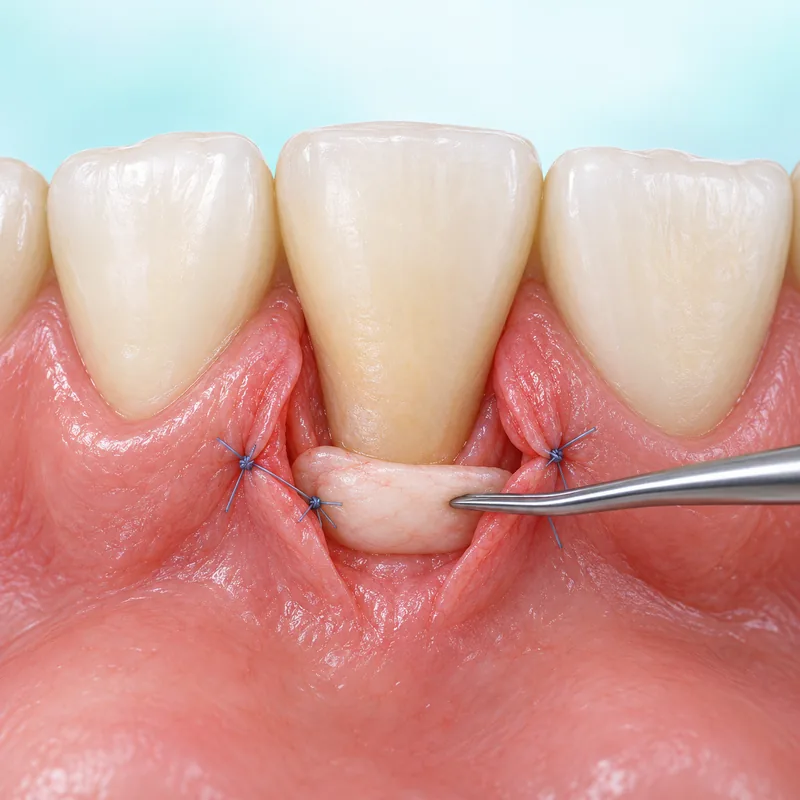
For a suitable within-bone defect supporting a natural tooth, the gum may be lifted, the area cleaned and graft granules (small pieces of graft material), a membrane (a thin sheet used with some grafts) or another regenerative material placed. Material choice depends on the site and plan. Ask what is proposed and whether it is animal-derived, since that possibility should be discussed with the patient.
Healing and defect shape affect the result. Regenerative surgery aims to recover some support, but complete restoration or complete bone fill is not guaranteed. Periodontal surgery can also involve pain, bleeding, swelling, recession (gums pulling back from a tooth) or sensitivity and may fail.
Sources (2)
Care after grafting
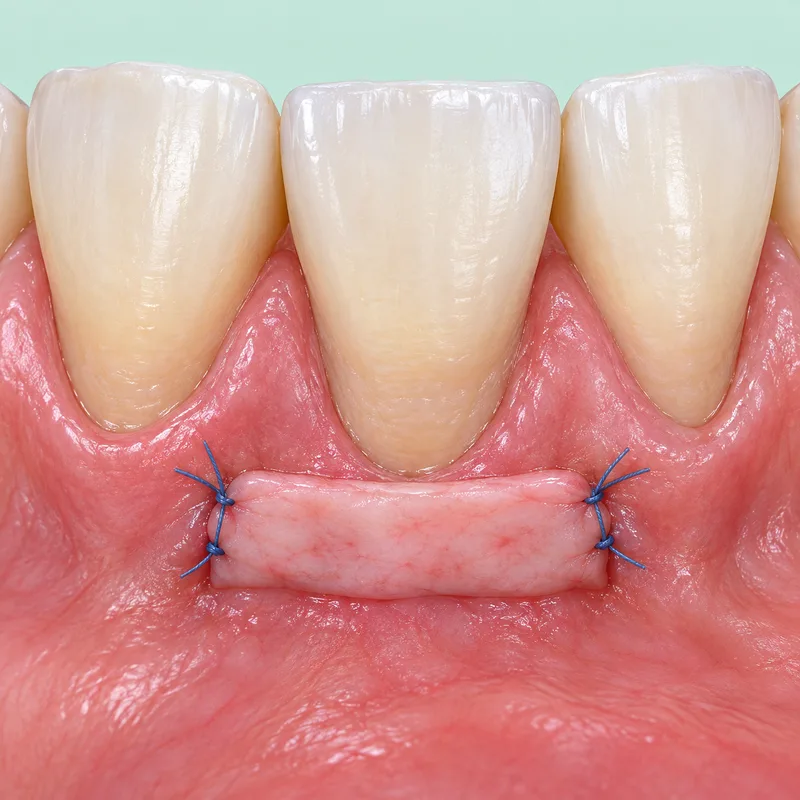
After open-flap or regenerative surgery, follow the surgeon’s site-specific cleaning plan while stitches are present and attend the planned review. If the surgeon advises a temporary pause in direct brushing, it applies only to the treated site; follow the surgeon’s instructions for medicines and rinses. If bleeding does not stop after advised firm pressure, contact a dental or urgent-care service promptly.
Sources (2)
Discussing periodontal grafting in Gurugram
Dr. Supreet’s Dental & Implant Centre is at 395 P, Sector 39, near Medanta Hospital, Gurugram (Gurgaon), Haryana 122001. Bring earlier periodontal charts and images if available. Ask whether initial treatment has been reassessed, what shape and depth the defect has, what material is proposed and what result is realistic. View the Sector 39 clinic location or contact the clinic; call or WhatsApp +91 9650298009.
Guided tissue regeneration for selected natural-tooth defects
Guided tissue regeneration (GTR) uses a barrier membrane, often with other materials, to help recover some supporting bone and tissue around a natural tooth in a selected periodontal defect. Complete restoration is not guaranteed. It differs from guided bone regeneration to build an implant-supporting ridge. For suitable residual stage III periodontitis defects—a clinical disease-severity category—the European guideline recommends regenerative surgery for remaining deep gum pockets with an intrabony (within-bone) defect at least 3 mm deep after initial treatment. This criterion does not make every site suitable or surgery automatic.
Sources (2)
Material and wound care for the planned GTR route
When a barrier-membrane regenerative route is selected for a suitable within-bone periodontal defect, the gum may be lifted and the defect cleaned before graft granules, a membrane or another regenerative material is placed. Ask what is proposed and whether it may be animal-derived; complete bone fill is not assured. After open-flap or regenerative surgery, follow the surgeon’s operated-site cleaning plan while stitches are present and attend review. A temporary pause in direct brushing applies only to the treated site; rinses and medicines are individual. If bleeding does not stop after the advised firm pressure, contact a dental or urgent-care service promptly.