Tilted Dental Implants in Gurugram
In a selected fixed full-arch replacement—fixed replacement teeth across one whole jaw—tilting posterior implants may shorten the cantilever, the part of the replacement teeth that extends past implant support. The cited example comes from a small study of selected upper-jaw cases with early bite-loading, when replacement teeth are used to bite soon after placement. This is a study-specific example, not a routine clinic protocol; anatomy and restorative planning constrain placement, and it does not establish a benefit for tilting a single implant. Dr. Supreet Kaur Sawhney, MDS, is a Senior Consultant – Oral & Maxillofacial Surgeon and Senior Implantologist with 20+ years of experience. She can assess the jaw, remaining teeth and proposed restoration with you.
Sources
Plan the whole arch with Dr. Supreet
For fixed replacement teeth across one whole jaw, the plan depends on how implants are distributed and how the replacement fits—not simply the implant count. Planning can include bone anatomy, room for the replacement teeth, lip support, smile line, opposing teeth, the cantilever (the part of the replacement teeth extending past implant support) and access for cleaning. Before remaining teeth are removed for a full-arch plan, their potential for preservation should also be considered.
Sources
The 2018 International Team for Implantology (ITI) consensus recommends at least four appropriately distributed implants for a one-piece set of fixed replacement teeth across one whole jaw. This recommendation is limited to that design; it is not a universal four-implant prescription. The consensus also notes that grouped observational comparisons and differing configurations do not establish that four and six implants are equivalent or predict an individual's result.
Sources
For a clinic appointment, visit Dr. Supreet's Dental & Implant Centre, 395 P, Sector 39, near Medanta Hospital, Gurugram (Gurgaon), Haryana 122001. View the Sector 39 clinic location, other consultation locations, or contact the clinic. Call or WhatsApp +91 9650298009 to ask about an appointment.
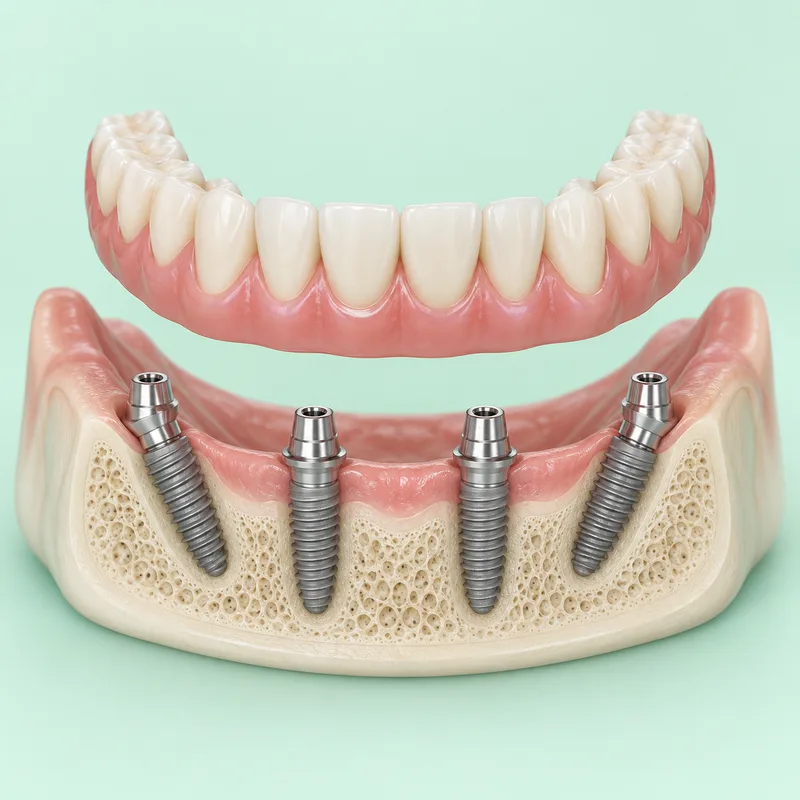
What tilting changes in the restoration
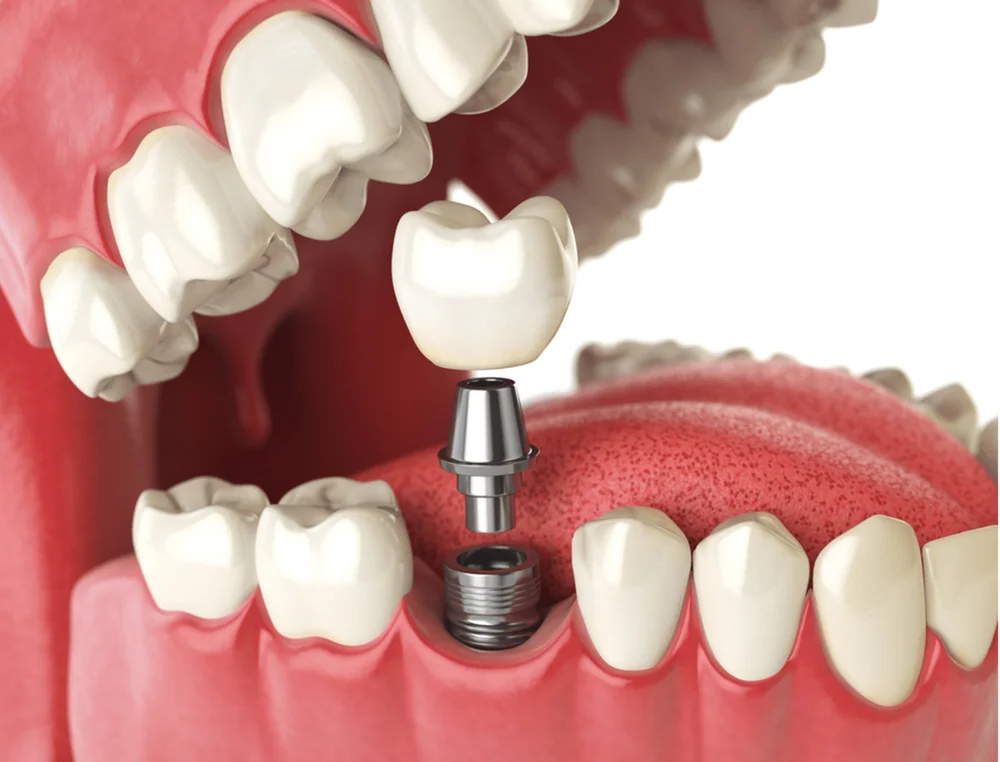
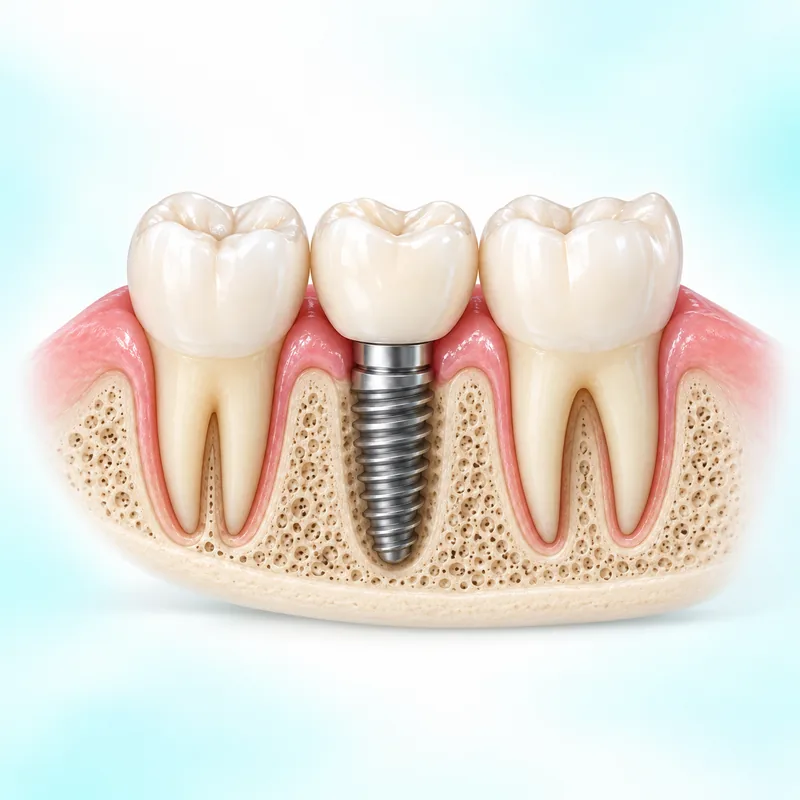
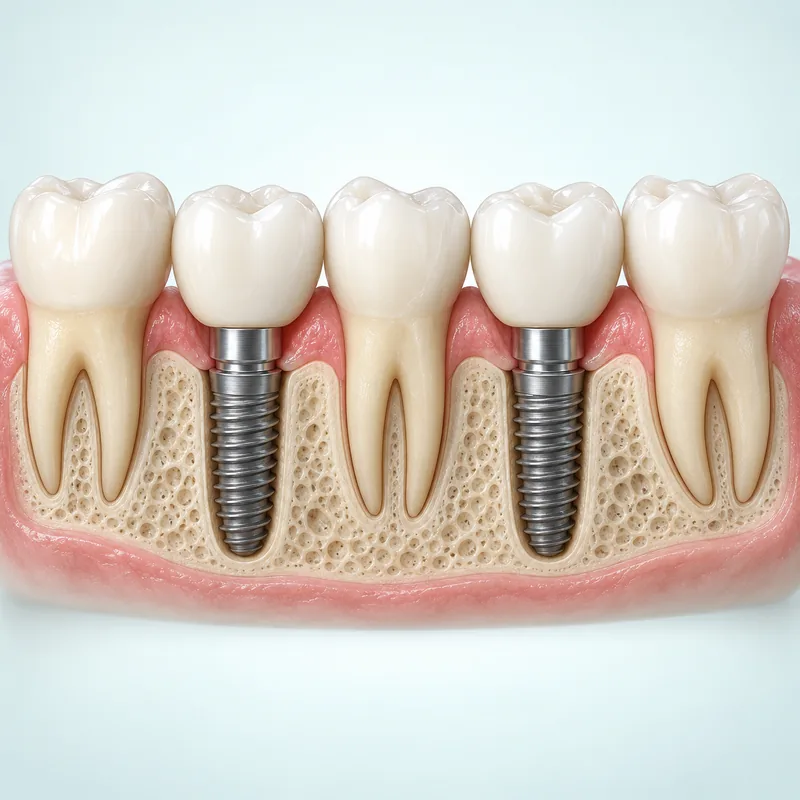
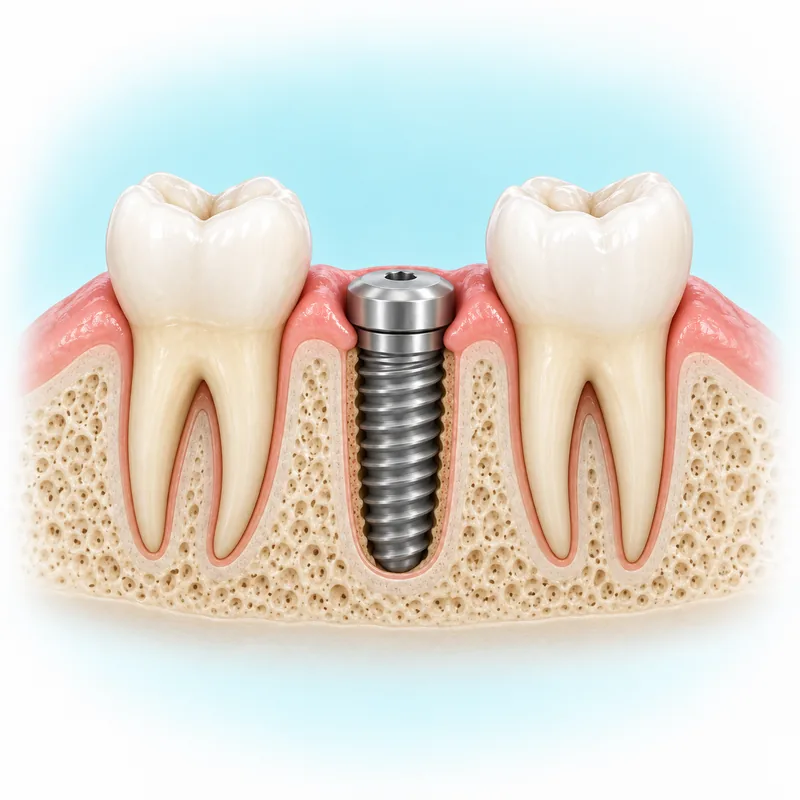
An implant-supported full-arch replacement combines implants in the jawbone, connecting parts and fixed replacement teeth. In selected plans, the back implants may be tilted to shorten the cantilever—the part of the replacement teeth extending past implant support. Angled connectors can redirect the screw-access opening in some systems, but this is specific to the device and case. Anatomy and the restorative plan constrain placement; these features do not establish a standard technique or outcome for every whole-jaw replacement.
Sources (2)
A complete denture is a non-implant option for replacing a whole jaw without teeth. For complete tooth-loss care using implants, fixed replacement teeth and a removable implant-supported denture are options to discuss according to anatomy, clinical needs and patient preferences; a 2018 International Team for Implantology (ITI) patient-outcomes consensus addresses this choice. If some natural teeth remain, their condition and potential for preservation belong in the discussion rather than assuming extraction is required.
Sources (3)
- American Academy of Periodontology: Full-Mouth Dental Implants
- International Team for Implantology: Patient-Reported Outcome Measures of Edentulous Patients Restored with Implant-Supported Removable and Fixed Prostheses
- International Team for Implantology: Number of Implants Placed for Complete-Arch Fixed Prostheses
Placement, healing and care
A conventional placement procedure prepares a site in the jawbone and inserts the implant under local anaesthesia (numbing the area); other approaches and anaesthetic plans are possible. This is not a personal treatment plan. General health, medicines and smoking are relevant to candidacy and healing. Soreness, swelling, bruising or minor bleeding can occur after surgery and recovery varies. Risks depend on site and procedure and can include injury to nearby structures; infection or failure to integrate with bone can lead to implant loss.
Sources (4)
- Guy's and St Thomas NHS Foundation Trust: Dental Implants: Having a Dental Implant
- US Food and Drug Administration: Dental Implants: What You Should Know
- Guy’s and St Thomas’ NHS Foundation Trust: Dental Implants: Overview
- Guy’s and St Thomas’ NHS Foundation Trust: Dental Implants: After Having a Dental Implant
After placement, follow the surgical team's cleaning instructions for the healing stage, keep the implant and restoration under regular professional care, and report pain or a feeling of looseness promptly. Worsening swelling or discomfort also needs contact with the treating team. Bleeding that does not stop after surgery needs urgent assessment; if it remains uncontrolled, seek appropriate local emergency care.
Sources (3)
The dental implant consultation guide explains broader implant choices. The single-tooth implant guide answers a one-gap question, while the full-arch implant guide covers the wider fixed-versus-removable restoration decision.