Root-Coverage Surgery in Gurugram
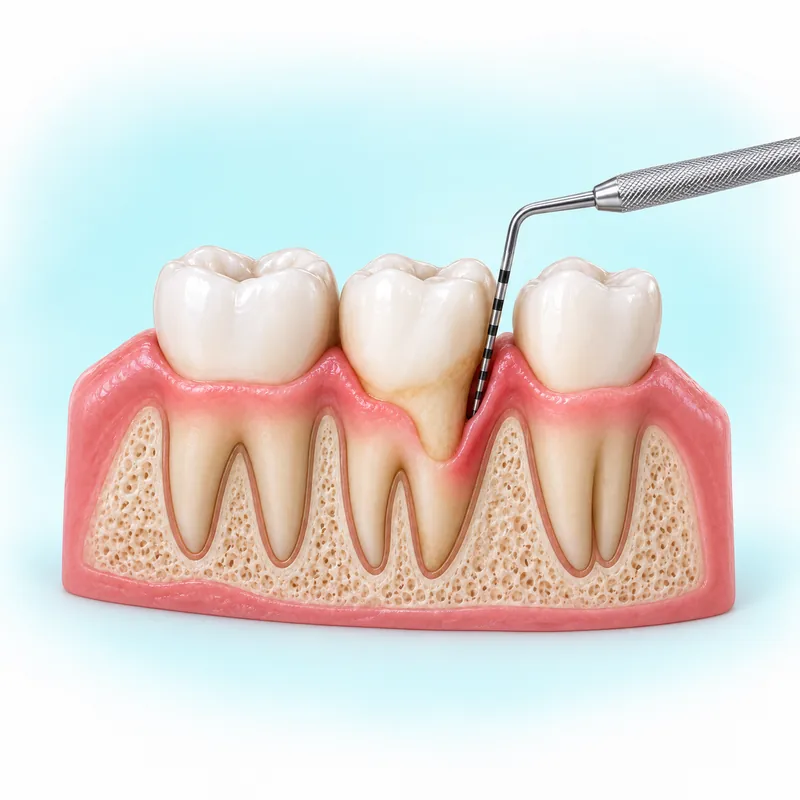
When gum recession exposes a natural-tooth root, root-coverage surgery may be discussed to reduce sensitivity or improve appearance in selected cases. Complete coverage cannot be promised: tooth position and supporting attachment (the gum support attached around the tooth) affect what may be achievable. Dr. Supreet Kaur Sawhney, MDS, is a Senior Consultant – Oral & Maxillofacial Surgeon and Senior Implantologist with 20+ years of experience. Her consultation can connect your goal—comfort, appearance or both—to the specific tooth and its gum support.
Sources (2)
What the recession classification means
RT1, RT2 and RT3 are natural-tooth recession categories based on loss of supporting attachment between neighbouring teeth. The classification helps organise assessment but does not, by itself, predict complete root coverage. A clinician also considers brushing trauma, gum disease, tissue thickness and tooth position; more than one cause may be present. Other causes of sensitivity need to be considered before attributing it to an exposed root.
Sources (2)
Stable recession can sometimes be monitored rather than treated immediately, depending on assessment and symptoms. If surgery is considered, the aim and expected limit should be clear: reducing recession-related sensitivity and improving appearance are possible goals in selected cases, not assured outcomes. Patient satisfaction with appearance may differ from a clinical measurement of root coverage; tissue colour and how tissue blends with neighbouring gum can matter too. The eventual tissue appearance develops over weeks to months and varies by individual.
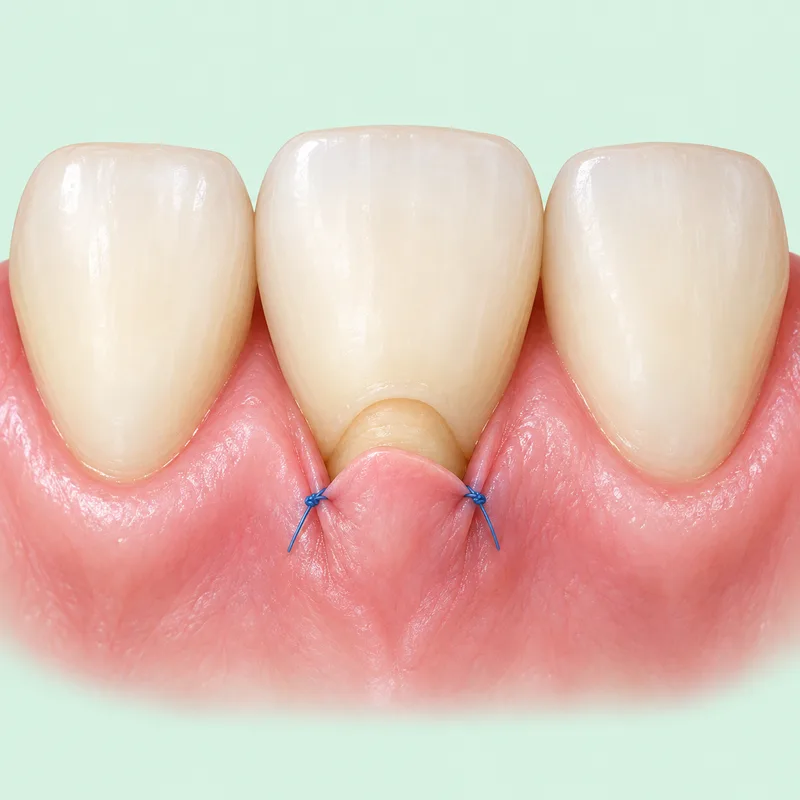
When a graft may be part of the operation
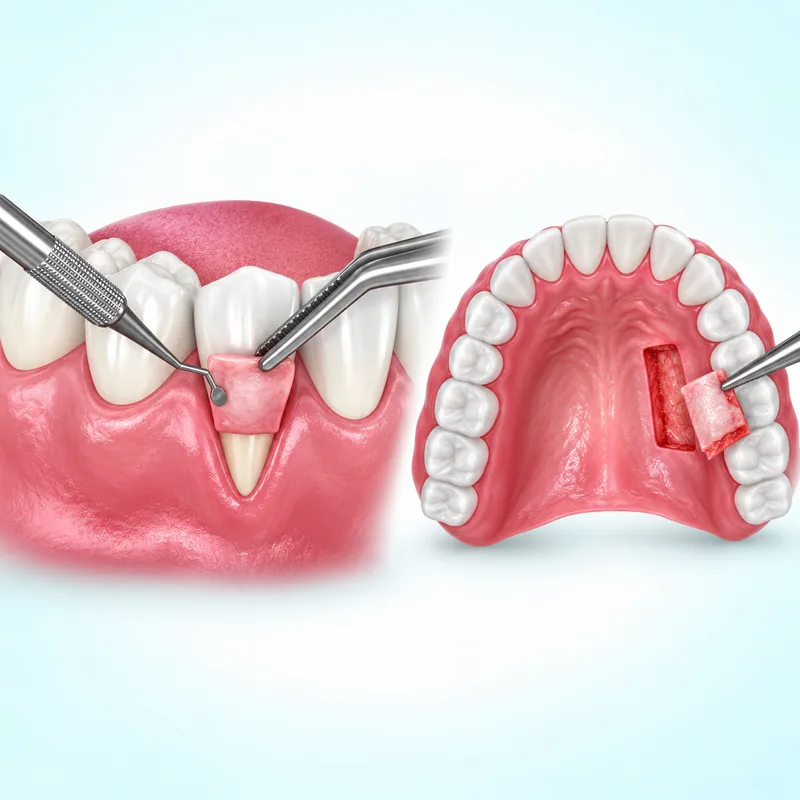
Root-coverage surgery can be discussed with or without an added connective-tissue graft, depending on the case. Adding a graft may improve stability of coverage, but taking tissue from the palate (roof of the mouth) creates a separate healing area and may add pain, bleeding, operating time, cost or a colour mismatch. A graft is not required for every operation and does not guarantee success.
Sources
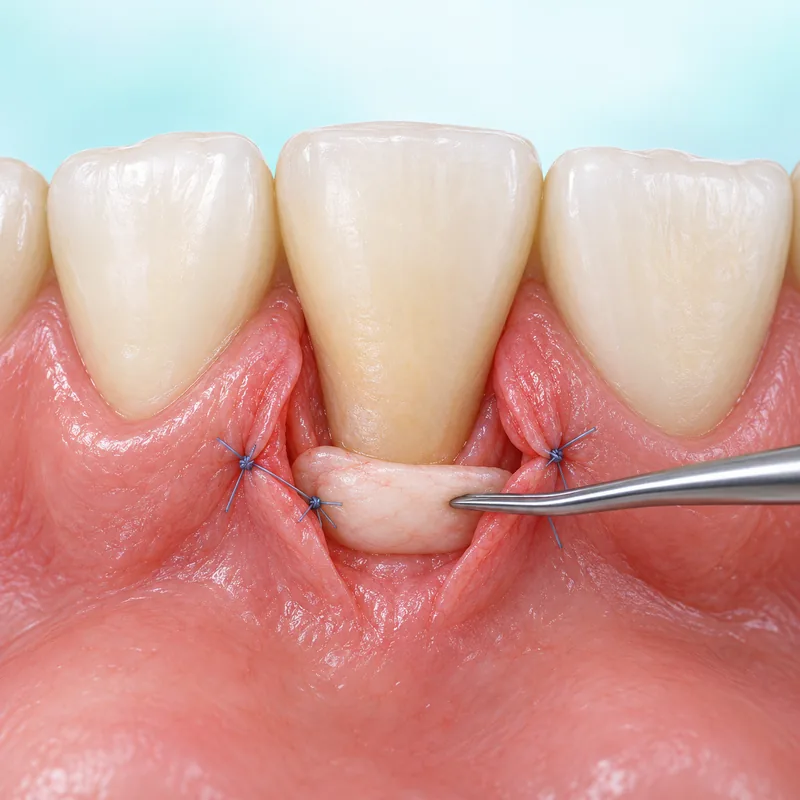
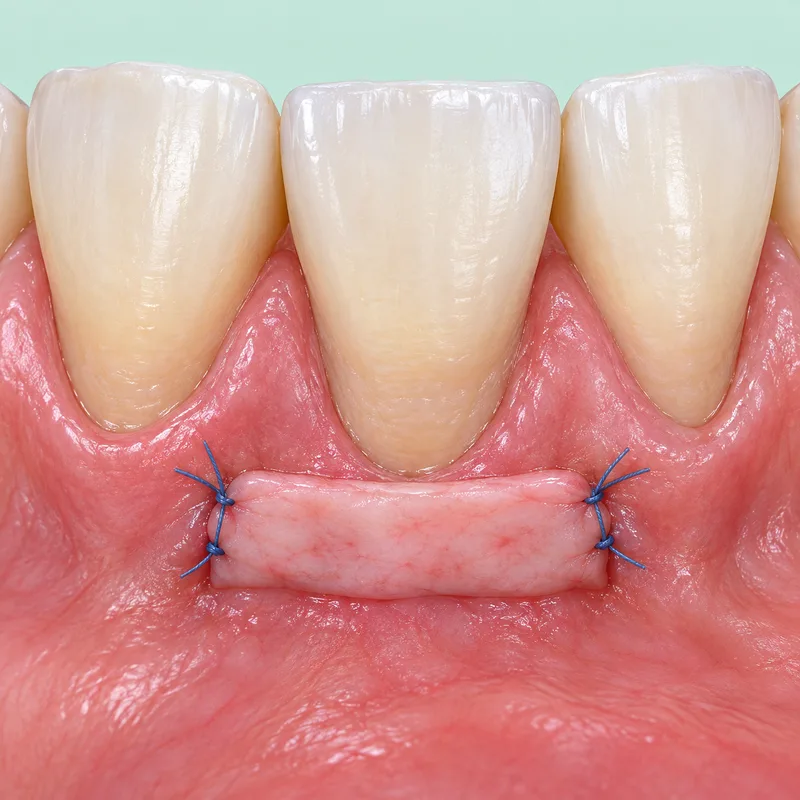
A general operation outline includes local anaesthetic (medicine that numbs the area), preparing the gum that receives the graft, positioning tissue and securing it with stitches. Technique depends on the site and plan. Grafting can cause bleeding, infection, altered appearance or the need for further surgery. If a graft is used, protect the area during early healing: do not pull the lip or cheek to inspect it, avoid brushing the surgical site until advised, and follow the treating team’s food and cleaning plan. After healing, gentle effective brushing and ongoing maintenance help protect the treated tissue. General gum-graft recovery averages about one to two weeks and may take longer across several sites; this is not a personal guarantee or a measure of full tissue maturation.
Sources (3)
Contact the treating team for pain that worsens or does not improve as expected, fever, pus or concern that graft tissue has been lost. Bleeding that does not stop after firm pressure needs prompt dental or urgent-care contact. Follow the treating service’s own pressure and emergency instructions; if urgent bleeding or another urgent concern occurs while the team is unavailable, seek local urgent care.
Sources (3)
For root-coverage surgery in Gurugram, Dr. Supreet consults at Dr. Supreet's Dental & Implant Centre, 395 P, Sector 39, near Medanta Hospital, Gurugram (Gurgaon), Haryana 122001. See the Sector 39 clinic location or contact the clinic; call or WhatsApp +91 9650298009. The gum grafting and gum surgery guide covers wider recession decisions. Connective-tissue grafting discusses one graft option.
Root coverage without a graft
A coronally advanced flap (CAF) repositions nearby gum toward the tooth crown for root coverage. Gum phenotype means the tissue’s thickness and characteristics. EFP expert consensus describes an ungrafted flap for selected upper-jaw natural-tooth recessions when the tissue and root position permit; lower-jaw or thin-tissue sites often need a graft or substitute. This is a selected anatomy-based option, not a guarantee of coverage or an implant procedure.
Sources
Tissue thickness can affect the graft discussion
An EFP summary of one trial in multiple adjacent upper-front natural-tooth recessions reported better complete coverage from adding connective tissue at thin-gum sites; thick-gum sites did not show the same gain. The result is limited to that trial’s sites and tissue-thickness groups and does not establish the best route for other teeth or implants.
Gum repositioning without a graft: one upper-tooth study
A separate trial compared CAF alone with CAF plus leucocyte-platelet-rich fibrin (L-PRF), a blood-derived fibrin material—not a connective-tissue graft. It enrolled 19 selected adults with 70 RT1 upper-jaw recession sites; nine patients with 28 sites received CAF alone. Active disease and several healing risks were excluded. For the ungrafted route, the area was numbed, a gum flap was lifted and moved toward the crown, then secured with stitches over the exposed root. The cuts and stitches can vary; this is a study example, not a routine protocol for every recession site.
Aftercare in that upper-tooth study
In the selected RT1 upper-jaw CAF-alone pathway, the operated area was protected from brushing initially, a prescribed rinse was used, and participants returned for stitch removal at about two weeks before restarting gentle cleaning as instructed. Pain and swelling can occur; the study monitored pain and healing, and individual root coverage was not assured. The study’s regimen and low average pain are not personal predictions or universal prescriptions; your treating periodontist sets cleaning, rinse, medicine and recall instructions. These details do not describe graft-assisted or implant surgery.
Report bleeding and protect the result after healing
After CAF on a natural tooth, follow the surgeon’s written wound-care plan. If bleeding continues despite the advised pressure with clean gauze, contact the treating dentist. Follow your surgeon’s instructions for how to apply pressure and for how long. After healing, the gum margin can move back over time, and traumatic brushing is associated with recurrence. Use the gentle cleaning method and follow-up recommended by your team; recurrence is a possibility, not a personal forecast.