Laser Soft-Tissue Surgery in Gurugram
A laser may be considered for a selected mouth lesion, gum operation or tissue-band release, but the diagnosis and intended operation come first. At a consultation in Gurugram, Dr. Supreet Kaur Sawhney can discuss what tissue needs treatment, whether a sample is needed and which instrument fits that plan. Laser is a tool, not one standard operation or a guarantee of a better result.
Sources (3)
Why the tissue and technique matter
Laser effects depend on wavelength—the type of light—energy, technique and the tissue being treated. Dental lasers can modify or remove selected mouth tissues, including diseased gums. This general application does not establish the need for surgery, a numbing plan or the outcome of a particular operation.
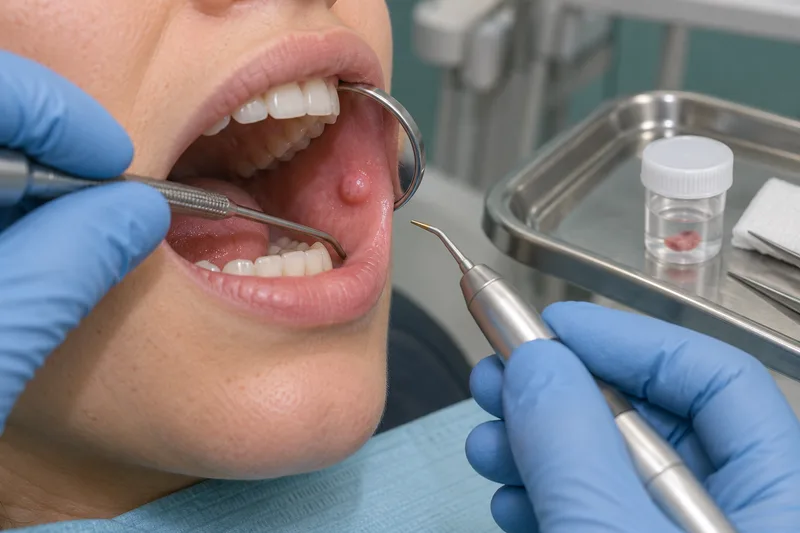
An oral lesion needs a diagnosis and sample plan
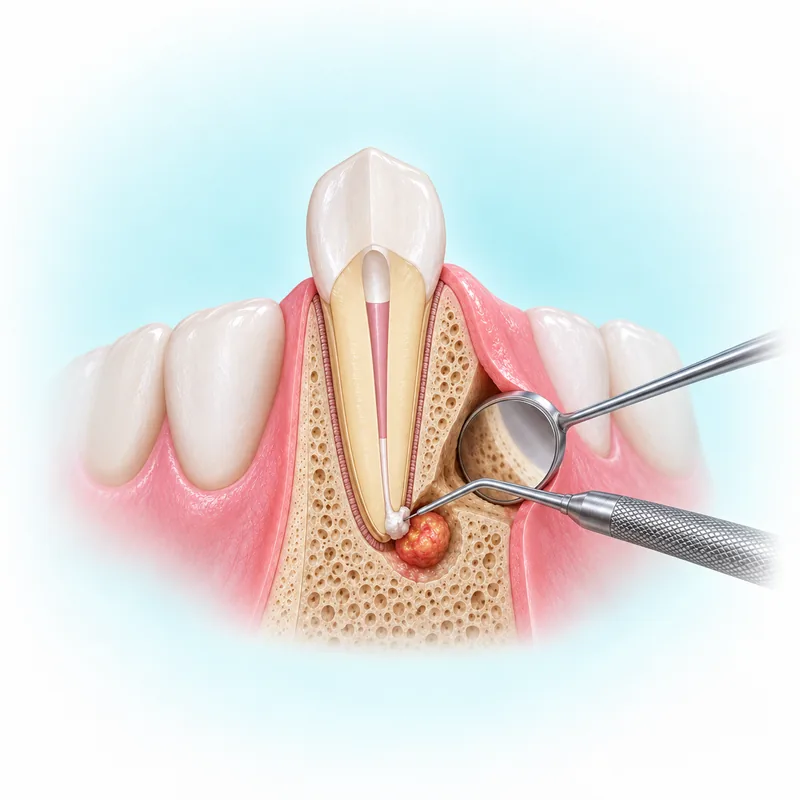
For a mouth lesion selected for laser surgery, the surgeon may vaporize the affected tissue or cut the lesion out. Tissue that is cut out is normally examined under a microscope; vaporization destroys tissue in place and requires a different sample plan when diagnosis matters. Some lesion pathways concern suspected precancer or cancer, so discuss diagnosis, sampling, numbing and the extent of removal before choosing the operation. The oral biopsy guide explains tissue sampling and the result pathway. This lesion operation does not set steps for gum contouring or a frenum release.
Care after oral-lesion laser excision
After laser excision of a mouth lesion, avoid vigorous rinsing on the day of surgery, clean teeth carefully near the wound and attend the arranged healing and biopsy-result review. Follow the operating surgeon’s individual instructions. Bleeding that continues despite firm pressure over this wound needs urgent medical or surgical assessment through local care. These are lesion-wound instructions, not a timetable or bleeding threshold for every laser procedure.
Periodontal laser treatment follows a gum diagnosis
Periodontitis is gum disease involving loss of the tissue attachment and bone supporting teeth. In a selected periodontal laser pathway, a periodontist may use a small laser beneath the gums to treat diseased tissue; selection depends on disease stage and the person’s health. Numbing, incisions, stitches and recovery vary by the actual procedure. After periodontal treatment, follow its cleaning and medicine plan, maintain oral hygiene and attend regular dental review. Contact the periodontist for bleeding that will not stop, severe or persistent pain, pain that worsens after several days, fever or pus at the site. These are general periodontal warnings, not a laser-specific complication rate.
Sources (2)
Cosmetic excess-gum removal and reshaping
For selected uneven or overly visible gum lines, assessment includes smile goals, oral health, gum-to-tooth proportions and bone level; decay or gum disease needs attention before cosmetic contouring. In the combined tissue-removal and reshaping operation, excess gum may be removed with a scalpel or laser, and some patients also need limited bone adjustment. The described route uses local numbing and can leave mild soreness when numbness wears off. If sedation is chosen, arrange an escort and rest afterward. This is not isolated reshaping without removal or evidence that laser heals better.
Care after that combined cosmetic-contouring route
After cosmetic contouring that removes excess tissue, follow the clinician’s cleaning and medicine instructions, choose soft foods early in healing and avoid strenuous activity while the gum heals. The extent of treatment and individual healing affect recovery. Contact the dentist or periodontist for severe pain despite medication, bleeding that does not stop, fever or pus near the wound. These instructions belong to that combined contouring route, whether scalpel or laser is used; they do not set care for every soft-tissue operation.
Laser tongue-tie release and tongue function
A frenum is a tissue band connecting the tongue or lip to nearby tissue. For tongue restriction, assessment of function comes first; observation, feeding support or speech therapy may be appropriate, and the release instrument is a separate choice. For an infant with functionally troublesome tongue-tie, scissors are conventional; laser is an option still being compared and may take longer. After an infant tongue release, the care team may recommend feeding immediately and follow-up to assess feeding and healing. Routine wound stretching lacks evidence of benefit. Contact the child’s clinician for bleeding, infection signs or new feeding difficulty. Infant tongue instructions do not apply to adult upper-lip surgery; the frenectomy guide discusses these separate age and site decisions.
Sources (3)
Safety when a child is treated with a laser
For pediatric laser treatment, eye protection must match the laser wavelength for the patient, team and observers. Plume evacuation, infection-control precautions and device-specific training are needed. Heat, eye and fire hazards require safeguards; this policy provides no individual risk rate or guarantee of benefit.
Discuss the actual operation in Gurugram
The parent oral and maxillofacial surgery guide covers broader specialist assessment. Ask Dr. Supreet which diagnosis is being treated, what alternatives are available, whether tissue will be examined, and which written recovery and contact instructions apply to your operation. Dr. Supreet’s Dental & Implant Centre is at 395 P, Sector 39, near Medanta Hospital, Gurugram (Gurgaon), Haryana 122001. Contact the clinic or call +91 9650298009.