Autogenous Bone Grafting in Gurugram
An autogenous bone graft uses bone taken from the same patient. For an implant-site graft, the key choice is whether using your own bone fits the amount and shape needed, while weighing the added surgery and recovery at the donor site. The clinician should explain the proposed donor location and what the separate operation involves for your case. Dr. Supreet Kaur Sawhney, MDS, is a Senior Consultant – Oral & Maxillofacial Surgeon and Senior Implantologist with 20+ years of experience. In Gurugram, she can discuss the site, donor burden and other restoration options together.
Sources (2)
What “your own bone” means
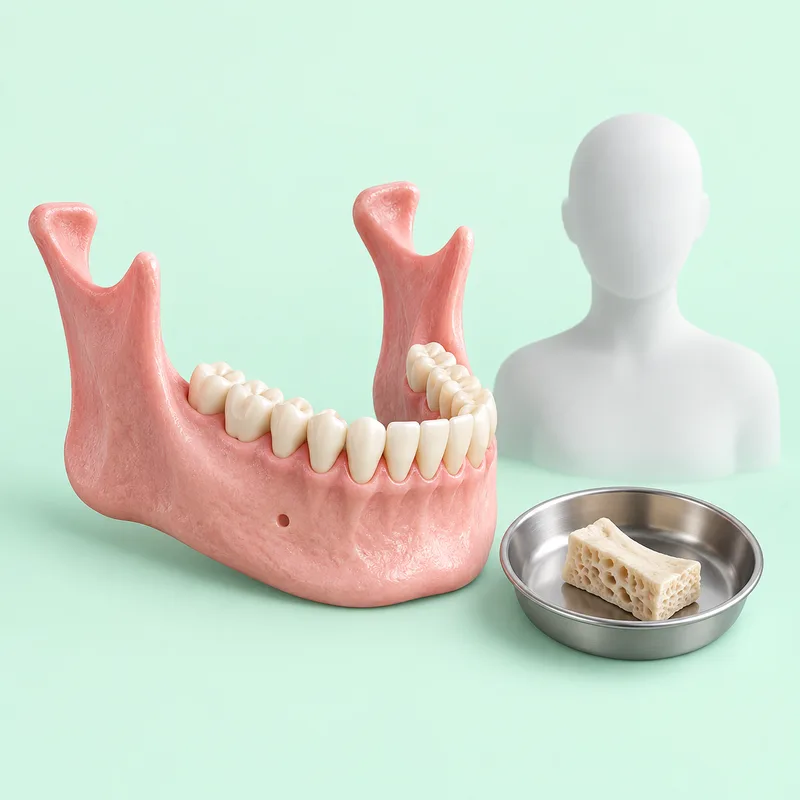
A graft adds material where the jawbone is deficient to support repair. In an autogenous graft, the material comes from the same patient; another operation is needed to obtain it. The place where bone is taken (the donor area) and the amount are case-specific. This operation can add pain, bruising and recovery needs, depending on location and amount. Ask where bone would be taken and what care that area needs before choosing this source.
Sources (2)
Graft source and graft form are separate choices. Material may come from the patient, a human donor, an animal source or a synthetic substitute, and some grafts combine sources. The source name alone does not establish the best choice for your defect, and results cannot be assumed to be the same for every material. Ask which graft and membrane products are planned, where each comes from and how your preferences affect the choice; a membrane is a thin protective sheet or barrier.
Procedure stages and recovery
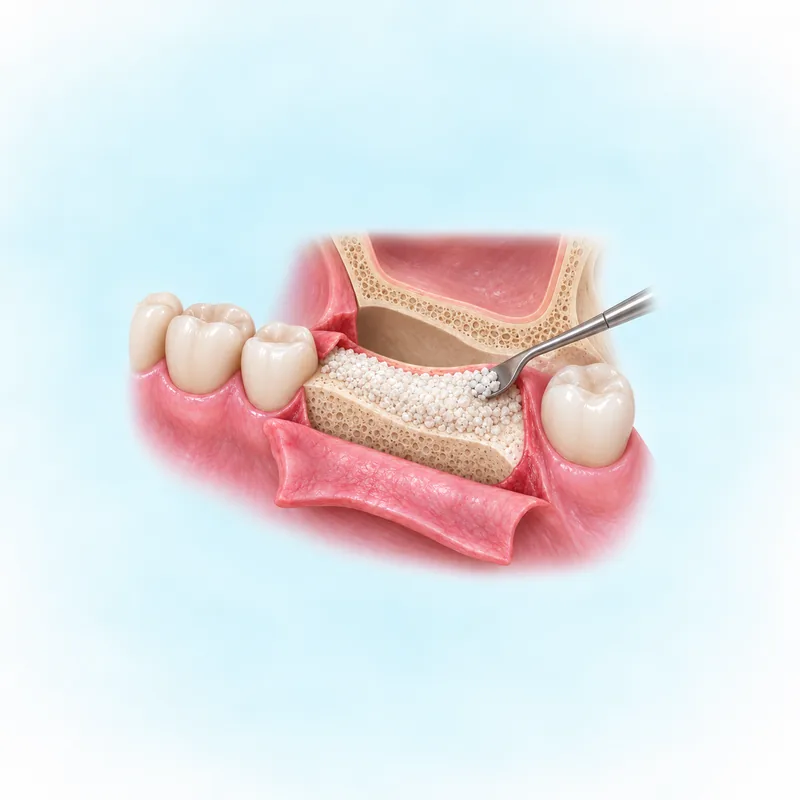
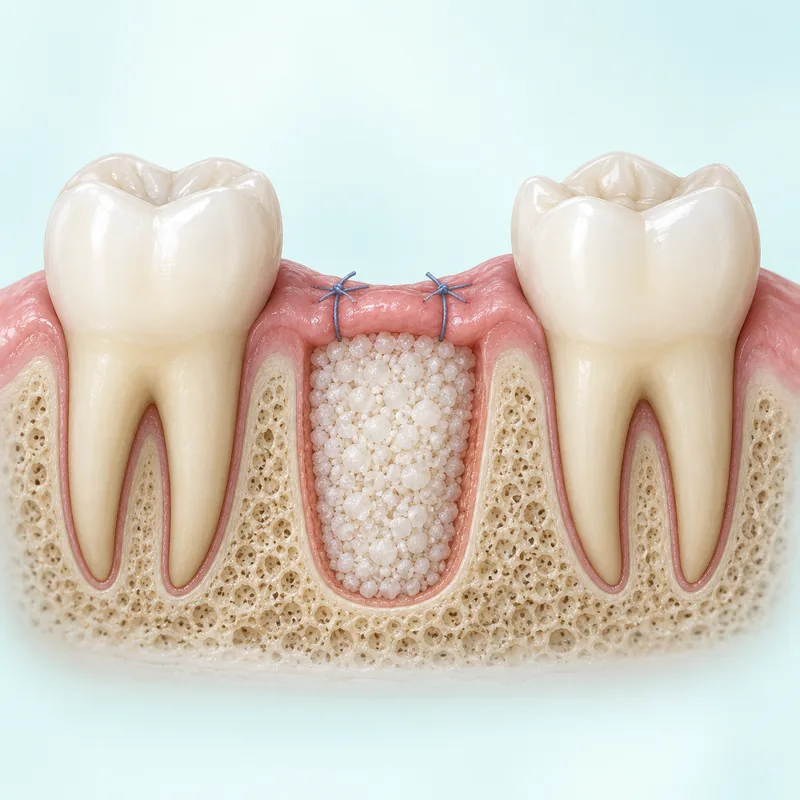
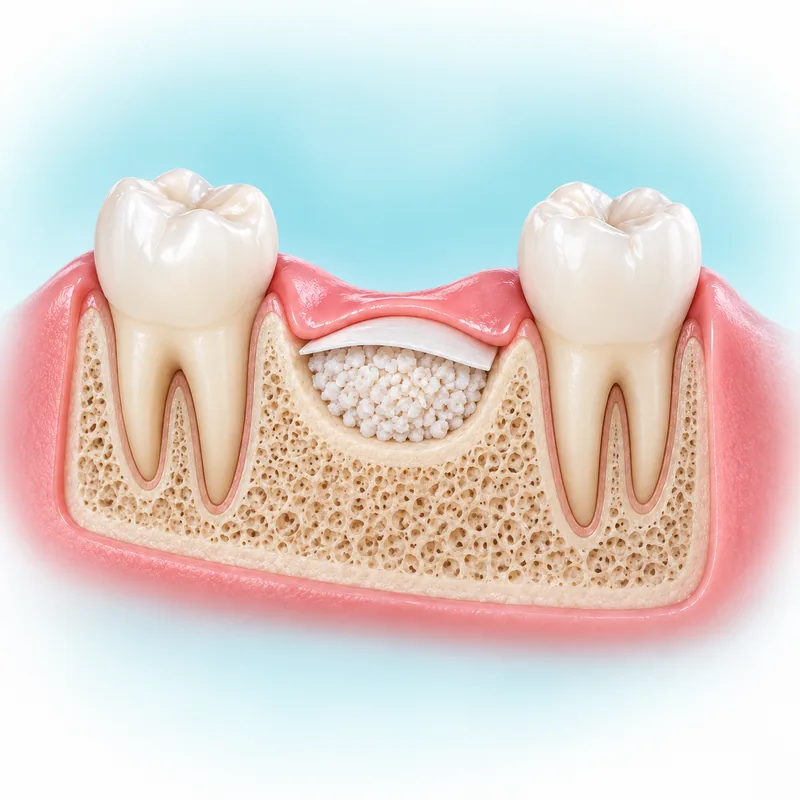
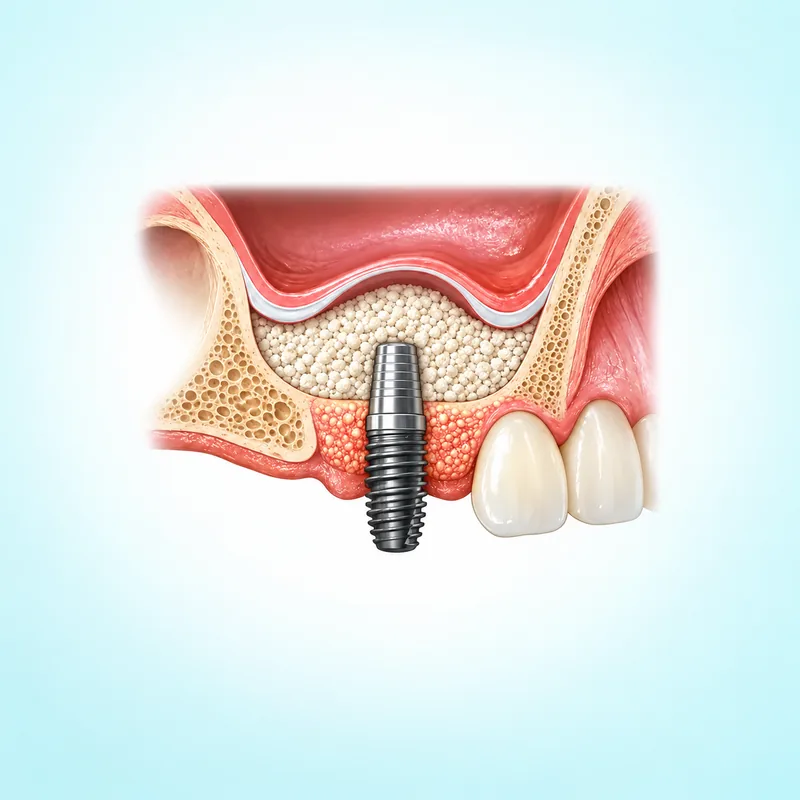
A general graft outline may involve local anaesthetic (medicine that numbs the area), preparing the gum, placing graft material and sometimes covering it with a membrane (a thin protective sheet or barrier) before stitches. These general steps and the area where bone is taken depend on anatomy and the plan. Grafting and implant placement may be considered together or at separate stages. Health conditions, medicines and smoking should be reviewed before surgery.
Sources (3)
Follow the instructions for both the grafted area and any donor area; avoid disturbing the wound and use soft foods for a few days if advised. Pain, bruising, swelling or infection may occur, and risks differ between the grafted and donor areas. Graft material becoming uncovered (exposure) is also a possible complication. A healed graft may still leave too little bone for the intended implant, so further bone grafting may be considered. Contact the treating team if pain, swelling, or drainage (fluid or pus from the wound) worsens; these symptoms require assessment but do not alone prove the graft failed.
Sources (3)
For an implant-site consultation in Gurugram, Dr. Supreet sees patients at Dr. Supreet’s Dental & Implant Centre, 395 P, Sector 39, near Medanta Hospital, Gurugram (Gurgaon), Haryana 122001. Visit the Sector 39 clinic, contact the clinic, or call or WhatsApp +91 9650298009. The bone grafting and sinus lift guide explains broader site-development planning.
Compare the donor procedure with other plans
Ask where bone would be taken, why own bone is being considered, what care each site needs, whether another graft source or a blend may suit the defect, and whether grafting and implant placement are planned together or separately. Depending on tooth support, bite and function, a bridge, denture or leaving the space unrestored may also be discussed instead of a graft-dependent implant plan.