Keratinized-Tissue Augmentation in Gurugram
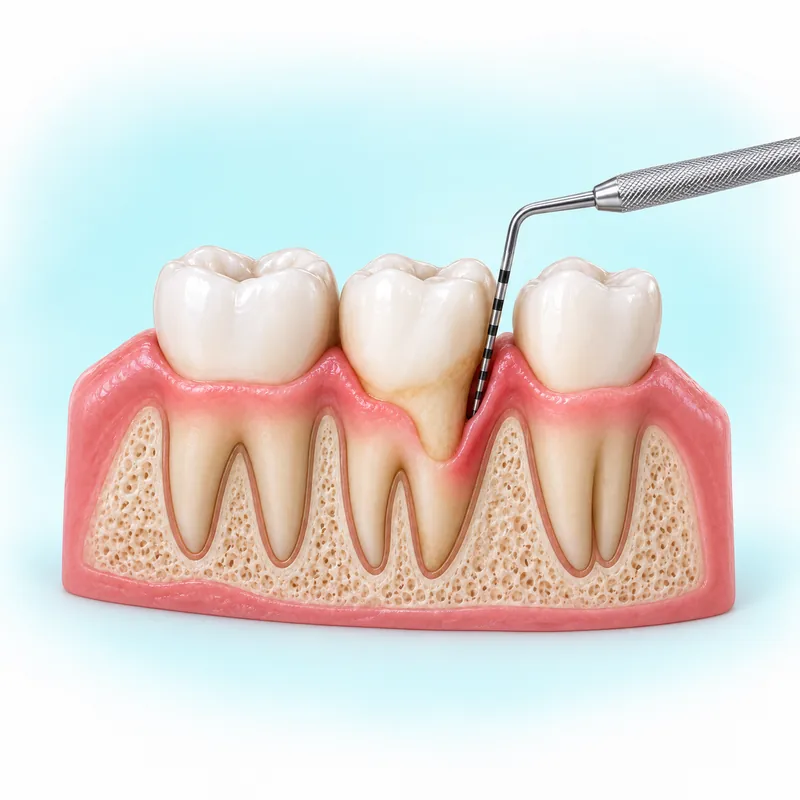
Keratinized tissue is the band of firmer, resilient gum beside a natural tooth or dental implant. Augmentation aims to widen that band when it is reduced; a narrow band alone does not mean surgery is needed. In Gurugram, Dr. Supreet Kaur Sawhney can assess the site and the cleaning or comfort concern before discussing a graft, a selected flap or monitoring. The tooth or implant site and treatment goal determine the options.
Sources (4)
Width, thickness and root coverage are different goals
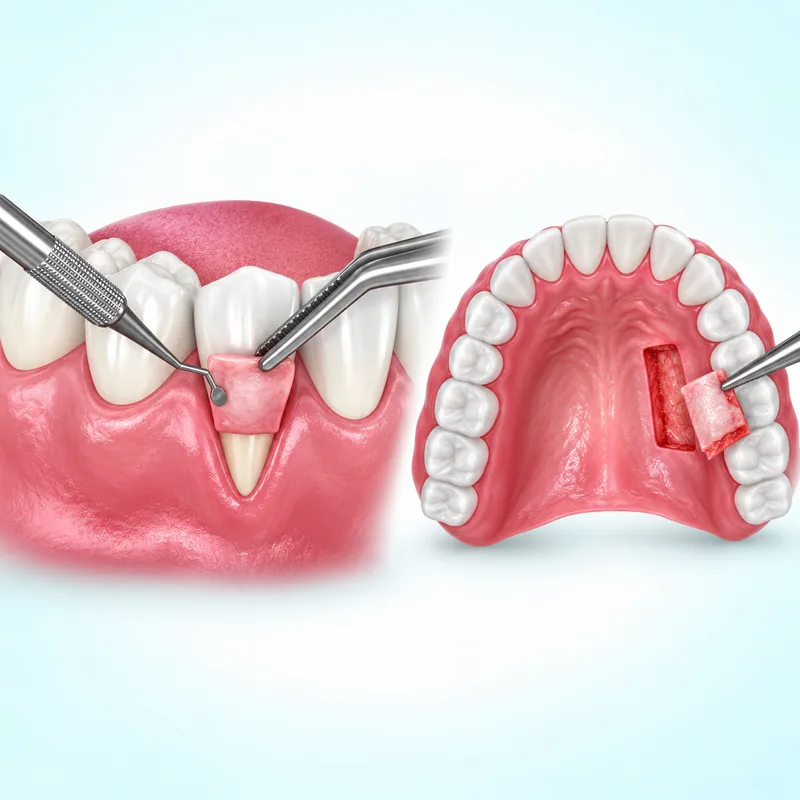
A free gingival graft transfers a thin surface layer from the palate—the roof of the mouth—to increase resilient gum around a natural tooth. Its main aim is tissue width, not covering an exposed root; any root coverage is unpredictable. A separate root-coverage procedure may be considered when appropriate. Around a healthy implant, increasing width and adding tissue thickness are also different objectives. The root-coverage guide explains the separate natural-tooth decision.
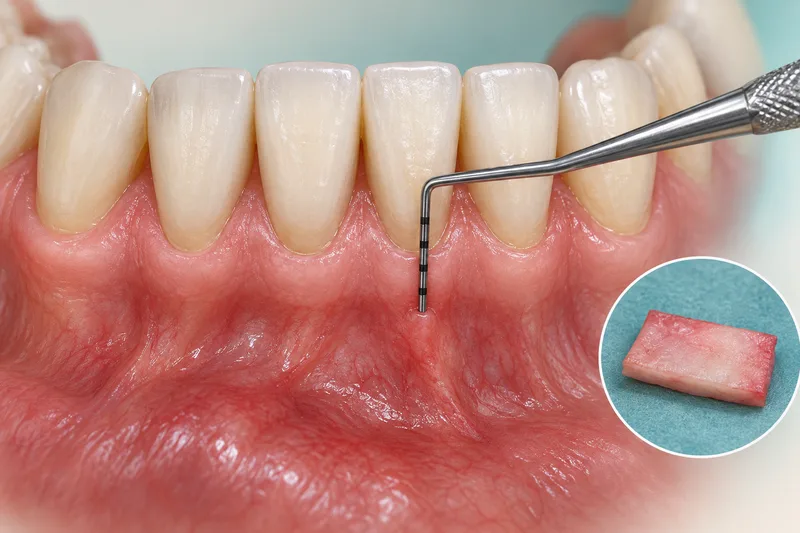
A selected natural-tooth free gum graft
For a natural-tooth graft, the plan considers brushing trauma, gum disease, tissue thickness and tooth position; several factors can coexist, and stable recession may sometimes be monitored. Graft surgery generally includes local numbing, preparing the recipient area, positioning the graft and securing it with stitches; exact technique varies. A free graft uses a thin surface layer from the palate to widen resilient gum. Bleeding, infection, altered appearance or further surgery are possible, not expected for everyone.
Natural-tooth graft care and warning signs
After a natural-tooth free graft, do not pull the lip or cheek to inspect the wound or disturb the graft or dressing. Avoid brushing the operated area until the team advises restarting, choose soft foods during early healing and follow the surgeon’s cleaning and review plan. After healing, gentle effective brushing and continuing dental care help protect the treated tissue. Contact the treating service for fever, pus or concern about graft loss. Pain that worsens or fails to improve as expected, or bleeding that persists despite advised firm pressure, also needs contact with the dental team. Pressure methods and contact arrangements follow your own service’s instructions; these natural-tooth graft instructions do not set care for an implant or ungrafted flap.
Sources (4)
A free graft at a healthy implant site
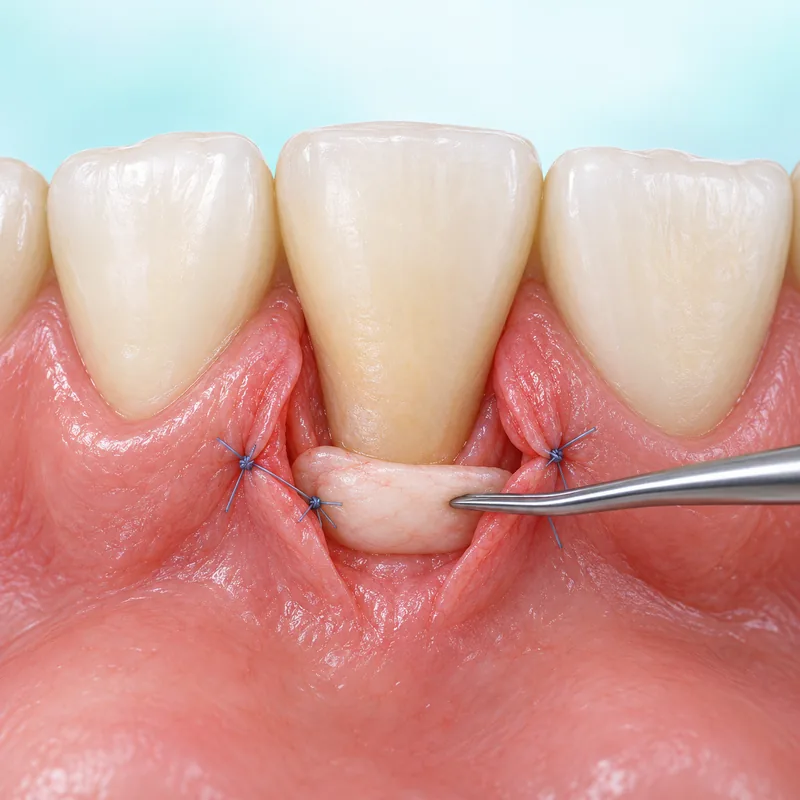
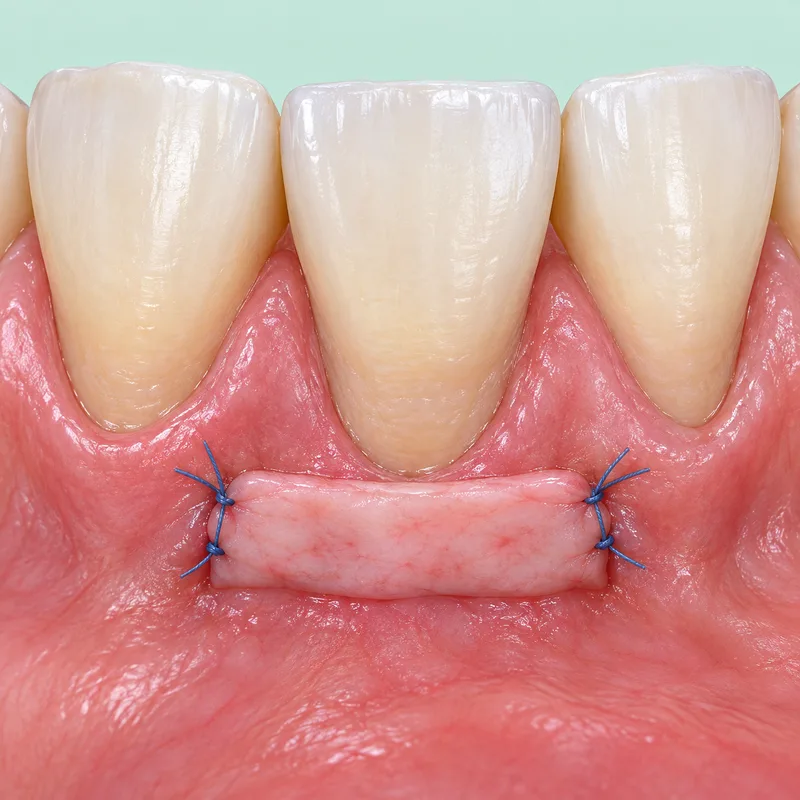
At a healthy implant in a less visible area with inadequate resilient gum, a free gingival graft may be considered when plaque control is difficult or brushing is uncomfortable; improvement is not assured. In a described implant-graft technique, the recipient bed—the area prepared to receive the graft—lies over the tissue covering the bone, and the graft is secured there. Movement can interfere with new blood supply and healing. The healed color and contour may be less suitable for a highly visible site; suitability is individual, not a blanket prohibition. This width-augmentation decision differs from treating active implant disease.
Sources (2)
Grafting around an implant before replacement teeth are fitted: one study
A small prospective study treated 12 selected patients with 19 healthy unloaded implant sites lacking resilient gum, excluding implant infection, active gum disease, malposition and important healing risks. At second-stage surgery, the clinician used local numbing, took a free gingival graft from the palate, stitched it to the prepared gum bed near the implant and placed a dressing. The team reviewed both graft and palate, removed dressing and stitches at an early visit and checked healing over subsequent weeks before the implant-restoration phase. Grafts shrank during the first three months, so initial size did not guarantee final width. No infection or graft failure in that small group does not prove those risks absent. These are study steps and visits, not a universal timetable or a personal outcome forecast.
Protecting a selected implant free graft
For a free gingival graft at a healthy implant, the graft can fail to heal into place or be lost; the intended tissue change is uncertain. General graft precautions include not pulling the lip or cheek back, protecting the site while eating, and not brushing the operated area until the team advises restarting; attend the healing review. The surgeon sets implant-site, palate, rinse and stitch instructions. Contact the dental team if bleeding continues despite firm pressure, or pain is not improving or becomes much worse about a week after surgery. For uncontrolled bleeding or an urgent concern when the team is unavailable, seek urgent local care. This is graft-specific advice, not the care plan for a flap without a graft.
A flap using existing gum at implant placement
A different small trial involved 20 healthy adults aged 20–50 with a narrow existing band of attached gum at premolar or molar implant sites. During concurrent one-stage implant placement, the surgeon moved available gum away from the crown direction around the new implant and held it with stitches or a stent, a support appliance that keeps tissue in position. This selected apically repositioned flap did not require a separate graft. It is not the default for an absent tissue band, inflamed implants or later-stage surgery, and neither tissue gain nor superiority of a stent is assured.
Aftercare when existing gum is repositioned around a new implant
After the selected flap at one-stage implant placement, the operated area may need temporary protection from direct brushing or other mechanical cleaning, with a planned review. Follow the team’s rinse, cleaning-restart and review instructions; trial drug regimens and cleaning intervals are not universal advice. If bleeding continues despite the pressure method the team advised, contact the treating dental or maxillofacial team and use its urgent contact arrangement outside clinic hours. This general dental-surgery contact action is not an apically repositioned-flap complication rate or a complete warning list.
Sources (2)
Discuss the site and goal with Dr. Supreet
The parent gum grafting and gum surgery guide covers broader gum concerns. Ask which goal matters at your site—tissue width, thickness, cleaning comfort or root coverage—and whether the plan uses a graft or existing gum. Dr. Supreet’s Dental & Implant Centre is at 395 P, Sector 39, near Medanta Hospital, Gurugram (Gurgaon), Haryana 122001. Contact the clinic or call +91 9650298009.