Frenectomy in Gurugram
A frenectomy removes a frenum (frenulum), the tissue band connecting a lip or tongue with nearby mouth tissue, and its attachment. A frenotomy instead makes a cut in that band. Whether either is appropriate depends on the specific functional or tissue problem, not appearance alone. Dr. Supreet Kaur Sawhney, MDS, is a Senior Consultant – Oral & Maxillofacial Surgeon and Senior Implantologist with more than 20 years of experience. A consultation in Gurugram can clarify what the attachment is affecting and which assessment or care pathway is relevant.
Sources
The reason for considering release matters
A visible upper-lip attachment by itself does not establish a need to release an infant’s frenulum. If an infant is having feeding difficulty, the actual feeding problem and other causes need assessment first; feeding support or observation may avoid surgery for some infants. Selected tongue releases may help some feeding problems, but longer-term benefit is uncertain and cannot be promised.
Sources
A gap between a child’s upper front teeth is another, separate question. Many gaps in baby teeth or during the transition to developing permanent teeth narrow as children grow. Assessment considers dental development and the cause of the gap; if a persistent gap needs orthodontic treatment (moving teeth with braces), any frenectomy is timed around that plan. Release alone is not guaranteed to close the gap or prevent it from returning.
Sources
In children with speech concerns attributed to tongue restriction, assessment of the actual difficulty making speech sounds by a speech-language professional can help establish whether the attachment is relevant. The cited speech and gum-traction evidence is pediatric; adults need individual assessment. Speech therapy may be part of care whether or not surgery is chosen; improvement after release is not assured. In a child, a frenum pulling on gum tissue may be considered separately when a gum problem persists after soft plaque buildup and swollen or irritated gum tissue are addressed.
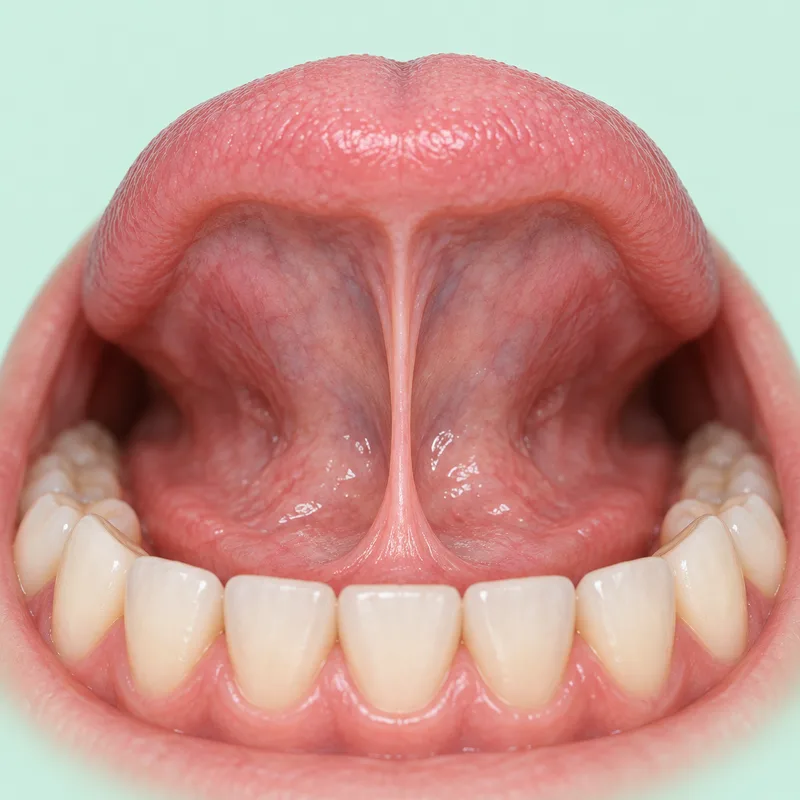
Procedure and recovery depend on the patient
The plan depends on the attachment, the patient’s age and the reason for treatment. Possible complications include bleeding, scarring, reattachment (the tissue joining back together), infection or altered sensation (changed feeling or numbness); risks vary. Follow the treating team’s care instructions. Older patients may need a soft diet and careful oral hygiene, but that advice should not be confused with infant feeding instructions. After an infant tongue-frenulum release, follow the treating team’s feeding and wound instructions; bleeding that does not settle with the advised pressure needs urgent clinical contact. Continued feeding difficulty calls for reassessment and feeding support. Infant tongue-frenotomy leaflets do not set aftercare for a larger lip procedure or for adults.
Sources (2)
Discussing frenectomy in Gurugram
Dr. Supreet’s Dental & Implant Centre is at 395 P, Sector 39, near Medanta Hospital, Gurugram (Gurgaon), Haryana 122001. Bring relevant dental or orthodontic notes. For a feeding concern, seek an appropriate feeding assessment; for speech concerns, discuss assessment of the actual speech pattern. Ask what function or tissue problem is being treated, what alternatives or referral input may help and what outcome cannot be predicted. View the Sector 39 clinic location or contact the clinic; call or WhatsApp +91 9650298009.
Choosing care before choosing an instrument
For tongue restriction, assessment comes before the instrument: observation, feeding support or speech therapy may be appropriate, and release is considered for the identified functional problem. A laser is one way of performing a selected frenectomy; it does not itself establish an indication or guarantee improvement. For children, it requires diagnosis, trained use and informed discussion of risks. A conventional lip or tongue frenectomy can also involve local numbing, a small incision and dissolving stitches; this is one hospital’s incisional procedure, not a laser protocol. After assessment, doing nothing may be a reasonable option for some patients.
Sources (3)
Tongue-tie treatment in infants
For an infant tongue frenotomy, scissors are the conventional instrument; laser is an option still being compared and may take longer. The treating team may recommend feeding immediately after release and follow-up to assess healing and feeding. Routine wound stretching has not shown benefit in the cited infant guidance. Contact the child’s clinician about bleeding, infection or new feeding difficulty. These instructions concern an infant tongue release and do not set care for an adult upper-lip procedure.
A selected adult upper-lip laser study
One study compared scalpel surgery with a 940-nm diode laser in 43 healthy nonsmoking adults aged 18–55 with an abnormal upper-lip frenum attachment. The laser arm used local infiltration numbing, secured the tissue band and cut it with the laser; no stitches were used in that study arm. Participants received oral-hygiene advice, soft cold food for the first 12 hours and healing follow-up. Laser participants reported less pain on days 1, 3 and 7, while scalpel wounds healed faster at day 7; both groups had a fully healed surface lining by week 4. This single selected adult study does not promise less pain, faster healing, no stitches or the same care for another age, site or laser device. Your surgeon sets your own food, cleaning and review plan.
Safety during a child’s laser procedure
For pediatric laser treatment, the patient, team and observers need eye protection matched to the laser wavelength. Plume evacuation and infection-control measures, device-specific training and safeguards against heat, eye and fire injury are part of safe use. Lasers and their settings are not interchangeable, and these safeguards do not imply a guaranteed feeding or speech result.
Sources (2)
Warning signs after frenectomy
After frenectomy, contact the treating team for heavy bleeding that does not stop, markedly worsening swelling, fever, pus or foul odor, or uncontrolled pain. Difficulty breathing or swallowing requires immediate emergency assessment. This general oral-surgery advice does not replace the patient’s own age- and site-specific plan. A pediatric practice’s laser-frenectomy instructions separately advise immediate medical assessment for heavy bleeding in an infant or young child and prompt contact if bleeding continues despite advised pressure; do not wait for a routine review.
Sources (2)
Related oral-surgery assessment
The oral and maxillofacial surgery guide explains the clinic’s broader assessment and treatment services. Bring the feeding, speech, dental or orthodontic assessment relevant to the person’s concern to your consultation with Dr. Supreet in Gurugram.