Soft-Tissue Grafting Around Dental Implants in Gurugram
Start with implant health, position and your concern
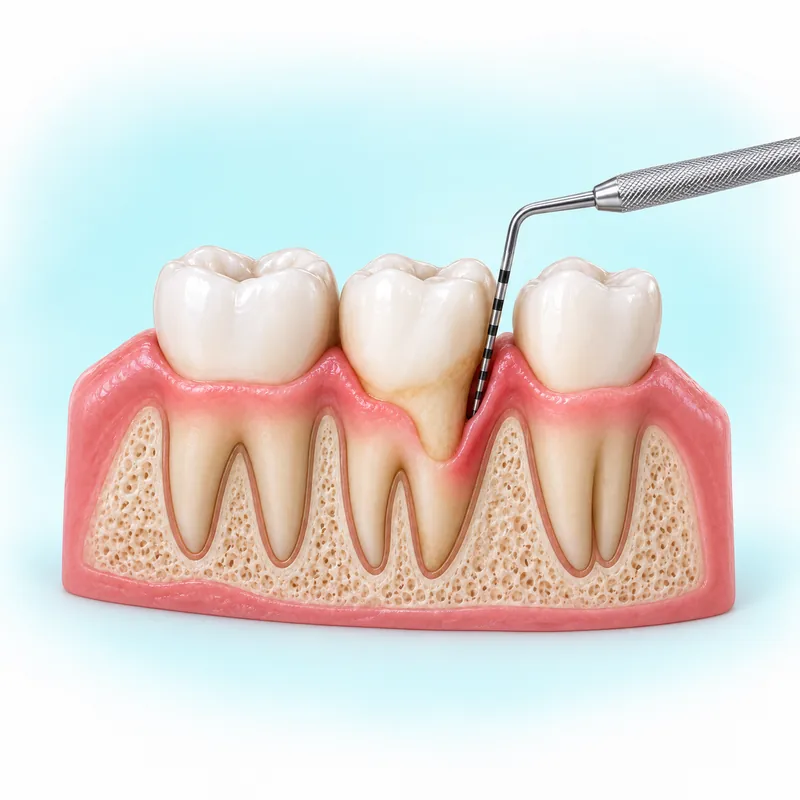
Dr. Supreet Kaur Sawhney in Gurugram assesses implant health and position, cleaning access and the concern about gum appearance before discussing a graft. At selected healthy implant sites, grafting may address thin tissue, a narrow band of firm gum or a cheek-facing tissue gap. Increasing gum width and increasing thickness are different goals. Inflammation or disease around an implant needs its own diagnosis and treatment rather than assuming this healthy-site graft plan fits.
Sources (2)
See the broader gum surgery and grafting guide, or the existing dental implant guide when the implant and its replacement tooth also need review.
Different goals lead to different graft choices
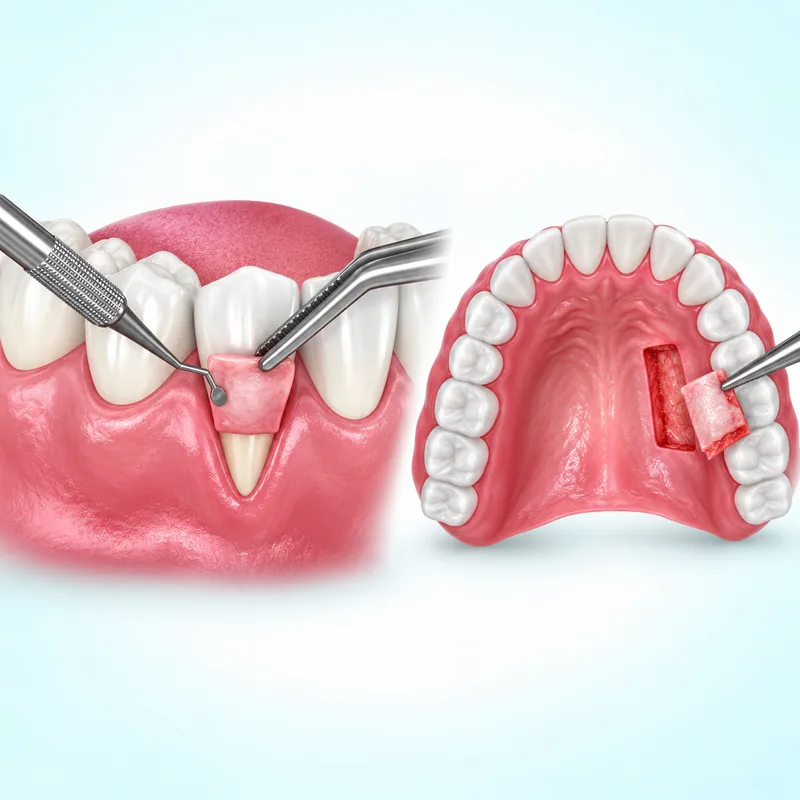
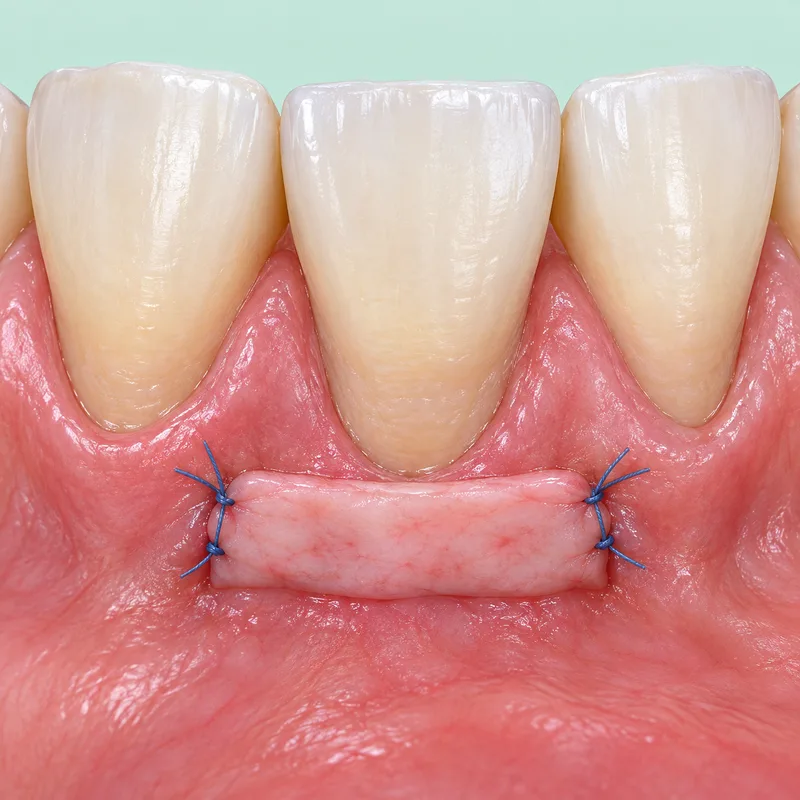
At a healthy implant site where appearance is not the main concern, a free gingival graft may widen firm gum when cleaning is difficult or brushing is uncomfortable. For selected appearance-related thickness deficiencies, connective-tissue grafting may be considered after checking implant position, tissue findings and the patient’s concern. Tissue from the palate (roof of the mouth) or a selected substitute may be discussed; these choices are not interchangeable for every indication.
If an implant is positioned too far toward the cheek and causes an appearance concern, grafting alone may be insufficient. Modification of the replacement tooth, grafting or implant removal may need discussion according to severity. Bone and soft-tissue grafting can sometimes be combined at a healthy site when local conditions are favourable; this is not promised for every implant.
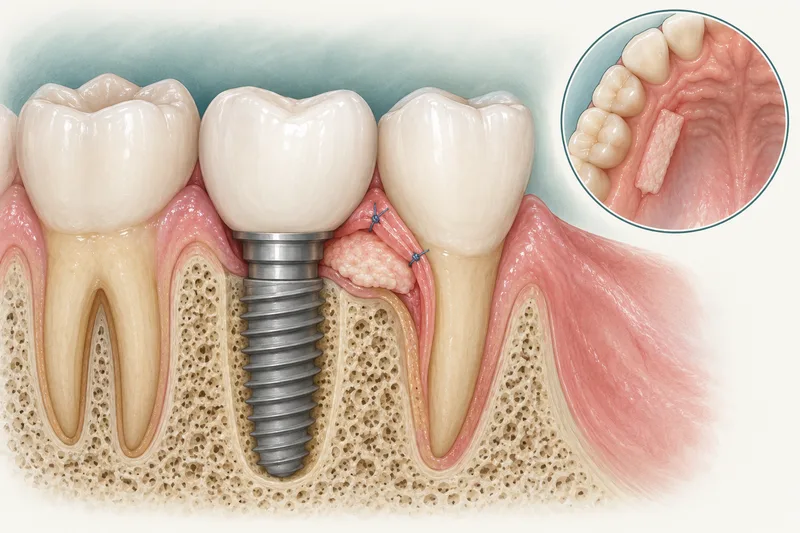
What a selected palatal connective-tissue operation involves
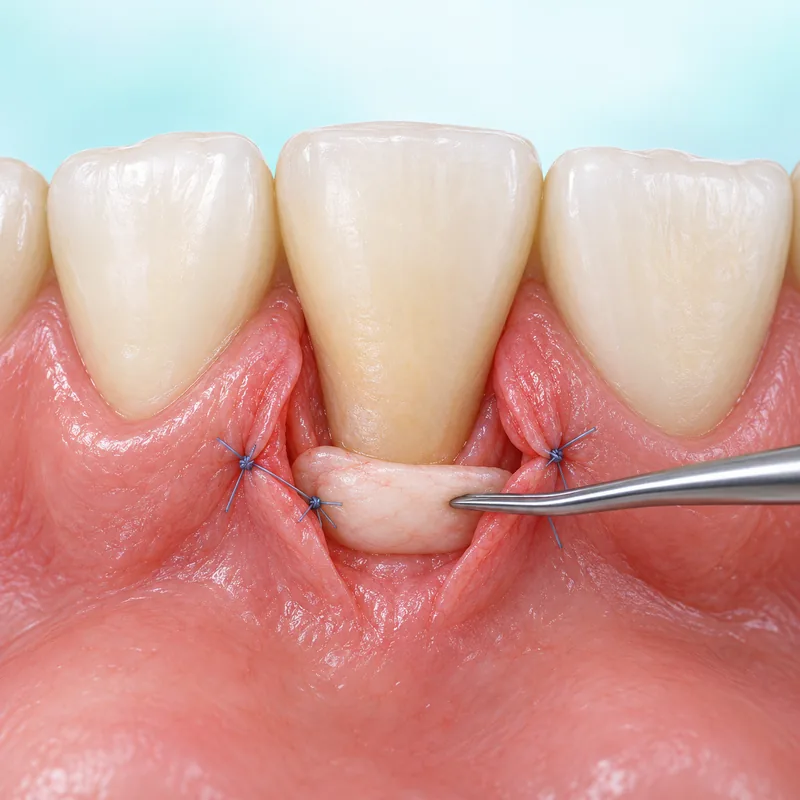
Connective tissue is tissue from beneath the gum surface. If this route is selected, tissue from the roof of the mouth can add gum bulk around an implant, but the placement technique varies. A trial of 28 adults treated healthy, already loaded single implants outside the molar region, between natural teeth, with isolated cheek-facing tissue gaps classified as class II a/b. Their implant crowns were retained. The surgeon positioned palatal connective tissue over the exposed area beneath either a gum flap moved over the site or a tissue tunnel, then secured the graft and flap with stitches. This example does not describe peri-implantitis, multiple adjacent implants or other defect classes.
Sources (2)
In that selected trial, discomfort and a recovery period were recorded during the first two weeks, with individual variation. A tissue gap could improve without complete coverage, and the retained crown and defect anatomy affected what was feasible. These study results are not a personal recovery forecast or success rate. More generally, a graft may fail to heal into place or be lost.
Sources (2)
Protect the graft and follow the surgeon’s plan
A temporary replacement tooth should avoid pressure on a healing implant-site graft; its design is individual. Do not pull back the lip or cheek to inspect the wound, protect the site while eating, and do not brush the operated area until the dental team advises when to restart. Attend the healing review. These are general NHS gum-graft precautions; implant-site, donor-site, rinse and stitch instructions must come from the treating team, without a fixed schedule being assumed.
Sources (2)
Symptoms that need contact or urgent care
After a gum graft, contact the dental team if bleeding continues after firm pressure, or pain is not improving or becomes much worse about a week after surgery. This general graft advice is not a complete implant-specific emergency list. For uncontrolled bleeding or another urgent concern when the team is unavailable, seek urgent local care.
Arrange an assessment
Dr. Supreet Kaur Sawhney, MDS, is a Senior Consultant Oral & Maxillofacial Surgeon and Senior Implantologist with more than 20 years of experience. Dr. Supreet’s Dental & Implant Centre is at 395 P, Sector 39, near Medanta Hospital, Gurugram (Gurgaon), Haryana 122001. For an assessment, contact the clinic or call +91 9650298009.