Impacted-Tooth Surgery in Gurugram
An unerupted tooth (one that has not come through the gum) does not automatically need an operation. Its type, position, effects on nearby teeth and the available alternatives shape the next step. Dr. Supreet Kaur Sawhney, MDS, is a Senior Consultant – Oral & Maxillofacial Surgeon and Senior Implantologist with more than 20 years of experience. In Gurugram, her consultation can help clarify what the images and examination show and whether observation, orthodontic planning or surgery should be discussed.
Sources (2)
Start with which tooth is involved
For a child, assessment identifies the tooth, its position and development, nearby permanent teeth and surrounding tissues before choices are made. The clinician also reviews general health and medicines. Dental X-rays are chosen when they help answer a question, with care around developing teeth. For adults, assessment and imaging are tailored to the tooth involved and the person’s needs. In either age group, a scan or surgery is considered only when the findings and treatment plan justify it.
Sources (4)
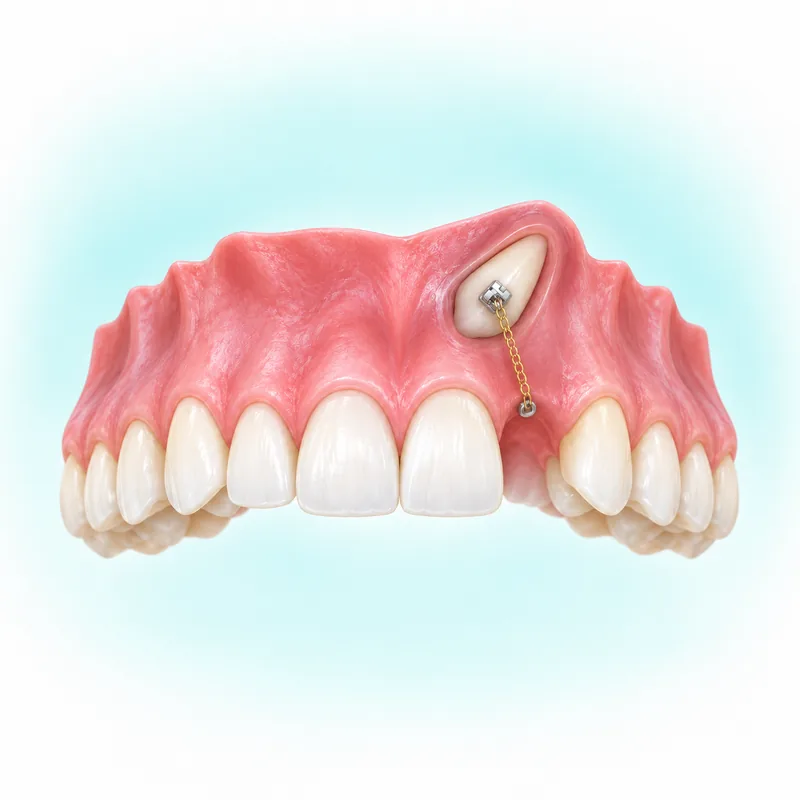
Some impacted teeth may be monitored. For a suitable tooth that has not come through the gum and an orthodontist plans to move, a surgeon may expose (uncover) it and bond an attachment so the orthodontic team can guide it into place with braces (orthodontic traction). This is one selected tooth-preserving route, not a promise that every tooth can or should be moved. Position, space, neighbouring roots, disease and willingness to have orthodontic treatment matter.
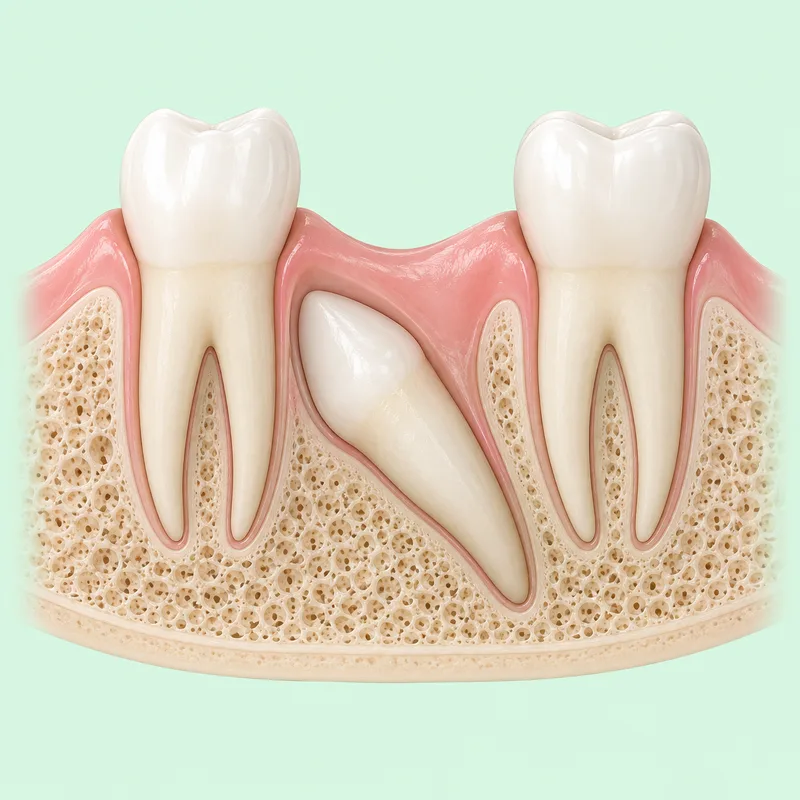
Wisdom teeth and canines need different care
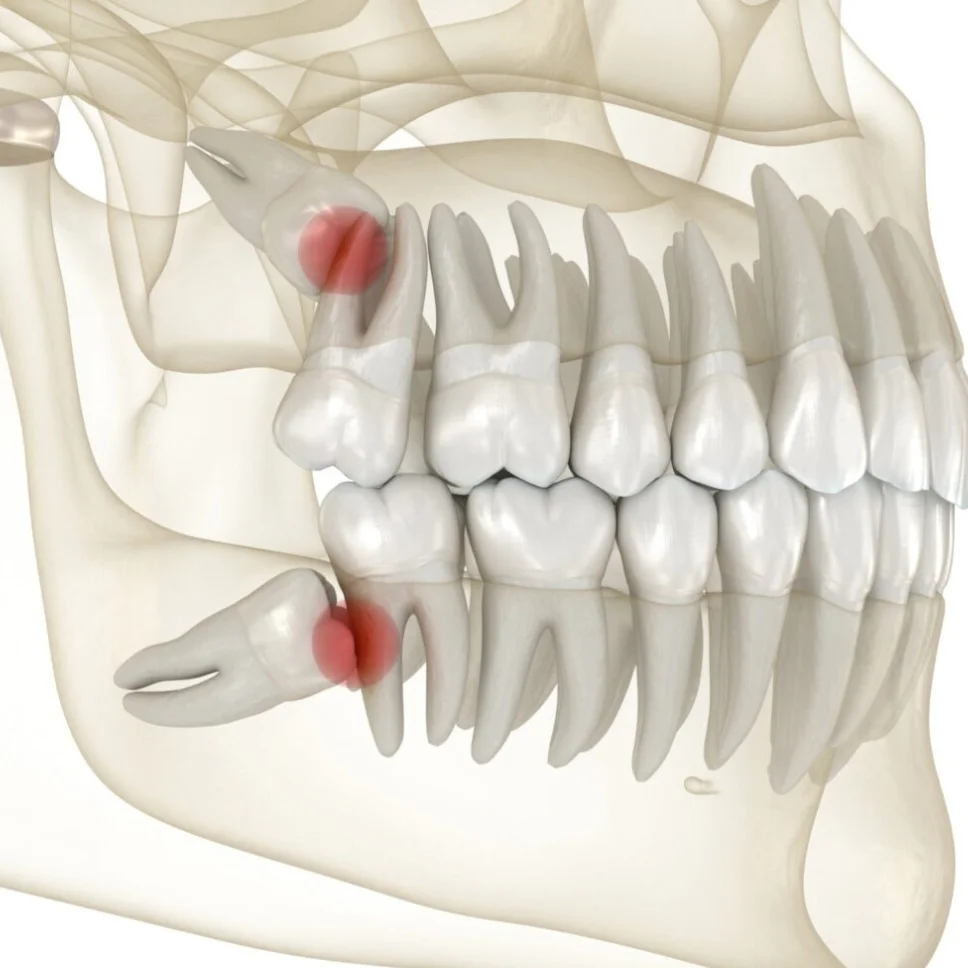
A wisdom tooth that is not causing a problem may be monitored, although pain or infection can arise later. For a suitable lower wisdom tooth whose roots lie near a sensory nerve (a nerve that carries feeling), a coronectomy may be discussed: the crown (visible top of the tooth) is removed while roots remain. Root decay or infection can make this option unsuitable.
An upper canine (pointed tooth) displaced toward the roof of the mouth has its own orthodontic choices, while reports on lower impacted canines (pointed teeth that have not come through the gum) describe limited and mixed approaches without establishing a preferred route. These tooth-specific examples should not be applied as one protocol for every premolar, extra tooth or other impacted tooth. See the separate wisdom-tooth surgery guide and impacted-canine guide for their detailed choices.
Sources (3)
- University College London Hospitals NHS Foundation Trust: Wisdom Tooth Surgery—Advice for Patients Considering Coronectomy
- Royal College of Surgeons of England: Management of the Palatally Ectopic Maxillary Canine
- BMC Oral Health: Management of Impacted and Transmigrated Mandibular Canines—Systematic Review
Before choosing surgical removal, discuss the diagnosis and reason for removal, likely benefits and harms, feasible tooth-preserving or observation options, and what leaving the condition untreated could mean. The options depend on the tooth, disease, symptoms, images, health and patient preference; observation is not automatically safe and preserving the tooth may not be feasible.
Imaging and removal depend on the question
A clinician examines the mouth and may use dental X-rays. A panoramic image (a wide dental X-ray of the teeth and jaws) can help assess an impacted tooth (one that has not come through the gum), but further imaging may be needed for a specific anatomical question; a scan is not automatically required for every case.
Sources (3)
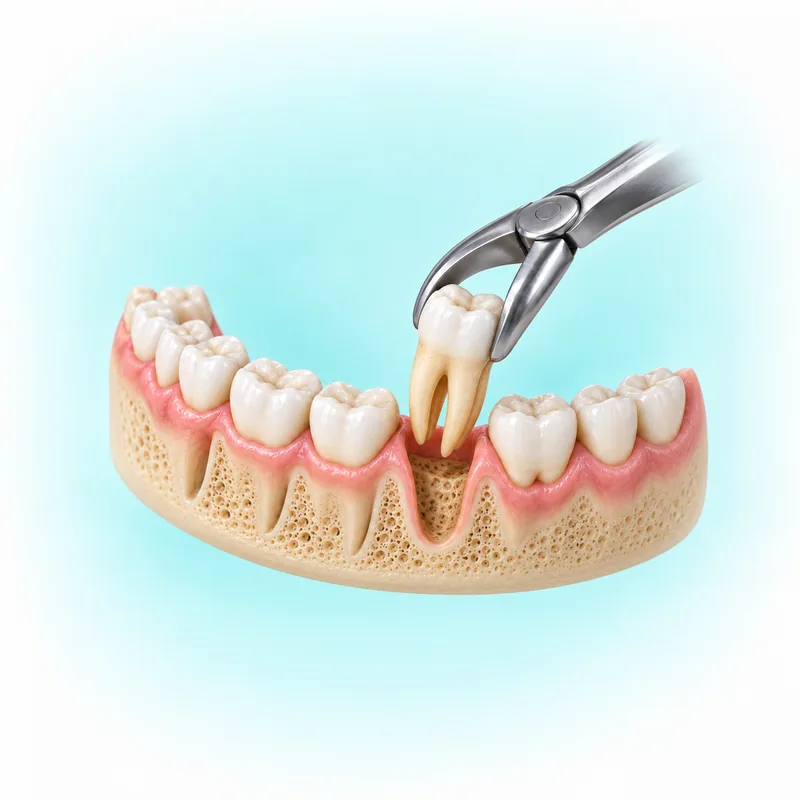
If removal is selected, a tooth partly beneath the gum or with complex access may need a surgical approach. A gum flap (opening and lifting the gum), limited bone removal, tooth division or stitches may be used as needed, but none is automatic. Surgical removal can also affect nearby teeth or their fillings. Some upper sites risk an opening to the sinus (the air-filled space above the back upper teeth), and some lower sites risk injury to a nerve that carries feeling; sensation changes can sometimes persist and a sinus opening may need further care. These are possible anatomy-dependent harms, not expected outcomes for everyone.
If removal is selected, local anaesthesia (medicine that numbs the area) is used. Afterward, protect the blood clot in the socket (space left after removal), avoid disturbing the wound and follow the operator’s cleaning instructions; smoking can impair healing. These instructions do not automatically apply to an exposure-and-braces pathway, which has different follow-up. Contact the team promptly for bleeding that persists despite the pressure advised by the operator, increasing pain or swelling, fever, pus or bad taste; difficulty breathing or swallowing needs emergency assessment.
Sources (2)
Discussing impacted-tooth care in Gurugram
Dr. Supreet’s Dental & Implant Centre is at 395 P, Sector 39, near Medanta Hospital, Gurugram (Gurgaon), Haryana 122001. Bring any dental images, previous treatment notes and orthodontic plans you already have. You can ask which tooth is involved, what the images can establish, what monitoring would require and who would lead any orthodontic movement. View the Sector 39 clinic location, other consultation locations, or contact the clinic. Call or WhatsApp +91 9650298009.