Dental CBCT Scan in Gurugram
A three-dimensional dental scan is useful only when it answers a clinical question that examination and suitable images using less radiation cannot resolve. Dental cone-beam computed tomography (CBCT) is selected for that question, and its findings still need interpretation alongside the examination. Dr. Supreet Kaur Sawhney, MDS in Oral & Maxillofacial Surgery, is a Senior Consultant and Senior Implantologist with 20+ years of experience.
What CBCT shows
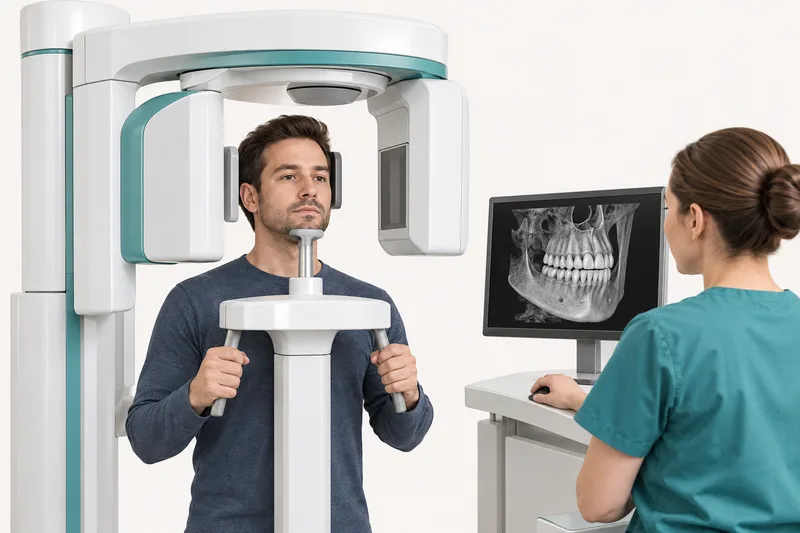
Cone-beam computed tomography (CBCT) uses a rotating cone-shaped X-ray beam to create three-dimensional images. It can show teeth and bone and their relationships, including bone dimensions and nearby anatomy for a selected implant-planning question.
Sources
The clinician considers examination findings, history, risk and existing suitable images before prescribing another radiograph. An image is interpreted with the clinical examination, not as a complete diagnosis on its own.
When a scan may be justified
CBCT is considered when the clinical question cannot be answered adequately with imaging using less radiation; it is not a routine replacement for dental X-rays. The area scanned and settings should be limited to what is needed for the diagnostic task.
Dental X-rays involve radiation, so the expected diagnostic benefit should outweigh the exposure risk and the radiation dose should be kept appropriate for the question. CBCT radiation exposure is substantially higher than regular dental X-rays and varies with the area scanned, device and settings; this comparison concerns ordinary dental X-rays.
Sources (2)
What to expect and limitations
During a scan, a patient may sit or stand while the scanner moves around the head and is asked to remain still. Setup and duration vary. The team may ask about possible pregnancy or difficulty staying still, and metal objects that interfere with imaging may need removal.
Sources (2)
CBCT shows teeth and bone well but gives less information about soft tissues, such as muscles and gums, than medical computed tomography (CT). Every part of the dental CBCT scan needs assessment by an appropriately skilled clinician; referral to a specialist in imaging interpretation may be needed.
Sources (3)
- Radiological Society of North America and American College of Radiology – Dental Cone Beam CT
- American Academy of Pediatric Dentistry – Prescribing Dental Radiographs for Infants, Children, Adolescents, and Individuals with Special Health Care Needs
- American Dental Association and American Academy of Oral and Maxillofacial Radiology / JADA – ADA and AAOMR patient selection for dental radiography and CBCT: clinical recommendations
A CBCT scan ordinarily needs no special physical aftercare. The treating or referring clinician discusses the findings and next steps. Ask how the scan and report will be arranged for your care.
For the treatment decision behind a proposed scan, see dental implant planning or the wider oral and maxillofacial assessment guide.
Discuss Dental CBCT Scan in Gurugram
Dr. Supreet provides dental CBCT in Gurugram when clinically indicated. Dr. Supreet’s Dental & Implant Centre is at 395 P, Sector 39, near Medanta Hospital, Gurugram (Gurgaon), Haryana 122001. Bring prior records and a current medicine list. View the Sector 39 clinic, contact the clinic or call +91 9650298009 to ask about an appointment.