Facial Laceration and Wound Treatment in Gurugram
Facial laceration treatment in Gurugram begins with checking what the injury has damaged before choosing how to close the cut. Dr. Supreet Kaur Sawhney, MDS, is a Senior Consultant - Oral & Maxillofacial Surgeon and Senior Implantologist with 20+ years of experience. Her facial-wound assessment considers function as well as healing: a cut on the cheek, lip or eyelid may involve more than the skin.
Serious injury needs hospital care first
Go to the nearest hospital emergency department for uncontrolled heavy bleeding, breathing difficulty, loss of consciousness, vomiting after a head injury, or new double vision. Do not wait for a routine clinic appointment or message reply. Eye injury or a wound associated with severe facial trauma also needs urgent hospital assessment.
For a bleeding skin cut, use clean cloth or gauze to apply pressure if nothing is embedded in it. Do not remove embedded glass or press on an embedded object; a deep or serious facial cut needs prompt emergency assessment. This advice does not apply pressure to an injured eyeball.
Sources
What wound assessment needs to establish
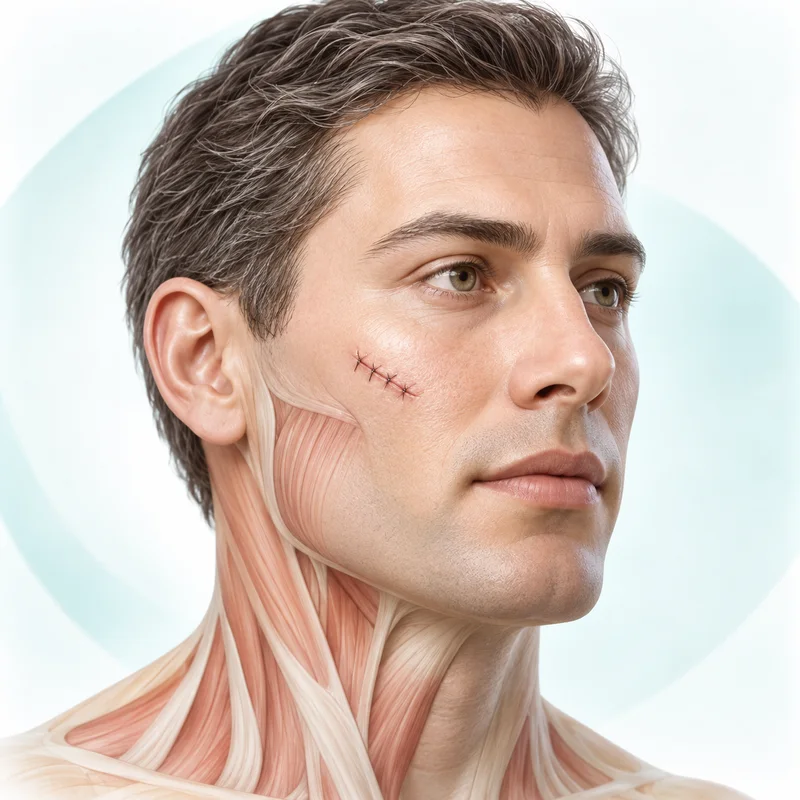
The history includes how and when the cut happened, contamination, medicines, allergies and relevant health conditions. Examination assesses wound depth, tissue loss, facial movement and possible associated bone injury. In the cheek, the facial nerve and the duct carrying saliva into the mouth may need particular attention; an eyelid wound can involve structures protecting the eye. Closing the surface alone does not address a deeper injured structure.
Bring information about previous treatment, dressings, medicines and tetanus vaccination if available. Tell the clinician about a bite or dirty wound. Tetanus protection and antibiotics are considered according to the injury and infection risk; they are not interchangeable with cleaning and assessment.
Cleaning and closure are separate decisions
Treatment can involve washing out the wound, removing foreign material and carefully dealing with damaged tissue before repair. Preserving viable facial tissue matters. The surgeon decides whether a simple closure is appropriate or whether deeper repair and another care setting are needed.
Depending on the cut, closure may use stitches, adhesive strips or medical glue. A contaminated or infected wound may need a different plan and may not be closed immediately. Household glue and self-stitching are not substitutes for assessment. A wound that has already been treated elsewhere can still need review if it opens, becomes infected or has an unresolved deeper injury.
Sources
Selected deeper wounds are closed in layers so underlying tissue is brought together before the skin. Local anaesthesia numbs an area; complex injuries may require general anaesthesia and hospital treatment. The wound, associated injuries and patient factors determine the plan rather than one anaesthetic for every facial cut.
Sources (2)
Healing, scars and follow-up
After repair, obtain specific instructions for wound cleaning, dressings and stitches. Dissolvable and removable stitches have different review needs. Swelling and bruising can occur; wound breakdown, pus or discharge needs clinical reassessment. A repair aims to bring the tissues together, but it cannot promise an invisible scar. Scar colour and firmness change over time, and excessive raised scar tissue can occasionally develop.
New difficulty moving part of the face or loss of feeling near a wound after injury needs urgent hospital assessment. Increasing redness, pain, fever or pus also needs review. Persistent heavy bleeding or new eye symptoms follows the emergency route above.
Consult Dr. Supreet about the wound and the care plan
Dr. Supreet's OMFS background supports a consultation about wound depth, the affected facial structures and appropriate repair or referral. The discussion should make clear who will perform the planned treatment, where it will take place and who will review healing. It can also address concerns after an earlier repair; bring the discharge note and any available injury records.
For wider facial and jaw care, see oral and maxillofacial surgery. Ask for an individual estimate once the wound and treatment setting are understood, including any dressings or review appointments.
Dr. Supreet's Dental & Implant Centre is at 395 P, Sector 39, near Medanta Hospital, Gurugram (Gurgaon), Haryana 122001. View the Sector 39 consultation location, contact the clinic, or call +91 9650298009.