Simple Tooth Extraction in Gurugram
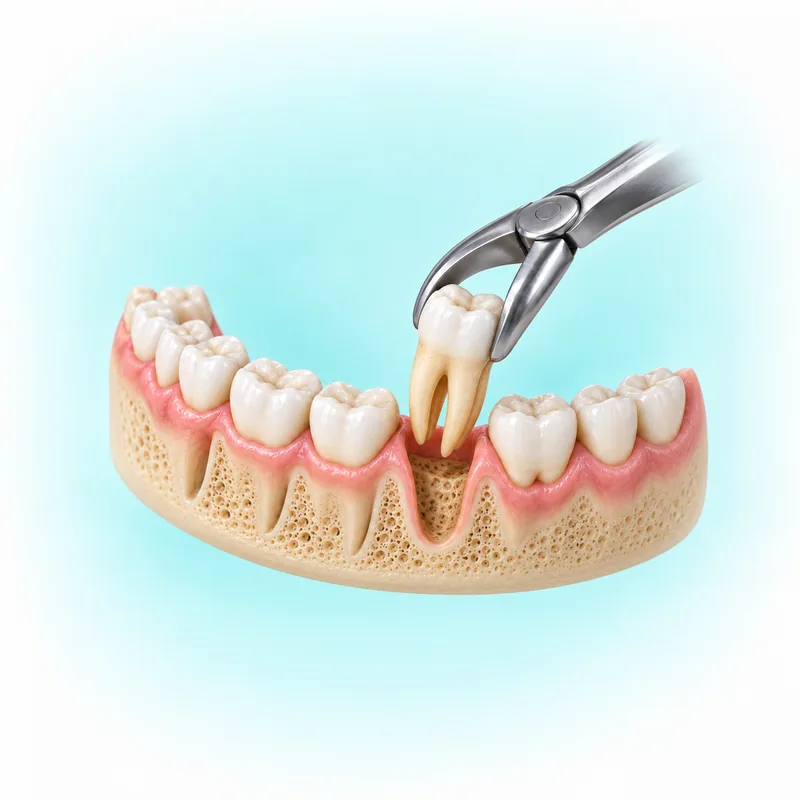
“Simple” describes access: the tooth is usually removed with forceps (a tooth-gripping instrument), without opening the gum to expose it. It does not by itself answer whether removal is the right choice. Dr. Supreet Kaur Sawhney, MDS, is a Senior Consultant – Oral & Maxillofacial Surgeon and Senior Implantologist with more than 20 years of experience. At her Gurugram consultation, she can assess the reason for removal, whether the tooth may be kept, and whether a simple approach appears suitable.
Sources (2)
First decide whether the tooth should be removed
Non-restorable decay, severe damage to the supporting gums, a fracture or crowding can lead to an extraction discussion, but each reason needs individual assessment. Ask what the examination found, what removal may address, what risks apply to this tooth and what may happen if it is not treated. Observation is not automatically the safer choice.
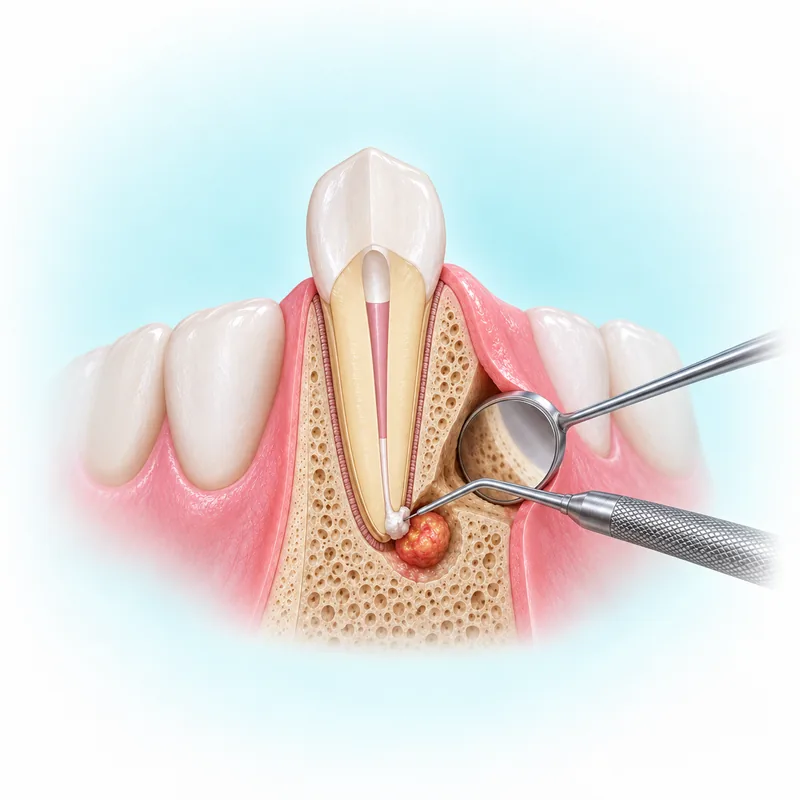
For some permanent teeth with disease inside a root canal (the channel inside a tooth root), root-canal treatment, repeating root-canal treatment (retreatment) or endodontic surgery (surgery around the tooth root) may preserve the tooth. These are options for selected endodontic problems, not alternatives for every fracture, gum condition or crowding concern. The clinician must assess whether the tooth can be restored; no option is guaranteed to work.
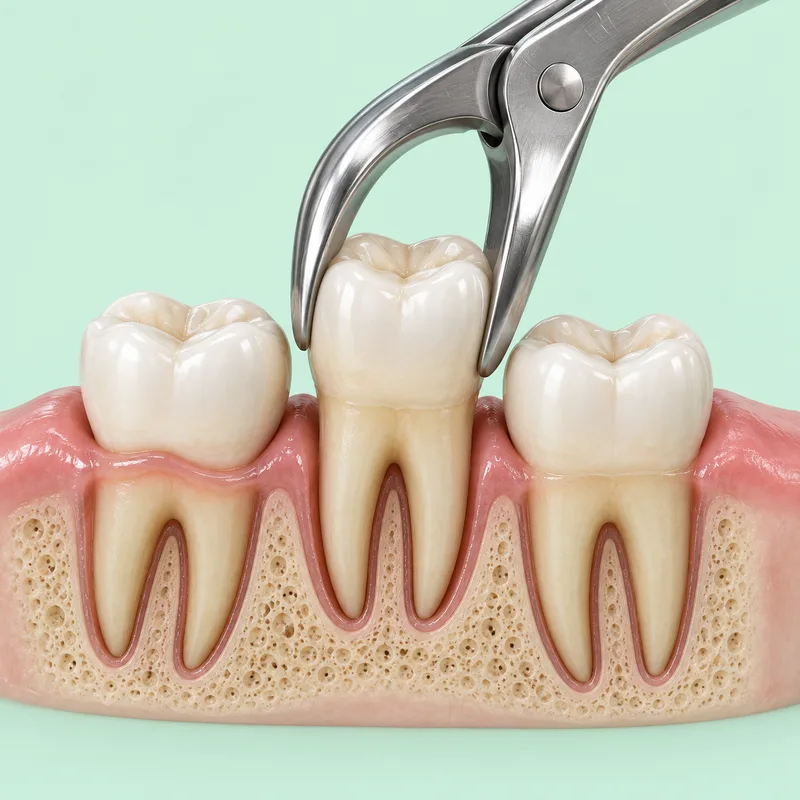
What makes an extraction simple
A simple extraction usually uses forceps without surgical exposure. Tooth shape, condition and position still matter. A tooth can fracture during removal with forceps (a tooth-gripping instrument), so a planned simple extraction may need a surgical approach if access changes. Some upper molars also have an anatomy-dependent risk of an opening to the sinus (the air-filled space above the back upper teeth). Possible risks include infection, delayed healing and nerve injury; which risks apply depends on the procedure and nearby anatomy. Neither a change in access nor these harms are expected for every extraction; ask how the tooth's position affects the plan.
Sources (3)
Before treatment, the clinician asks about health and medicines, examines the mouth and may take dental X-rays when they help answer a clinical question. Imaging is not required for every extraction. Local anaesthetic numbs the area. The socket (space left after removal) is cleaned; stitches or graft material (material used to help build bone) may be used when indicated, but neither is routine for every case.
Sources (3)
Protecting the extraction socket (space left after removal) while it heals
A blood clot forms in the socket. Avoid disturbing the wound and follow the treating team's cleaning and care instructions. Smoking can impair healing. Early gum recovery and healing of the jawbone are not the same timetable, and recovery varies rather than ending on one fixed date.
Contact the treating dentist or surgical team promptly for persistent severe pain, fever or pus. Heavy bleeding or severe pain after oral surgery also warrants contact; follow the instructions given for your procedure.
For the broader access decision, read surgical tooth extraction in Gurugram. The oral and maxillofacial surgery guide explains when a specialist assessment may help.
Discussing a simple extraction in Gurugram
Dr. Supreet’s Dental & Implant Centre is at 395 P, Sector 39, near Medanta Hospital, Gurugram (Gurgaon), Haryana 122001. Bring any recent dental images, previous treatment notes and a list of medicines. The discussion can clarify why removal is being considered, whether the tooth can be preserved and what would change a simple approach into surgical access. View the Sector 39 clinic location, other consultation locations, or contact the clinic. Call or WhatsApp +91 9650298009.