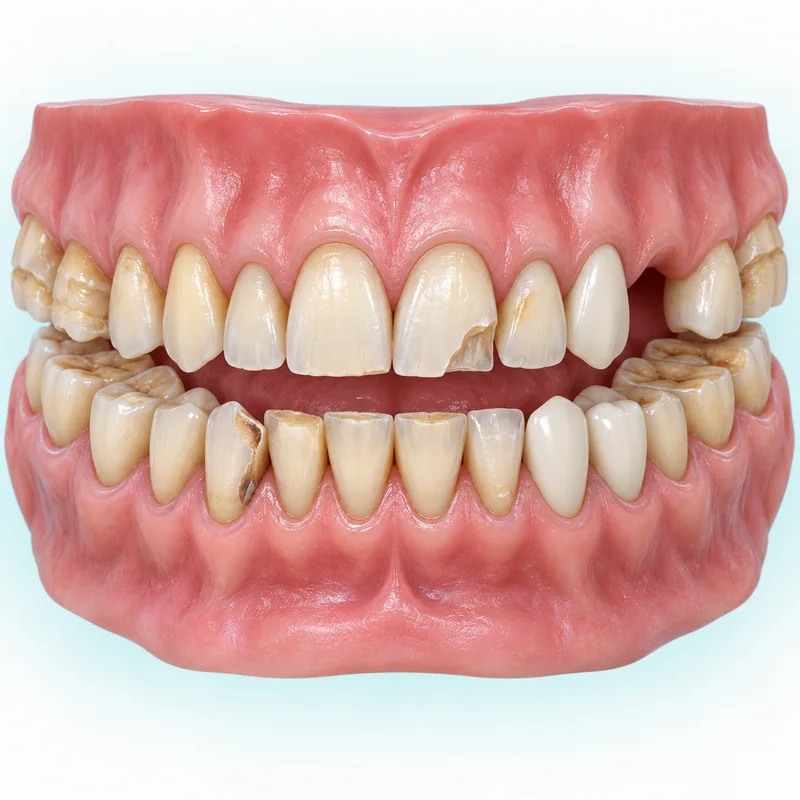
Tooth Wear Restoration in Gurugram
Worn teeth do not always need rebuilding: small, symptom-free wear may be monitored, while damage or symptoms can prompt a discussion of restoration after its cause is assessed. Dr. Supreet Kaur Sawhney, MDS in Oral & Maxillofacial Surgery, is a Senior Consultant and Senior Implantologist with 20+ years of experience.
Sources (2)
When worn teeth need restoration
Tooth wear can be physiological (ordinary wear over time) or pathological (wear that is excessive or harmful). Assessment looks at cause, severity, progression and effects before deciding whether to monitor or restore.
Small, symptom-free wear may be monitored. For severe wear, consensus supports diagnosis, prevention, counselling and monitoring; restoration depends on its effects and the patient’s wishes, and can be deferred when appropriate.
Finding and controlling the cause
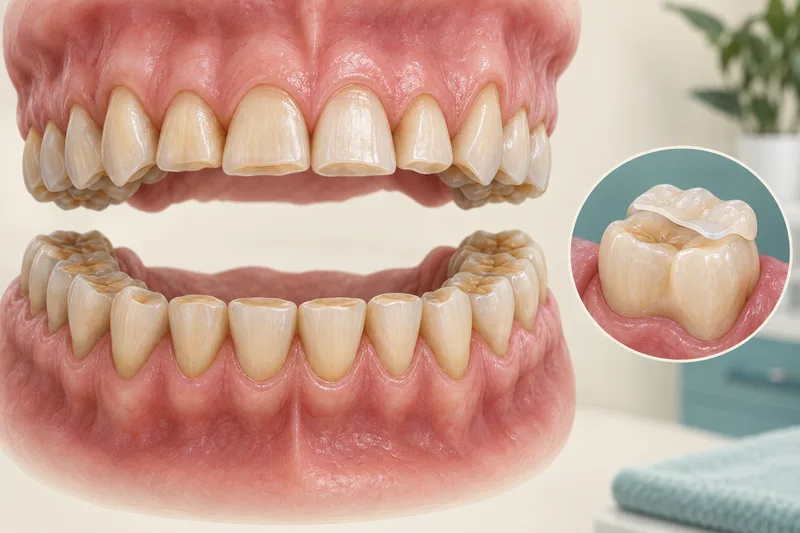
Assessment can include where and how much tooth structure is lost, possible acidic exposure such as diet or reflux, grinding, symptoms and whether imaging is needed to assess the tooth nerve. Wear is not automatically caused by grinding.
Prevention and cause control support any restorative choice. A protective guard may be considered for grinding when appropriate; it does not replace assessment of the wear itself.
Choosing a restoration
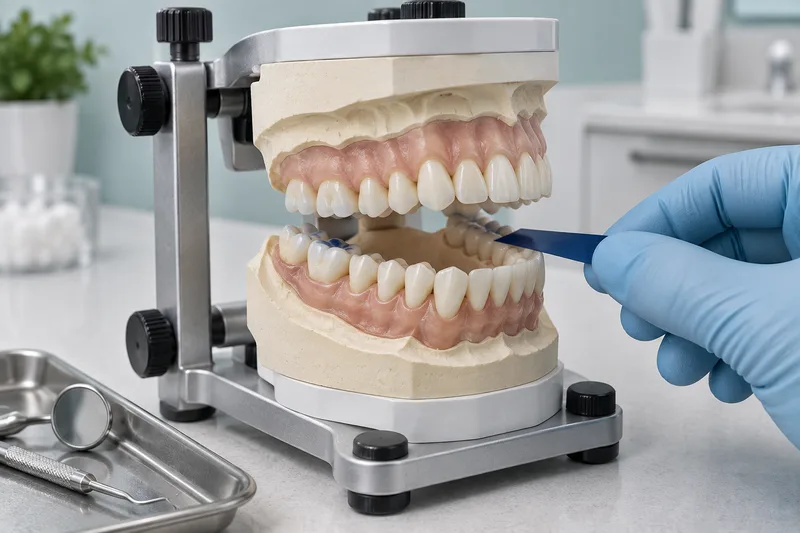
If restoration is needed, options can include preventive care, white filling material, a composite build-up (tooth-coloured filling material), an onlay (a partial tooth cover) or crown, and—in severe or widespread loss—a removable denture or overdenture (a denture fitted over retained teeth or roots). The amount of remaining tooth and treatment goals guide the choice; a crown is not automatically the least invasive option because preparation removes tooth structure.
Sources (3)
Direct restorations built in the mouth with composite and indirect restorations made outside the mouth, such as ceramic, may both be considered for worn teeth. Evidence does not establish one material as best for every patient.
Course, maintenance and when to seek review
Some worn-tooth restorations need several appointments. A composite build-up can initially make the bite feel unfamiliar; crown treatment involves preparing the tooth. Restorations may chip, fracture, wear or loosen and require review or repair, so no fixed personal lifespan can be promised.
Sources (2)
Ask for dental assessment if wear progresses, sensitivity develops, sharp edges interfere with eating, or chewing becomes difficult. Severe or persistent pain or a broken or loose restoration also needs dental assessment; uncontrolled bleeding or swelling that affects breathing needs emergency medical care.
Sources (2)
When worn teeth need planning across the mouth, read how full-mouth rehabilitation coordinates preservation, restoration and replacement choices.
Discuss Tooth Wear Restoration in Gurugram
Dr. Supreet’s consultation can help review findings, alternatives and next steps. Dr. Supreet’s Dental & Implant Centre is at 395 P, Sector 39, near Medanta Hospital, Gurugram (Gurgaon), Haryana 122001. Bring prior records and a current medicine list. View the Sector 39 clinic, contact the clinic or call +91 9650298009 to ask about an appointment.