Implant Crown, Bridge & Denture Maintenance in Gurugram
An implant-maintenance review considers two separate things: whether the replacement crown, bridge or denture is working properly, and whether the gum and bone around the implant are healthy. This guide is about an implant that already supports a replacement, not implant-placement surgery. Dr. Supreet Kaur Sawhney, MDS, is a Senior Consultant – Oral & Maxillofacial Surgeon and Senior Implantologist with more than 20 years of experience. In Gurugram, she can discuss how the replacement design, cleaning access and tissue checks fit together for ongoing care. Regular cleaning and professional follow-up remain part of maintenance.
Sources (3)
Reviews are planned around the person and the restoration
The American College of Prosthodontists (ACP) multisociety guideline advises lifelong professional review at least every six months for fixed or removable implant restorations. This is a consensus-based recommendation (strength D), not a personalized timetable: the treating team may suggest more frequent reviews when cleaning, tissue health, the restoration or other risks call for them. Supporting evidence for routine maintenance benefits is low certainty, so a review is not a guarantee that a restoration will last or a substitute for treatment after a dental professional diagnoses peri-implant disease, which is disease affecting the tissues around an implant.
Sources (2)
At a visit, the clinician can consider the implant-supported replacement and its components separately from the supporting tissues. Prior examination records help compare changes. For a fixed restoration, baseline records can include clinical findings, X-rays (radiographs) and bite records. Guidance recommends baseline X-rays when the implant-supported replacement is connected and again at one year; after those baseline images, further X-rays are guided by clinical signs rather than repeated automatically at every routine visit.
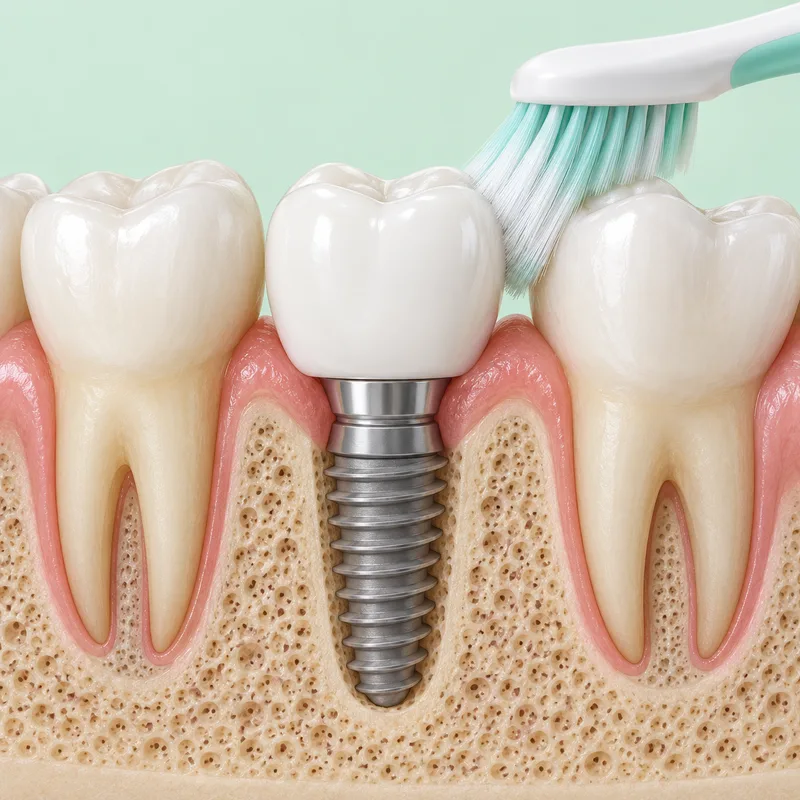
If the replacement is fixed
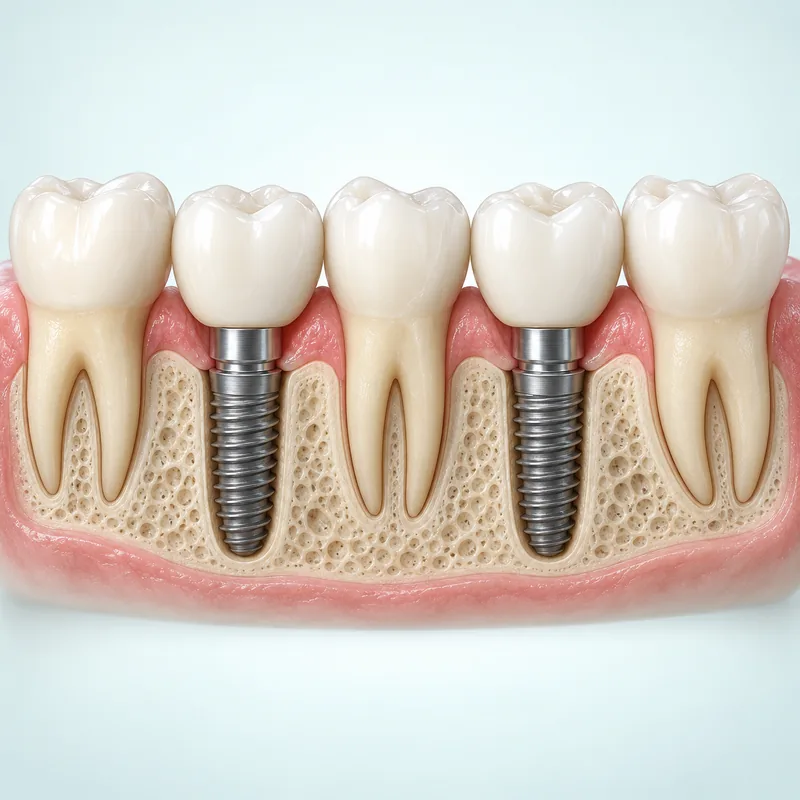
For an implant crown or bridge that stays in the mouth, cleaning aids need to suit its shape and the access around the gums. A clinician can show which brush or interdental aid (a cleaner for spaces between teeth or beneath a bridge) fits that restoration. Use a gentle technique that cleans without injuring the gums; do not force floss beneath the gum edge around an implant. Larger bridges and fixed dentures need instructions matched to their design.
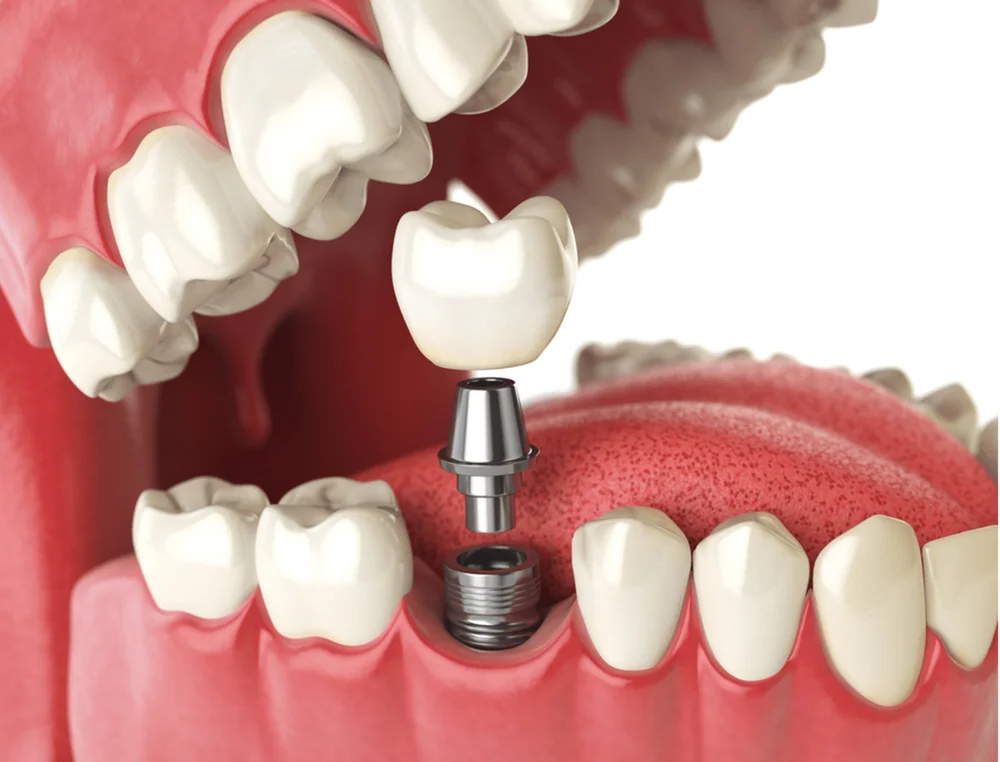
The clinician also checks whether the crown or bridge and its connecting parts remain functional. An abutment is the connecting part between an implant and the replacement tooth. Depending on what is found, a dentist may adjust, repair, replace or remake a part. The suitable action depends on the defect and implant system; it is not a do-it-yourself tightening task.
Sources (2)
If the replacement is removable
An implant-retained denture has its own cleaning and attachment-care needs. The ACP guideline advises cleaning the parts that remain in the mouth and the removed denture at least twice daily with soft brushes and products recommended by the dental team. It also advises removing the denture for sleep and storing it as directed; the right instructions depend on its design and material.
At review, a dental professional can examine the removable denture and its attachments and, when function is affected, may adjust, repair, replace or remake a part. Worn attachments or a change in fit need individual assessment; there is no single replacement interval for everyone.
The supporting tissues need attention too
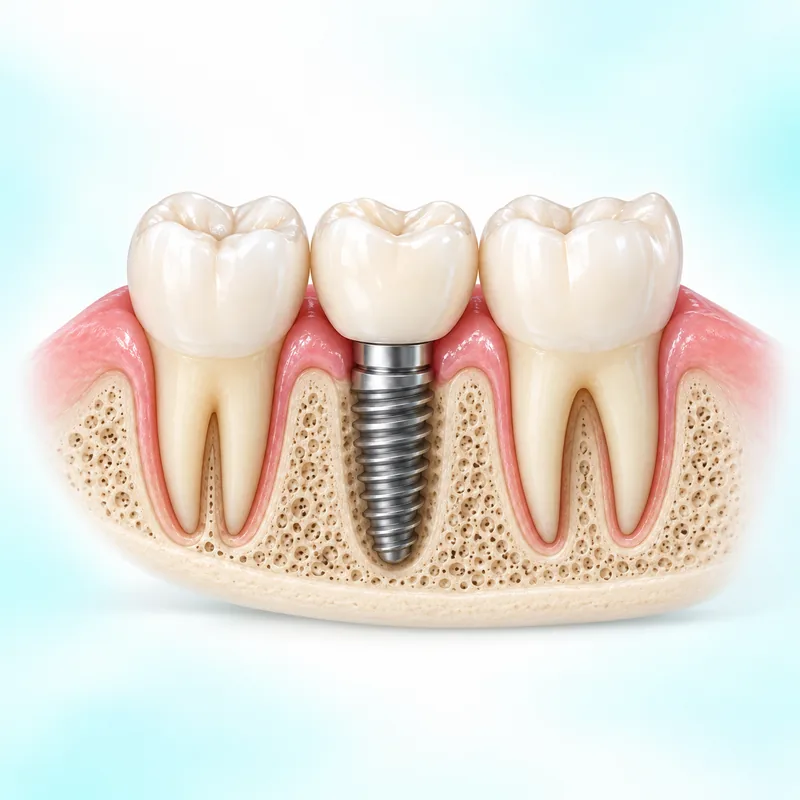
An implant cannot get tooth decay, but the tissues around it can become diseased. Maintenance may include checking plaque (soft buildup), gum bleeding or swelling and comparing tissue measurements with earlier records. Guidance recommends baseline X-rays when the implant-supported replacement is connected and again at one year; later imaging to assess bone is guided by clinical signs, not taken automatically at every routine visit.
Sources (4)
- American College of Prosthodontists: Dental Implants FAQ
- Scottish Dental Clinical Effectiveness Programme: General Care of Dental Implants
- International Team for Implantology: Protocol for Fixed Implant-Supported Prostheses Delivery
- European Federation of Periodontology: Prevention and Treatment of Peri-Implant Diseases
Bleeding or swelling around an implant, a bad taste or bad breath, or a loose implant, bridge or denture need prompt attention from a dental professional. These signs can reflect a tissue problem or a mechanical problem, and symptoms alone cannot identify the cause. Contact a dentist promptly rather than trying to tighten or repair a component yourself. Pain or a perceived loose implant also needs prompt dental assessment. Severe uncontrolled mouth bleeding or swelling that impairs breathing needs emergency medical assessment.
Sources (4)
Plan a maintenance discussion in Sector 39
Dr. Supreet's consultation can clarify what type of implant-supported replacement is being maintained, how it is functioning, what cleaning access it allows and whether the surrounding tissues need further assessment. Dr. Supreet's Dental & Implant Centre is at 395 P, Sector 39, near Medanta Hospital, Gurugram (Gurgaon), Haryana 122001. View the Sector 39 clinic location, browse other consultation locations, or contact the clinic. Call or WhatsApp +91 9650298009 to ask about an appointment. Browse the services hub for related treatment guides.
Loose or moving implant-supported teeth need assessment
A loose or moving implant, bridge or denture needs dental assessment; movement alone does not show whether a screw, restoration or implant body is involved. Implant components can loosen or wear, and fixed implant teeth can wear or break despite being described as permanent.
Sources (3)
When a fixed implant crown, bridge or screw is loose
A clinician examines the restoration and its components to identify the problem. Depending on the defect, care may involve adjustment, repair, replacement or remaking a part. A loose abutment screw is one possible mechanical issue and is distinct from failure of the implant body to join bone (integration). Do not try to tighten a component at home.
Sources (5)
- US Food and Drug Administration: Dental Implants: What You Should Know
- ACP/ADA/AGD/ADHA Scientific Panel: Clinical Practice Guidelines for Recall and Maintenance of Tooth-Borne and Implant-Borne Dental Restorations
- Xiao et al., International Journal of Oral & Maxillofacial Implants – Opinions Regarding Reuse or Replacement of Implant Prosthesis Retaining Screws: A Systematic Review
- Curtis et al., California Dental Association Journal – Occlusal Considerations for Implant Restorations in the Partially Edentulous Patient
- NHS – How to find an NHS dentist in an emergency
How a clinician checks and refits a screw-retained restoration
For a suspected loose screw, the clinician can inspect fit, screw threads and bite contacts. Retightening may be an option after inspection; very limited review evidence does not support automatically replacing every loosened screw. If refitted, seating and contacts are checked and the screw is tightened using the specific system instructions and a calibrated device. Torque means the tightening force; no universal value applies. Repeated loosening or a fractured screw needs reassessment rather than repeated tightening without checking the cause.
Sources (3)
- International Team for Implantology: Protocol for Fixed Implant-Supported Prostheses Delivery
- Xiao et al., International Journal of Oral & Maxillofacial Implants – Opinions Regarding Reuse or Replacement of Implant Prosthesis Retaining Screws: A Systematic Review
- Curtis et al., California Dental Association Journal – Occlusal Considerations for Implant Restorations in the Partially Edentulous Patient
If an implant crown or bridge is chipped or damaged
Fixed implant crowns and bridges can wear or break. The clinician examines the replacement teeth (prosthesis) and their components; depending on the defect, fit and function, care may involve adjustment, repair, replacement or remaking a part. Repair is not suitable for every defect. Ongoing maintenance remains important after repair.
Sources (3)
Different causes lead to different implant-management choices
A loose replacement tooth does not show by itself whether the problem is in the supporting gum and bone, the implant body, or a screw, crown or bridge. A clinician examines these parts; gum inflammation or supporting-bone loss is a biologic problem, while a moving restoration or component can be mechanical. Symptoms alone cannot establish the cause.
Sources (2)
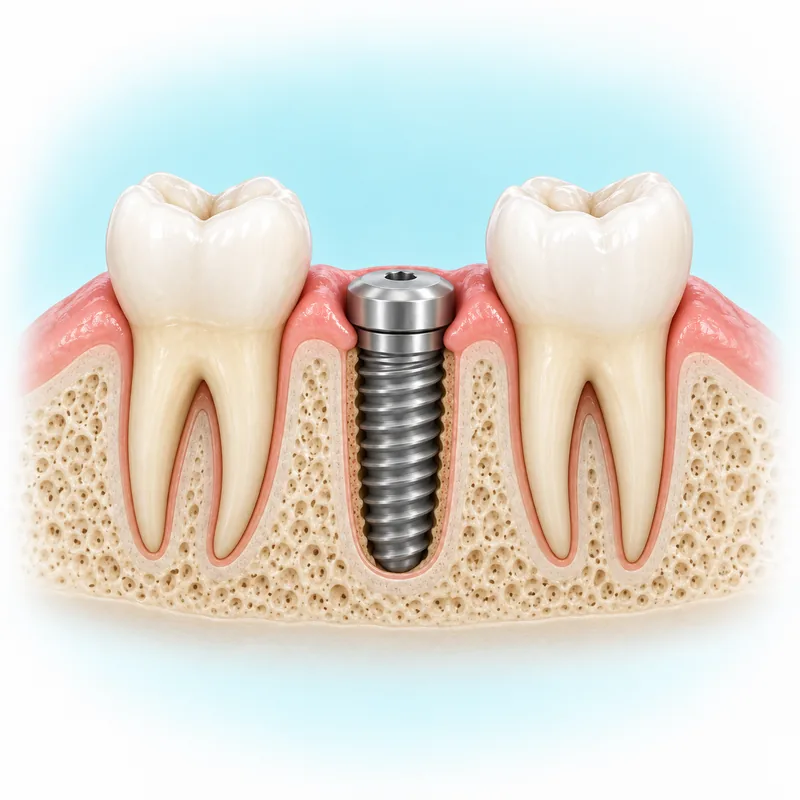
For diagnosed peri-implantitis (inflammation around an implant with progressive loss of its supporting bone), a clinician first assesses tissue inflammation and bone loss. If retaining the implant is reasonable, care can begin with nonsurgical cleaning and risk-factor management, followed by reassessment. Surgery, continuing supportive care or possible removal are separate decisions based on response and whether the implant remains retainable; removal is not automatic. Treatment outcomes vary. Treatment can control inflammation but does not re-establish the original intact tissue support.
Sources (4)
- European Federation of Periodontology – Prevention and treatment of peri-implant diseases: guideline infographic
- European Federation of Periodontology – Peri-implant disease: Treatment
- Scottish Dental Clinical Effectiveness Programme – Treatment of peri-implantitis
- European Federation of Periodontology: Prevention and Treatment of Peri-Implant Diseases
If a clinician diagnoses that the implant body has failed to join the bone, it may no longer support the restoration. Further surgery may be considered; in this specifically diagnosed branch, management can include implant removal and cleaning the bone, with another attempt considered later only if the site and plan suit it. That possibility does not promise removal, reimplantation or a timetable.
Sources (3)
For a diagnosed mechanical problem in a fixed implant crown or bridge, the clinician examines the restoration and components. Depending on the defect, an affected part may be adjusted, repaired, replaced or remade. This decision is distinct from treatment of tissue disease or a failed implant body.
A removable implant overdenture can loosen for different reasons
An overdenture is removable even though the implants remain fixed in bone. A worn attachment (the part that connects the removable denture to the implant) may reduce retention (the grip holding the denture in place), but changes in the supporting tissues can also affect fit. A clinician examines both attachments and the denture base; a reline means refitting the tissue-facing base when its fit has deteriorated, and it is different from replacing a worn attachment. Not every poorly fitting denture is suitable for relining; a clinician assesses the cause and chooses the approach. A broken denture needs professional repair and reassessment. Do not reshape or repair it at home; no fixed replacement date applies to everyone.
Sources (5)
- American College of Prosthodontists: Dental Implants FAQ
- American College of Prosthodontists – Dentures FAQs
- NHS – Dentures (false teeth)
- Leeds Teaching Hospitals NHS Trust – Removable partial dentures
- ACP/ADA/AGD/ADHA Scientific Panel: Clinical Practice Guidelines for Recall and Maintenance of Tooth-Borne and Implant-Borne Dental Restorations
Cleaning and review for the removable implant denture
Cleaning instructions depend on the denture material and actual attachments. Guidance supports soft brushes and recommended products, and cautions that hot water or strong bleach can damage some components. Professional review checks denture fit and attachments; the maintenance plan is individualized.
Sources (6)
- American Dental Association – Dentures
- Leeds Teaching Hospitals NHS Trust – Removable partial dentures
- American College of Prosthodontists – Dentures FAQs
- Scottish Dental Clinical Effectiveness Programme: General Care of Dental Implants
- ACP/ADA/AGD/ADHA Scientific Panel: Clinical Practice Guidelines for Recall and Maintenance of Tooth-Borne and Implant-Borne Dental Restorations
- European Federation of Periodontology: Dental Implant FAQs
For the wider replacement and planning decisions, read the dental implant guide.