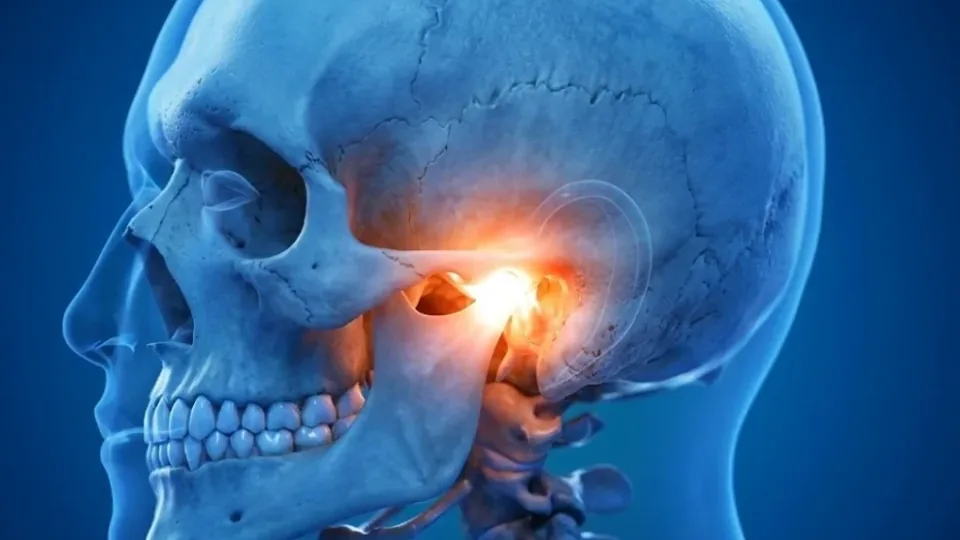
Jaw Locked Open or Unable to Open Fully: What Should You Do?
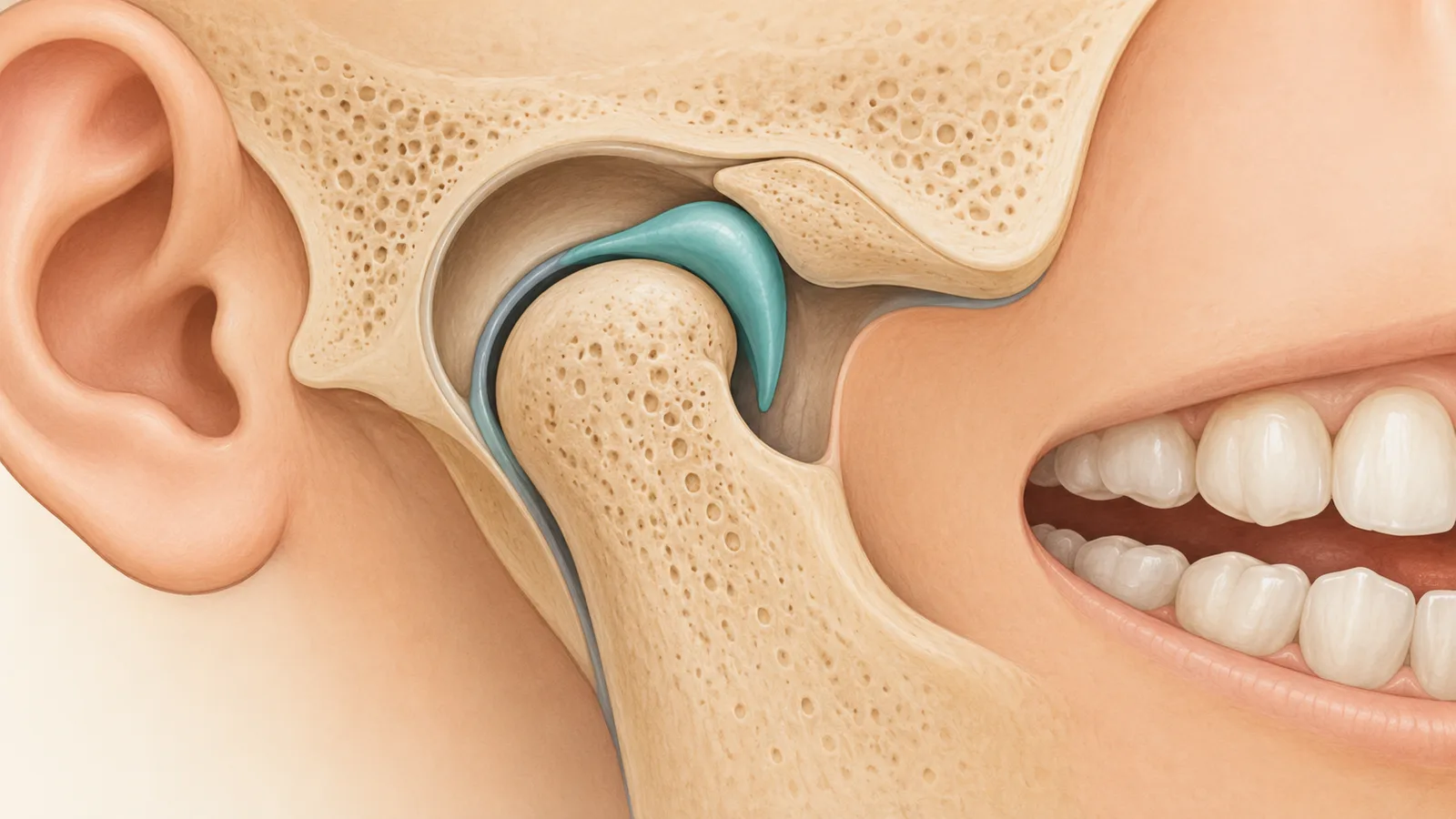
If your jaw is stuck open and you cannot close your mouth, get urgent medical help: it may be a dislocated jaw, and only a clinician should put it back (MedlinePlus). If your jaw will not open fully (often searched as 'jaw stuck' or 'can't open my mouth'), or locks, the NHS also lists that as a reason for urgent advice, because it can have several causes, from jaw-joint and muscle problems to dental infection (NHS; NHS dental abscess). Do not force it, and do not try an online "unlocking" technique.
Key points
- Stuck open and cannot close is a different problem from cannot open fully; tell the clinician which one you have.
- A dislocated jaw needs urgent care, and MedlinePlus says not to try to correct the position yourself (MedlinePlus).
- The NHS lists difficulty opening the mouth fully or jaw locking, and being unable to eat or drink, as reasons to seek urgent help (NHS).
- Limited movement and locking are listed symptoms of TMD, but dental infection and injury can also limit opening (NIDCR; NHS dental abscess).
- Locking alone does not mean surgery; NIDCR advises conservative, reversible care first (NIDCR).
Jaw stuck open or will not open: how do the two differ?
| What you notice | Possible explanations | What to do |
|---|---|---|
| Cannot close the mouth, bite feels off, drooling | Dislocated jaw | Urgent medical care; do not reposition it yourself |
| Cannot open fully, new or sudden | Joint, muscle, dental infection or injury | Urgent assessment (NHS: urgent GP appointment or 111) |
| Jaw catches or locks now and then | Possible TMD | Get it assessed promptly; the NHS lists locking as a reason for urgent advice |
| Cannot open, with facial swelling, fever or toothache | Dental infection | Urgent dental or medical care |
Sources: (MedlinePlus; NHS; NIDCR; NHS dental abscess).
What should you do if your jaw is stuck open?
MedlinePlus describes the signs of a dislocated jaw as pain in front of the ear or on the affected side that worsens with movement, a bite that feels off, trouble talking, inability to close the mouth with drooling, and teeth that do not line up. It most often follows facial injury and sometimes a dental or medical procedure, and says the person needs medical attention right away, with emergency help for difficulty breathing or heavy bleeding (MedlinePlus).
A provider may be able to reposition the jaw, after which the jaw may be stabilised to limit how wide the mouth opens, and surgery may be needed especially for repeated dislocations. MedlinePlus advises holding the jaw gently in place on the way to hospital, not trying to correct the position yourself, and, afterwards, avoiding wide opening for a period and supporting the jaw with your hands when yawning or sneezing. Follow your clinician's instructions for how long (MedlinePlus). A facial injury can also break the jaw, so tell the clinician about any blow or fall (MedlinePlus).
Why will my jaw not open fully?
Several things can restrict opening. NIDCR lists limited movement or locking of the jaw, jaw stiffness and pain in the chewing muscles or joint among the symptoms that may signal a TMD, and notes that TMDs include joint disorders (including disc disorders) and chewing-muscle disorders (NIDCR). The NHS lists difficulty opening the mouth fully and jaw locking among the symptoms of TMD (NHS). Which one applies to you cannot be told from symptoms alone.
A dental infection is another cause that should not be missed. The NHS lists difficulty opening the mouth and chewing, toothache or gum pain, a swollen face or jaw, a bad taste and a high temperature among abscess symptoms, and lists difficulty breathing, speaking or swallowing, a lot of swelling inside the mouth, a swollen or painful eye or sudden eyesight change, or difficulty opening the mouth as emergency signs (NHS).
What should you avoid doing?
Do not force the jaw open or repeatedly test its limit, do not use a relocation technique found online, and do not wait for a jaw that is stuck. For comfort while arranging care, the NHS suggests soft foods, a wrapped ice or heat pack and gentle massage, and advises not yawning too widely, not chewing gum, not biting food with your front teeth and not clenching (NHS). These are comfort steps; they do not unlock a joint. Jaw exercises are best chosen by a clinician once the cause is known; the Worcestershire leaflet tells readers to use its exercises along with guidance from their physiotherapist (NHS physiotherapy leaflet, Worcestershire). Our guide to jaw physiotherapy exercises explains why.
When is this urgent?
The NHS says to seek urgent help if you cannot eat or drink, have difficulty opening your mouth fully or your jaw locks, have frequent severe headaches, have pain or tenderness at the side of the head or scalp, or have vision problems such as double vision or loss of vision (NHS). The NHS temporal arteritis page describes headache, scalp or temple tenderness, jaw pain while eating or talking and vision problems together and warns that without quick treatment it can lead to stroke and blindness (NHS). An NHS pharmacy factsheet lists chest and jaw pain that is worse on exertion as an alert sign (angina), so mention it to a doctor promptly rather than assuming the jaw is the cause (NHS HEE).
What will the clinician ask and check?
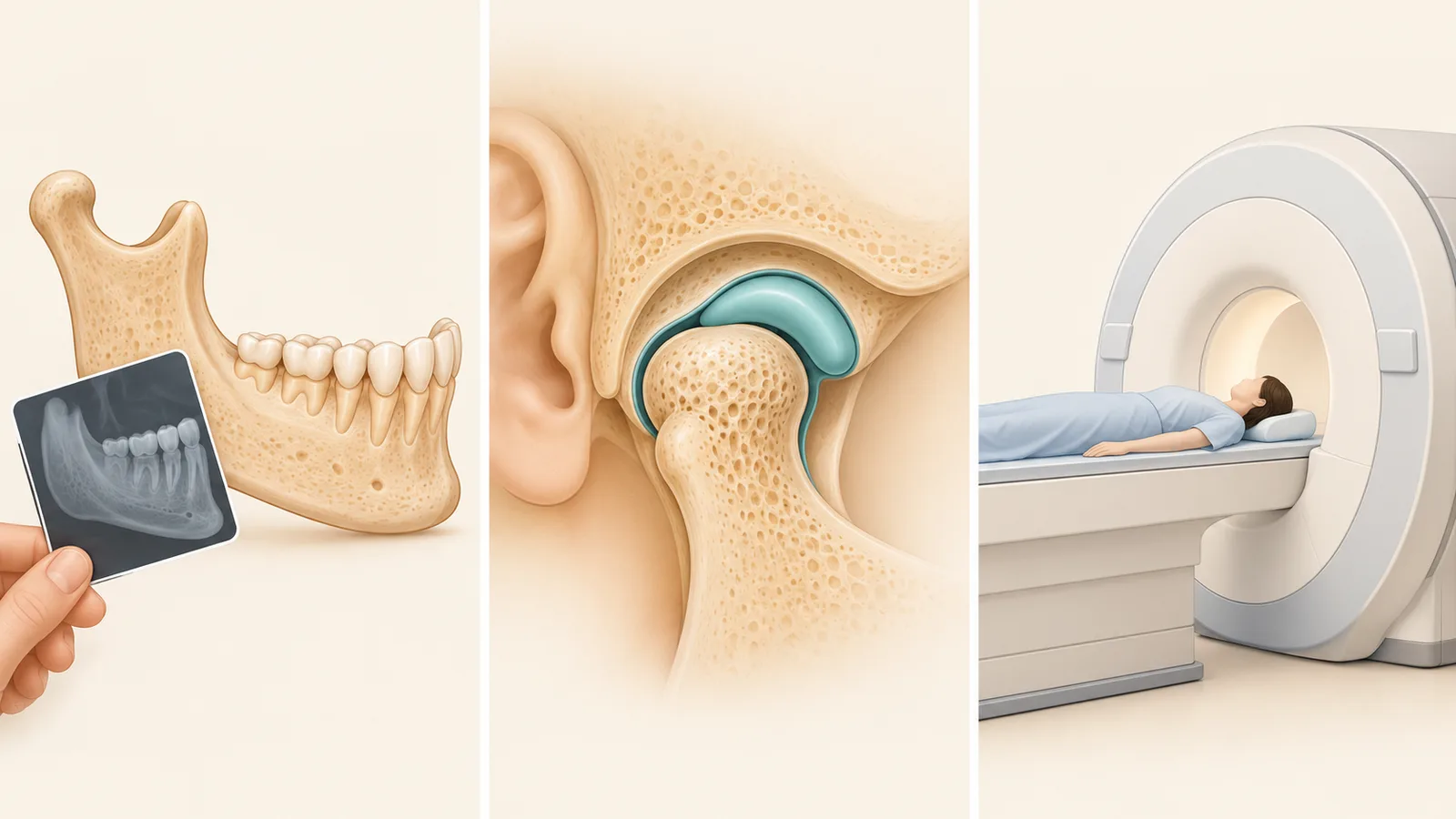
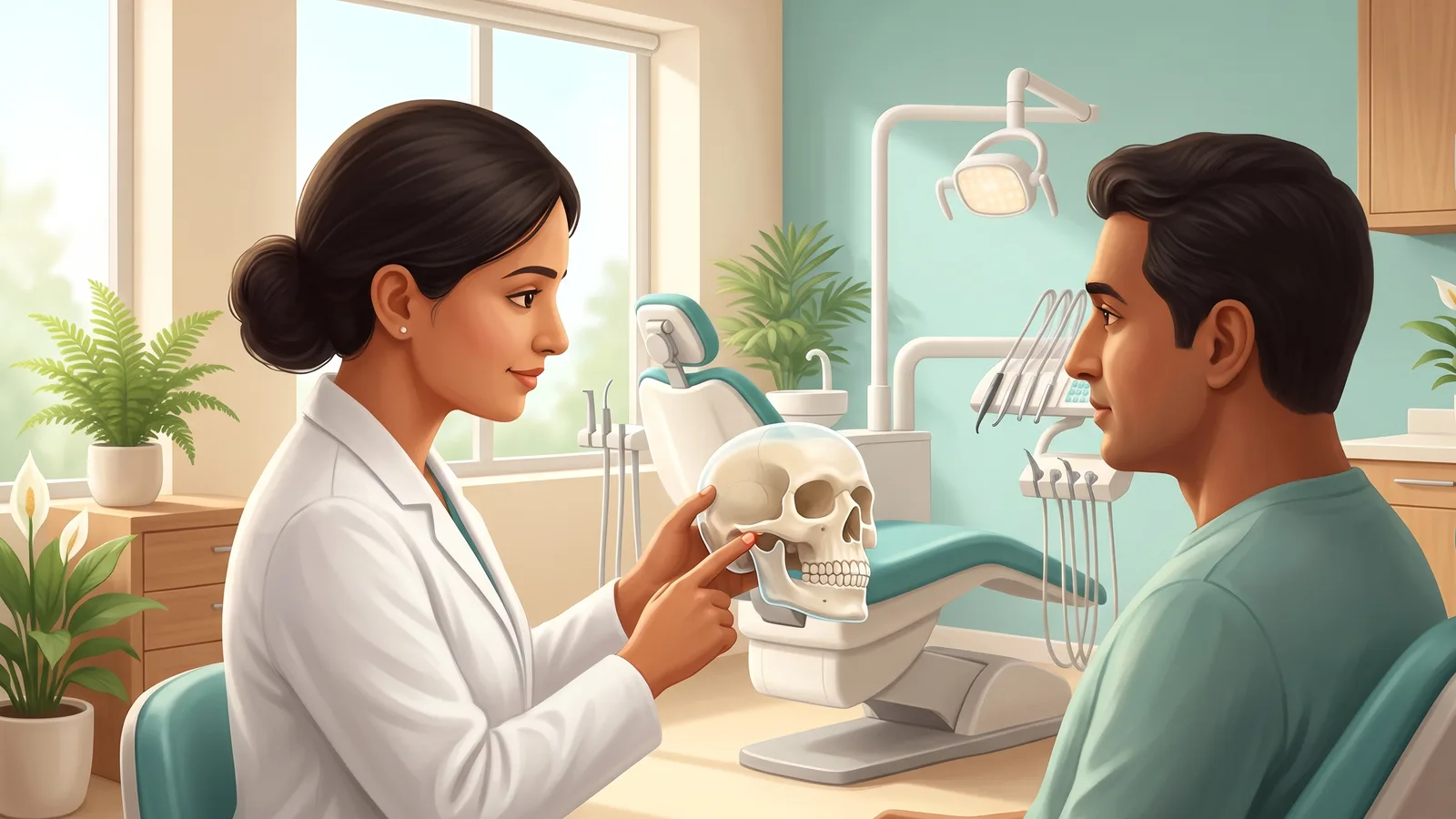
Tell them whether you cannot close the mouth or cannot open it fully, when it began, whether it is constant or comes and goes, and whether there was an injury or an earlier episode. Mention toothache, swelling, fever, a changed bite, headache and difficulty eating or drinking. NIDCR describes a detailed history, then an examination of the head, neck, face and jaw for tenderness, joint sounds and movement, and says X-ray, MRI or CT may also be recommended (NIDCR). Read more in our guide to TMJ assessment and imaging.
Does a locked jaw mean surgery?
No. NIDCR says conservative, reversible care is generally preferred (see can TMJ pain improve without surgery?), and that treatments that permanently alter the joint, teeth or bite or involve surgery should be avoided unless simpler options have failed (NIDCR). Physical therapy and behavioural care may be considered, and NIDCR describes arthrocentesis (flushing the joint) as inconsistent in results, arthroscopy as moderately effective for pain and function, and open surgery as permanent with long-term safety data lacking, to be considered only for joint destruction that other procedures cannot fix or severe symptoms that do not respond (NIDCR). See our pages on TMJ arthrocentesis, TMJ arthroscopy and TMJ surgery in Gurgaon for what each involves.
For choosing between specialists, see who should treat my TMJ?. If your jaw feels tired or sore on waking, see morning jaw pain, clenching and grinding, and for mouth guards see do night guards help TMJ pain and teeth grinding?. If your jaw feels tired or sore on waking, see morning jaw pain, clenching and grinding, and for mouth guards see whether night guards help. For a jaw that clicks without locking, see jaw clicks without pain. For pain that spreads to the ear or temple, see one-sided jaw pain, earache and headache.
Jaw locking and jaw pain treatment in Gurgaon
Dr. Supreet Kaur Sawhney, MDS in Oral & Maxillofacial Surgery and Senior Consultant Oral & Maxillofacial Surgeon, assesses jaw-joint problems at Dr. Supreet's Dental & Implant Centre in Sector 39, Gurugram. She manages TMJ problems from non-surgical care through TMJ arthroscopy and open TMJ surgery when a diagnosis requires it. See TMJ treatment in Gurgaon or contact the clinic, or call or WhatsApp +91 9650298009. A jaw that is stuck open, or any emergency sign above, needs local urgent care rather than a routine appointment.