One-Sided Jaw Pain, Earache and Headache: Could They Be Connected?
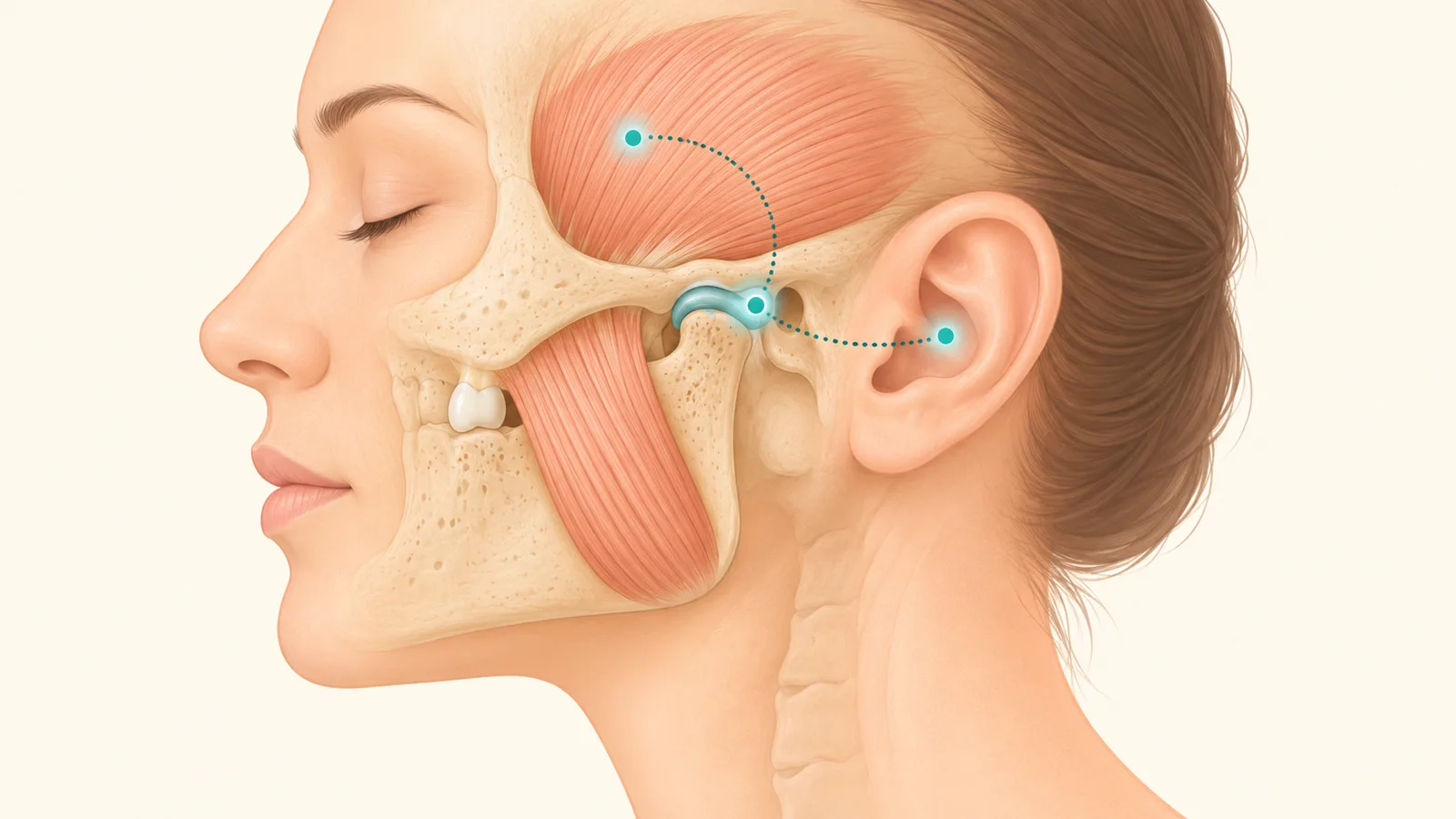
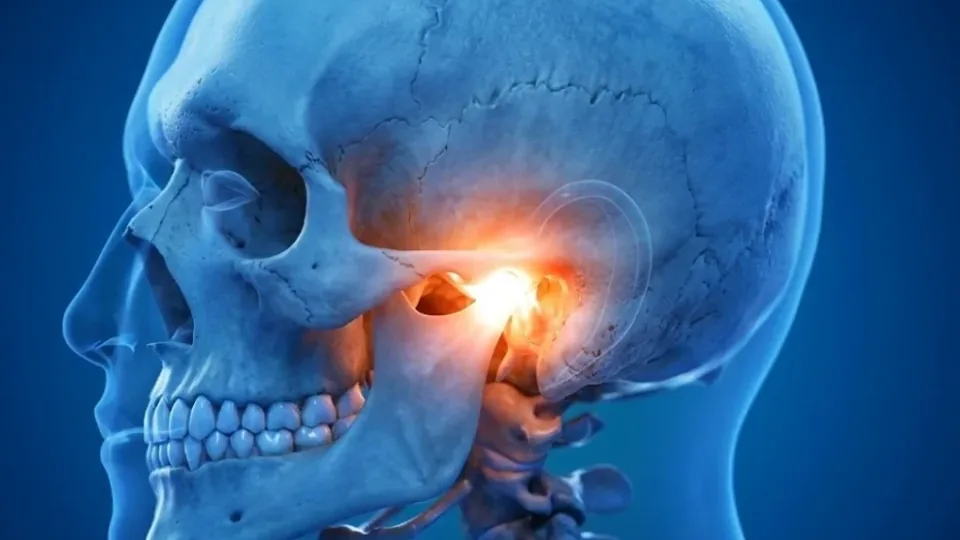
One-sided jaw pain with earache or a temple headache can come from the jaw joint or the chewing muscles, because jaw problems can cause pain around the ear and temple and pain felt away from its source (NHS; AAOP). But the same pattern can also come from teeth, the ear itself or, rarely, a serious medical condition, so these symptoms do not prove a jaw disorder. If you are asking "can TMJ cause ear pain and headache on one side?" (often searched as TMJ ear pain), the answer is yes, it can, and an examination is how you find out whether it does in your case.
Key points
- TMD (temporomandibular disorder) covers the jaw joints, the chewing muscles and headaches linked to them, and its symptoms include pain around the jaw, ear and temple (NIDCR; NHS).
- A tight jaw or neck muscle can cause pain felt in the ear, face or teeth even when those areas are healthy (AAOP).
- Ear infection, dental infection and temporal arteritis can look similar and need different care (NHS earache; NHS dental abscess; NHS temporal arteritis).
- There is no widely accepted standard test for TMD, so diagnosis rests on history and examination, with imaging only when it answers a specific question (NIDCR).
- Splints, bite adjustment and surgery are not a first answer to unexplained ear or head pain (NIDCR).
- Jaw pain with frequent severe headaches, tender temples or scalp, or vision problems needs urgent medical attention (NHS).
Why can a jaw problem hurt near the ear and temple?
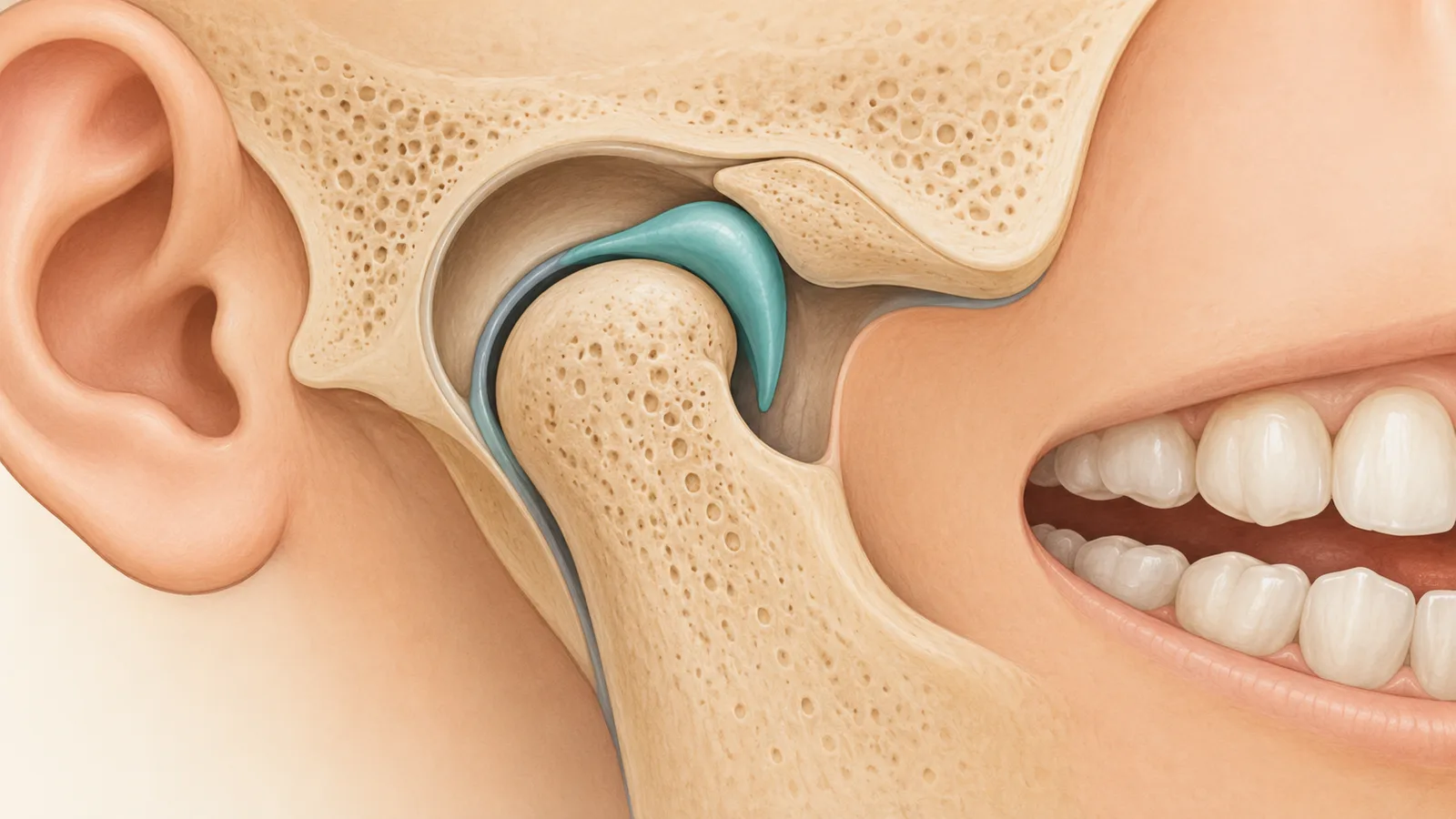
The jaw joint sits just in front of the ear, so joint pain is felt in that area. The NHS lists pain around the jaw, ear and temple, headache around the temples, clicking or popping, and difficulty opening the mouth among the symptoms of TMD, and says the pain may be worse when chewing or when stressed (NHS). NIDCR names pain in the chewing muscles or jaw joint as the most common symptom, sometimes spreading to the face or neck (NIDCR).
The second route is referred pain, which means pain felt in a different place from where it starts. The American Academy of Orofacial Pain explains that a tight jaw or neck muscle can cause pain in the face, ear or teeth even when there is no problem in those areas, and lists headaches (especially around the temples), earaches and tooth pain without a dental cause among the symptoms (AAOP). That is why a normal ear check does not close the question, but it also does not by itself prove the jaw is responsible.
Can TMD affect hearing, ringing or balance?
NIDCR lists ringing in the ears, hearing loss and dizziness among the symptoms that may signal a TMD (NIDCR). These are also common reasons to have the ear examined, so mention them to whoever you see. The NHS earache page advises urgent medical advice if earache lasts more than two to three days, if you feel generally unwell or have a very high temperature, or if there is swelling around the ear, fluid coming from the ear, or hearing loss or a change in hearing (NHS).
Can a headache come from the jaw?
NIDCR describes headaches associated with a TMD as one of three broad TMD categories, alongside joint disorders and chewing-muscle disorders, and notes TMD can occur together with other headaches and pain conditions (NIDCR). AAOP lists temple headaches among the symptoms of tender jaw muscles (AAOP). Useful details for a clinician are whether the headache changes with chewing or jaw movement, where it sits, and whether it comes with jaw soreness. A headache alongside jaw symptoms can still have a separate cause.
One-sided pain: jaw, tooth, ear or something else?
The sources reviewed for this article do not say that TMD typically affects one side, or that the side tells you the cause, so do not use "left" or "right" to diagnose yourself. You have a joint in front of each ear, so either can be involved.
| Pattern you notice | Possible jaw link | Other causes to rule out | Sensible next step |
|---|---|---|---|
| Ache near the ear that worsens with chewing | Joint or chewing-muscle pain | Tooth or ear problem | Dental assessment |
| Temple headache with a tired, tender jaw | Jaw-muscle pain or TMD-related headache | Other headache types | Dental and, if needed, medical review |
| Tooth pain, hot or cold sensitivity, bad taste, swollen face | Referred pain is possible | Dental abscess | Urgent dental appointment |
| Ear discharge, hearing change, swelling around the ear, fever | Less likely to explain these alone | Ear infection or other ear disease | Urgent medical advice |
| Jaw pain with severe headaches, tender scalp or vision problems | Not to be assumed | Temporal arteritis and other conditions | Urgent medical care |
Sources: (NIDCR; AAOP; NHS dental abscess; NHS earache; NHS temporal arteritis).
When is one-sided pain urgent?
The NHS says to seek urgent help if you cannot eat or drink, have difficulty opening your mouth fully or your jaw locks, have frequent severe headaches, have pain or tenderness at the side of the head or scalp, or have vision problems such as double vision or loss of vision, because these can signal a serious problem (NHS). The NHS temporal arteritis page describes headaches, scalp or temple tenderness, jaw pain while eating or talking and vision problems together, and says quick treatment matters because without it the condition can lead to stroke and blindness (NHS).
A pharmacy dental factsheet from NHS Health Education England also separates jaw pain with chest symptoms on exertion from a jaw-muscle problem; it is a triage aid, not a diagnosis, and it lists chest and jaw pain that is worse on exertion as an alert sign (angina), so mention it to a doctor promptly instead of assuming jaw strain (NHS HEE). For a suspected dental abscess, the NHS lists difficulty breathing, speaking or swallowing, a swollen or painful eye or sudden eyesight change, a lot of swelling inside the mouth, or difficulty opening the mouth as emergency signs (NHS).
What helps while you wait for an assessment?
If the jaw is sore, the NHS suggests soft foods, an ice or heat pack wrapped in a cloth, gentle massage of the sore muscles, and relaxation. It also advises not chewing gum or pen tops, not biting food with your front teeth, not yawning too widely, not biting your nails and not clenching, since your teeth should be apart except when eating (NHS). Ask a pharmacist or doctor which pain relief medicine suits you, because NIDCR notes the evidence for TMD pain medicines is limited and some prescription options carry serious side effects (NIDCR). Our guide to jaw pain flare-ups covers these steps in more detail. They ease strain; they do not tell you the cause.
What should you avoid?
NIDCR advises conservative care and avoiding treatments that permanently change the joints, teeth or bite, or that involve surgery, unless simpler options have failed. It says crowns, grinding teeth or orthodontics to change the bite have insufficient evidence and in some cases make TMD worse, and that a bad bite or braces are not supported as causes (NIDCR). So a tooth filing or bite change is not a reasonable response to ear or head pain until the cause has been examined.
What does an assessment involve?
NIDCR describes a detailed history (where and when the pain occurs, triggers, spread and other pain conditions such as headaches), then an examination of the head, neck, face and jaw for tenderness, joint sounds and movement. X-ray, MRI or CT may be used, and other conditions may need to be ruled out first (NIDCR). Bring a note of where the pain starts, where it spreads, its timing, what makes it better or worse, any ear or headache checks already done, and any dental symptoms.
If the pain is worst on waking, see why you may wake with jaw pain or tired jaw muscles. If your jaw also locks or will not open fully, see what to do about a locked jaw. If a night guard has been suggested, see whether night guards help TMJ pain and teeth grinding.
Seeing a TMJ doctor in Gurgaon for one-sided jaw and ear pain
Dr. Supreet Kaur Sawhney, MDS in Oral & Maxillofacial Surgery and a Senior Consultant Oral & Maxillofacial Surgeon with over 20 years of experience, assesses jaw-joint problems at Dr. Supreet's Dental & Implant Centre in Sector 39, Gurugram. Her care ranges from non-surgical management to TMJ arthroscopy and open TMJ surgery when a diagnosis requires it. See TMJ specialist care in Gurgaon, the conservative TMJ treatment page or the wider jaw pain, clicking and TMJ guide, then contact the clinic or call or WhatsApp +91 9650298009. Urgent warning signs above need local medical care, not a routine booking.