My Jaw Clicks but Does Not Hurt: Is It Normal and Does It Need Treatment?
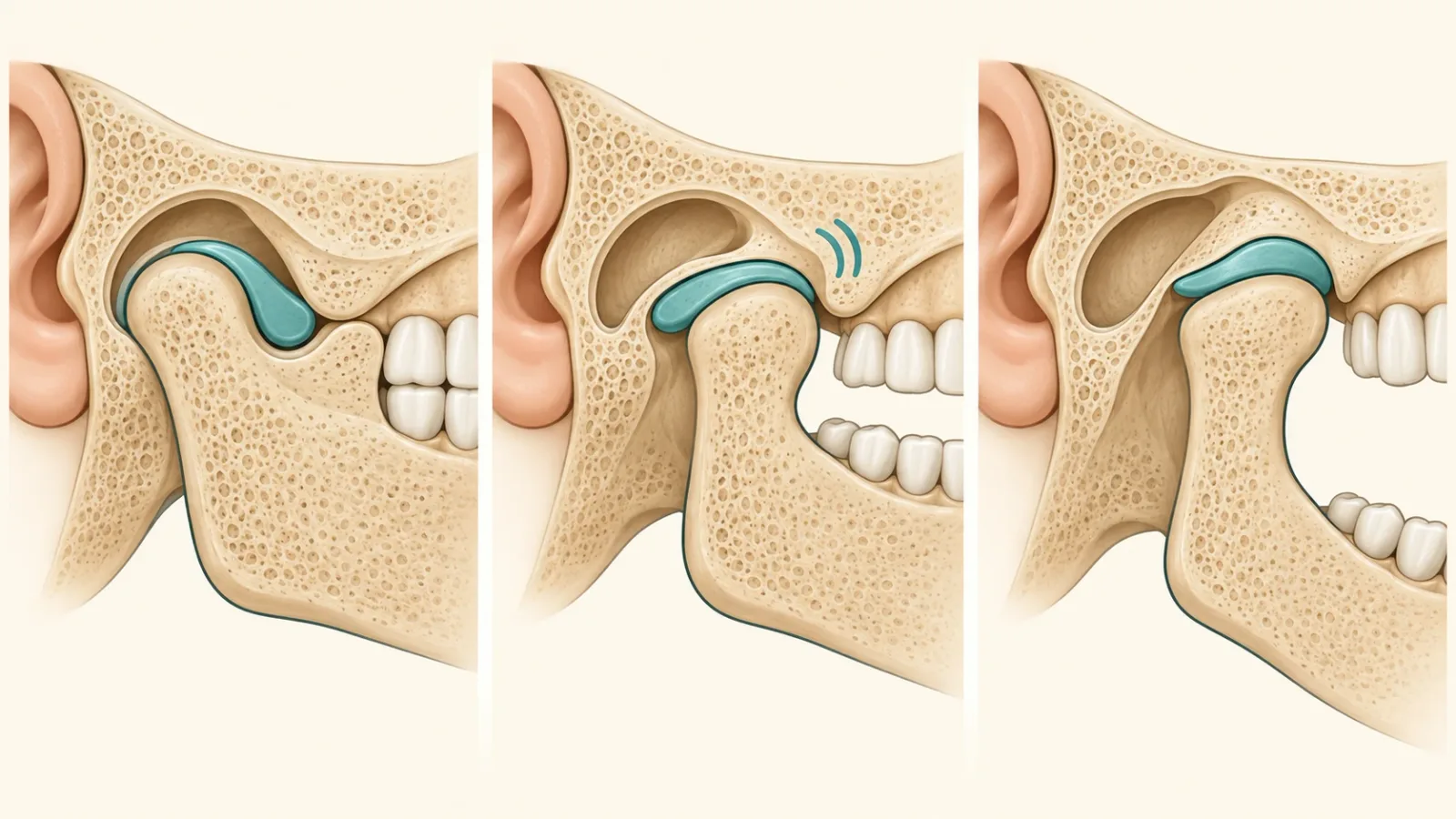
A jaw that clicks or pops without pain (often called jaw popping or TMJ clicking) is common and, on its own, does not need treatment. The sound is usually caused by the small cushion of tissue inside the joint (the disc) slipping and moving back into place as you open and close. What matters is whether the click comes with pain, stiffness, catching or locking, because those changes are what make an assessment worthwhile (NIDCR; Naeije et al.).
Key points
- A click or pop without pain is common and considered normal; it does not require treatment.
- Disc displacement, the usual cause of a click, is reported in roughly 18% to 35% of people in the general population.
- In most people it stays stable and pain-free, often for life.
- Splints, bite adjustments and surgery are not needed for a pain-free click, and treatments that permanently change the teeth, bite or joint are best avoided.
- Get assessed if the click becomes painful, the jaw catches or locks, or your bite feels different. Get urgent help if the jaw is stuck or you cannot eat or drink.
What is a jaw click, and what is TMJ versus TMD?
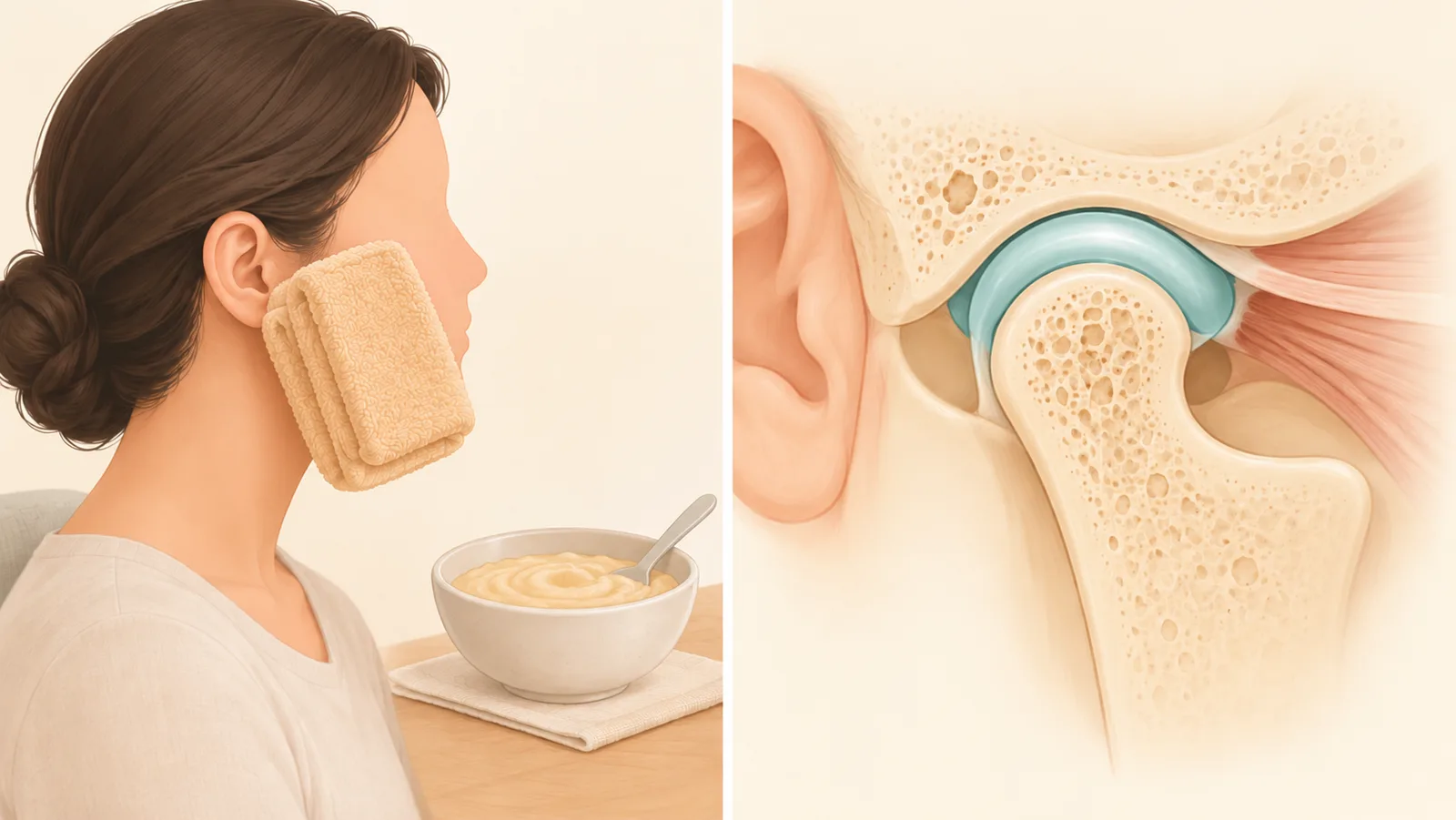
The temporomandibular joint (TMJ) is the jaw joint, one on each side of your face in front of the ear. Temporomandibular disorders (TMDs) are a group of more than 30 conditions that cause pain and problems with movement in the jaw joint and the muscles that move the jaw. So "TMJ" names the joint, while "TMD" names a problem with it (NIDCR).
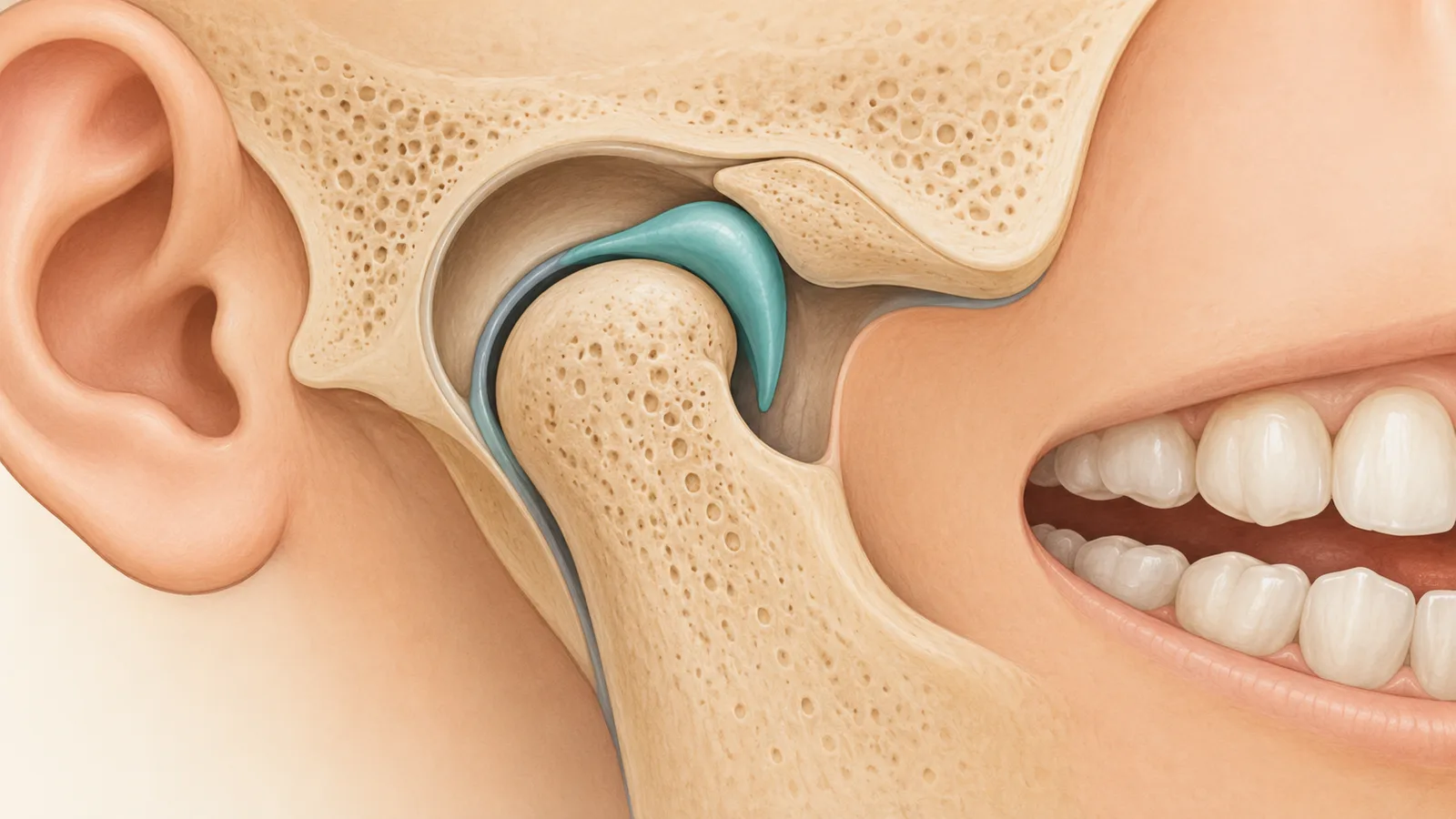
Inside each joint a small disc of tissue sits between the jaw bone and the skull. In the most common cause of clicking, called disc displacement with reduction, the disc rests slightly forward of its ideal position. When you open your mouth, the jaw moves over the disc and it slips back into place, which you hear or feel as a click or pop. Because it happens with jaw movement, you may notice it when chewing, yawning or opening wide (Naeije et al.).
A different sound, such as grinding or grating, is not the same thing as a simple click. If you notice it, mention it to a dentist or doctor rather than trying to work out its cause yourself. Painful clicking, popping or grating is on the list of symptoms that may signal a TMD (NIDCR).
How common is a clicking jaw, and what usually happens over time?
A systematic review of 167 papers found that disc displacement is highly prevalent, with reported figures ranging from 18% to 35% of the general population. Figures vary with the group studied and the methods used, and the review was published in 2013, so treat the range as a general guide rather than an exact number for any one person (Naeije et al.).
The same review describes a disc displacement with reduction as mostly stable, pain-free and lifelong. Only a small minority of people lose the disc's ability to move back into place when they open. A painful, limited opening (a closed lock) accompanies this in only rare cases, and those symptoms tend to reduce and in many cases resolve within months (Naeije et al.). NIDCR also notes that many TMDs last only a short time and go away on their own (NIDCR).
Does a pain-free click need treatment?
No. NIDCR states that clicking or popping sounds in the jaw joints without pain are common, are considered normal and do not require treatment (NIDCR). The review above reaches a similar position: because the usual course is favourable, active treatment is warranted mainly for disc displacement that is symptomatic and does not reduce (Naeije et al.).
Unnecessary treatment is not harmless. Experts recommend conservative care and avoiding treatments that permanently change the jaw joints, teeth or bite, or that involve surgery. Evidence is limited for many TMD treatments. Bite-based treatments such as crowns, grinding teeth or orthodontics to change the bite have insufficient evidence and in some cases make the problem worse. Mouth guards or splints (intraoral appliances) should not change your bite, and there is not a lot of evidence on whether they improve TMD pain, so they have no clear role for a click alone (NIDCR).
If you were advised to have a splint or night guard, scan, bite adjustment or procedure only because your jaw clicks, it is reasonable to ask what problem it is meant to solve, what the evidence is and what the alternatives are.
Pain-free click, painful click or urgent symptoms: how do they differ?
| Pain-free click | Painful click or signs of TMD | Urgent symptoms | |
|---|---|---|---|
| What you notice | Click or pop with no pain; jaw opens and closes comfortably | Pain with clicking, popping or grating; jaw or chewing-muscle pain; stiffness; catching or brief locking; change in how teeth meet; ear-area pain or ringing | Jaw stuck open or closed; sudden inability to open properly; unable to eat or drink; jaw or temple pain with severe headache, scalp tenderness or vision problems |
| What it usually means | Common and considered normal | May signal a TMD; the cause needs assessment | Can have causes inside or outside the jaw |
| What to do | No treatment needed; optional comfort habits | Arrange an assessment with a dentist or doctor | Seek same-day help; urgent medical help if you cannot eat or drink |
| How soon | No rush | A routine appointment, sooner if symptoms are worsening | Same day |
What everyday habits can ease a tired or noisy jaw?
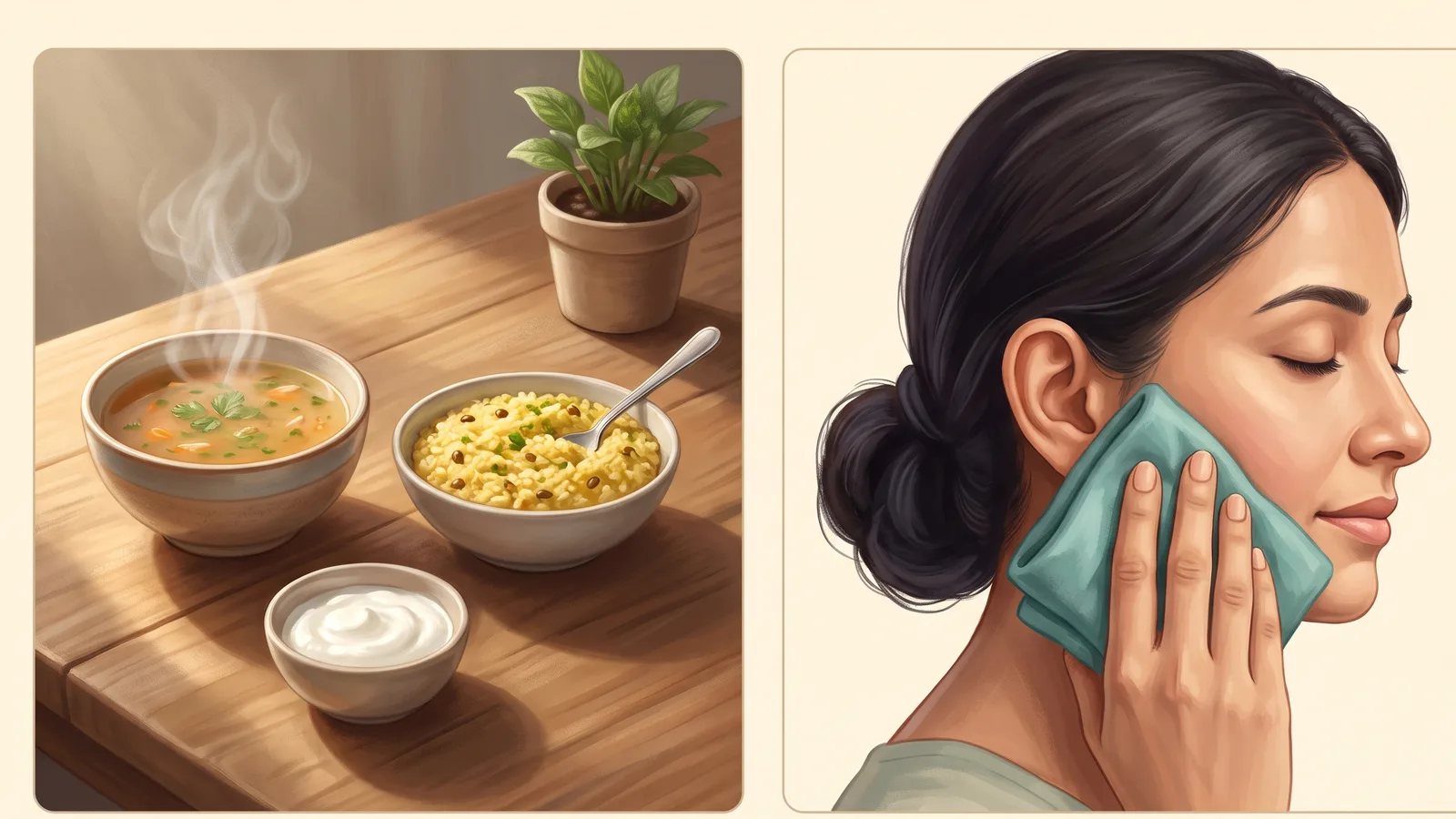
These are optional comfort measures, not a treatment for the click. If your jaw feels tired or sore, the NHS and NIDCR suggest:
- Avoid chewing gum, biting pen tops and biting your nails.
- Do not clench. Apart from when eating, your teeth should be apart (if you wake with a tired jaw, see morning jaw pain, clenching and grinding).
- Avoid yawning very wide.
- Avoid biting food with your front teeth, and choose softer food during a sore spell.
Because they reduce load on the joint, these habits are reasonable for anyone with jaw discomfort (NHS; NIDCR). There is no need to keep opening wide to test whether the joint will click.
When should you arrange an assessment?
Book a non-urgent assessment if any of these appear alongside the click. Each may signal a TMD, but only an examination can tell what is happening:
- The click becomes painful.
- You have persistent pain in the jaw joint or chewing muscles, or pain spreading to the face or neck.
- Your jaw feels stiff, catches or briefly locks.
- Your upper and lower teeth seem to fit together differently.
- You have ringing in the ears, hearing loss or dizziness along with jaw symptoms.
(NIDCR)
When is it urgent?
Seek same-day help if your jaw is stuck open or stuck closed, or you suddenly cannot open it properly. Seek urgent medical help if you cannot eat or drink. Jaw or temple pain together with frequent severe headaches, tenderness at the side of the head or scalp, or vision problems such as double vision or loss of vision also needs urgent medical attention, because these can have causes outside the jaw (NHS). If your symptoms started after a fall, accident or blow to the face or jaw, tell the clinician who examines you, and get urgent help if you cannot open or close your mouth properly or cannot eat or drink (NHS).
What does an assessment involve?
There is no widely accepted standard test for TMDs. A clinician takes a history, asking where and when you feel symptoms, what makes them worse and whether you have other pain conditions. They then examine the jaw for tenderness, clicking and how it moves. An X-ray, MRI or CT may be recommended if the history and examination leave a specific question to answer. Pain in the face may or may not be a TMD, so other conditions are considered too (NIDCR).
Seeing a TMJ specialist in Gurgaon for a clicking jaw
Dr. Supreet Kaur Sawhney holds an MDS in Oral & Maxillofacial Surgery and assesses jaw-joint problems in Gurgaon (Gurugram) at Dr. Supreet's Dental & Implant Centre in Sector 39. Her TMJ care ranges from non-surgical management to TMJ arthroscopy and open joint surgery when a diagnosis requires it, although a pain-free click alone rarely needs any of these.
If you want a jaw checked, see the TMJ specialist consultation in Gurgaon, read the broader jaw pain, clicking and TMJ guide, or contact the clinic. You can also call or WhatsApp +91 9650298009.