Why Do I Wake Up with Jaw Pain or Tired Jaw Muscles?
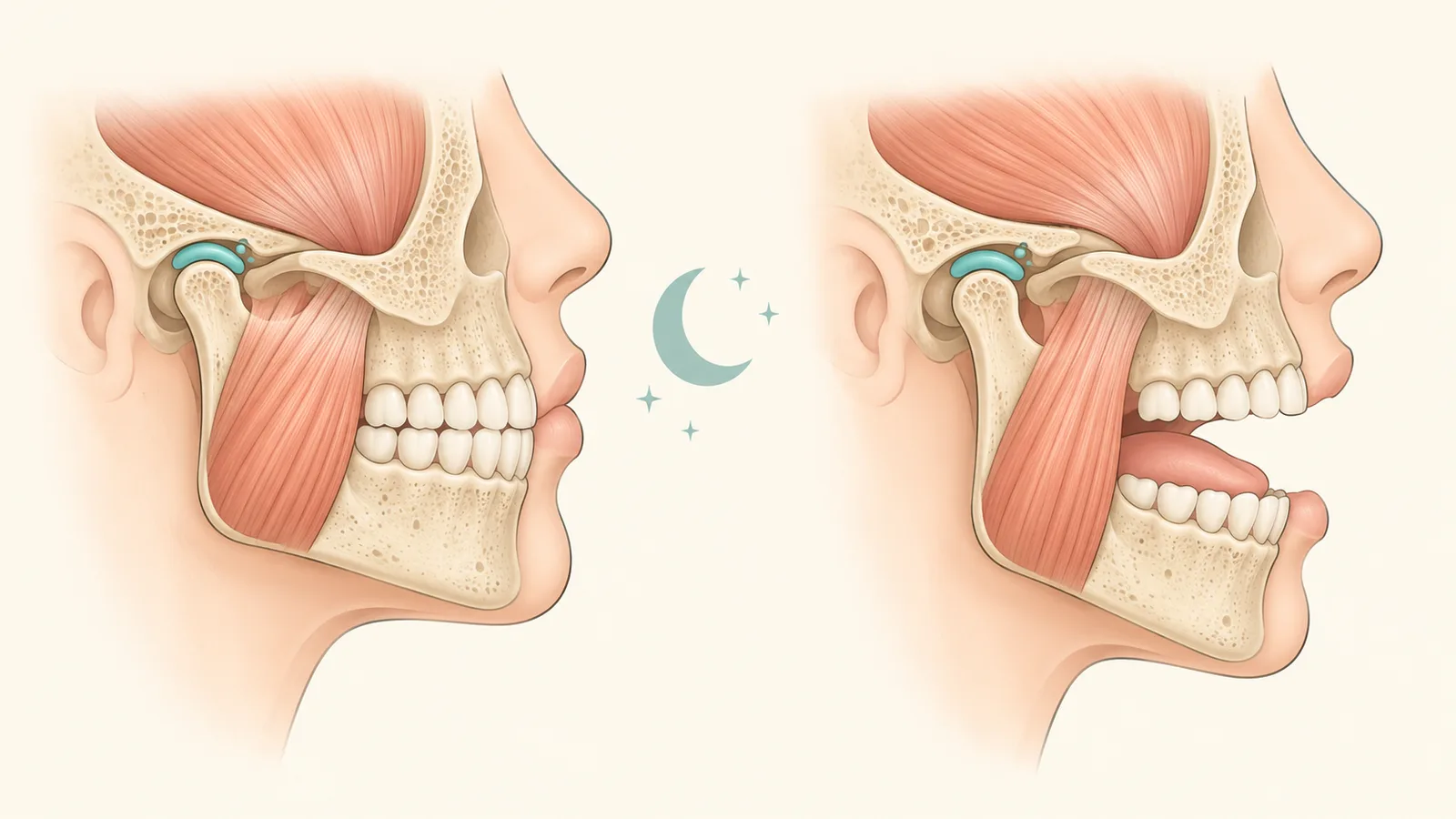
Waking up with a sore, tight or tired jaw can be linked to clenching or grinding your teeth in your sleep (sleep bruxism), but it does not prove that you grind. Bruxism means grinding, clenching or gnashing the teeth, awake or asleep, and when it is severe it can cause tooth damage, jaw pain, jaw fatigue and headaches (NIDCR). Stress is one possible contributor among several, so the useful step is a dental examination to separate bruxism from other causes of morning jaw pain.
Key points
- Sore, tight or tired jaw muscles and headaches are listed symptoms of bruxism, alongside worn, chipped or cracked teeth (NIDCR).
- Many cases of bruxism are mild and may not need treatment (NIDCR).
- Stress, mood and distress, genetics, alcohol, caffeine, smoking and some medicines are among the factors linked to bruxism; never stop a prescribed medicine without asking the prescriber (NIDCR).
- Leeds Teaching Hospitals states that bruxism does not cause TMD but can make existing TMD symptoms worse (Leeds).
- A night guard protects teeth and may reduce muscle activity, but evidence that guards relieve TMD pain is limited, and the sources do not say a guard stops the underlying habit (NIDCR; NIDCR TMD).
- Jaw pain with frequent severe headaches, scalp tenderness or vision problems needs urgent medical assessment, not a clenching explanation (NHS).
Why does my jaw hurt when I wake up?
A jaw that feels worst on waking fits the pattern Leeds Teaching Hospitals lists for sleep bruxism: stiff or sore jaw muscles on waking and headaches, sometimes with grinding noises a partner has heard, ridges on the inside of the cheeks or tooth-prints on the sides of the tongue, and worn, cracked or broken teeth or fillings (Leeds). Leeds also says sore, sensitive or loose teeth should be checked by a dentist to rule out gum disease or decay. NIDCR lists the same jaw symptoms and adds flattened or chipped teeth and worn enamel (NIDCR).
None of these signs is proof on its own. Morning jaw pain can also come from the jaw joint, jaw-muscle pain, teeth or other medical problems, and NIDCR notes that TMD has more than 30 forms and its exact cause is often unclear (NIDCR TMD).
Is sleep grinding the same as daytime clenching?
No. NIDCR says awake bruxism is more common, while sleep bruxism has been studied more (NIDCR). Leeds describes sleep bruxism as coming from brain activity in lighter sleep, which you cannot directly control, whereas daytime clenching is a habit you can notice (Leeds). So you may clench during the day and also wake with a sore jaw, and the steps for each differ.
Does stress cause jaw clenching?
Stress can play a part. NIDCR lists stress, mood, distress and nervousness as psychosocial factors, along with genetics, alcohol, caffeine, smoking and certain medicines used for depression, seizures or ADHD that may raise the risk (NIDCR). Leeds adds that stress, anxiety and poor or interrupted sleep can make sleep bruxism worse, and that obstructive sleep apnoea, acid reflux and some neurological conditions are linked to it (Leeds). Do not stop or change a prescribed medicine on your own; discuss it with the prescriber (NIDCR). Psychological support can help when stress amplifies pain, and the NHS says this does not imply the pain is imaginary (NHS).
What can you try for a sore morning jaw?
If you clench during the day, NIDCR and Leeds suggest building awareness and using reminders such as notes, phone timers or alarms to keep your teeth slightly apart and your jaw relaxed. Leeds notes that breaking a habit takes practice and time (NIDCR; Leeds). NIDCR also lists relaxation activities such as yoga or meditation, counselling for stress, and avoiding caffeine, alcohol and smoking (NIDCR).
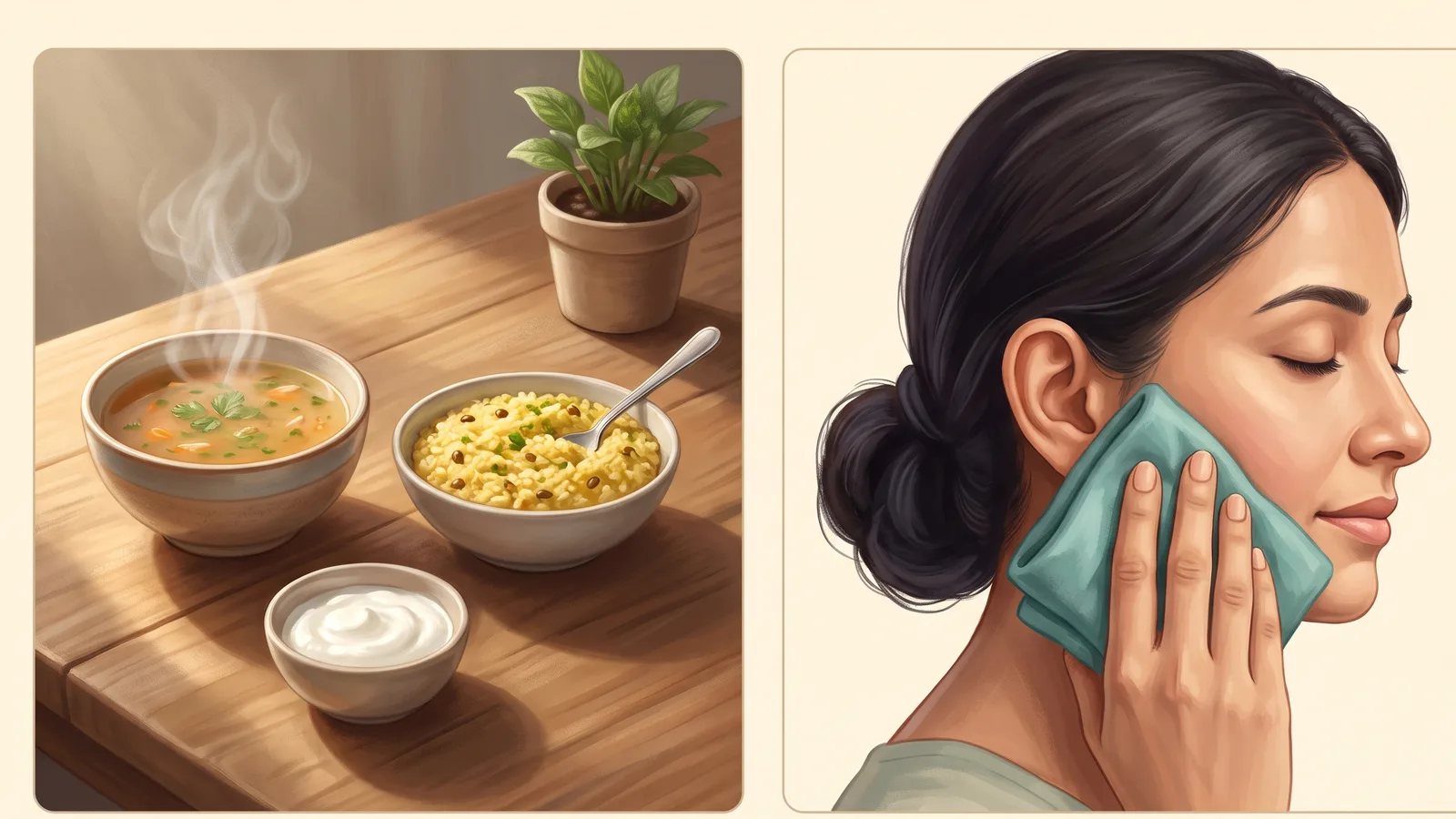
For a sore jaw, the NHS suggests soft foods, an ice or heat pack wrapped in a cloth, gentle massage of the sore muscles and relaxation, and says not to chew gum and not to clench, since your teeth should be apart except when eating (NHS). These ease strain. They do not establish the cause or promise that sleep grinding will stop. For more on food and daily habits during a flare, read our guide to jaw pain flare-ups.
Do I need a night guard?
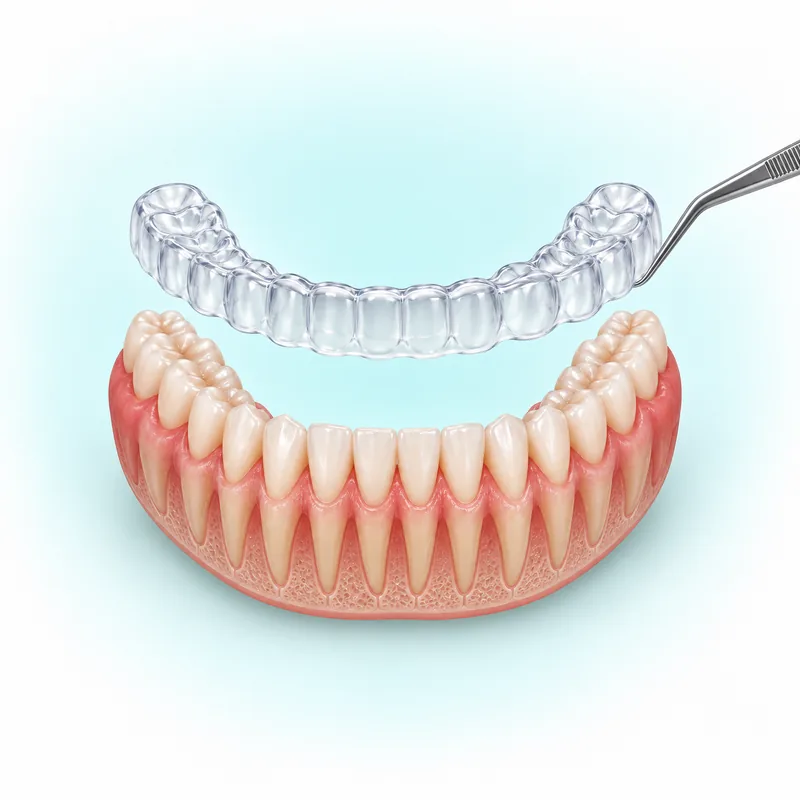
Not everyone does. Leeds says sleep bruxism is not necessarily harmful and treatment is usually needed only if it causes pain or tooth problems (Leeds). When it does, a dentist may discuss a mouth guard, which NIDCR says separates the teeth, helps prevent tooth damage and may reduce muscle activity from grinding and clenching. For TMD pain specifically, NIDCR says evidence that appliances relieve pain is limited, that an appliance should not change your bite, and that you should stop using one and consult your provider if it causes pain (NIDCR; NIDCR TMD).
| Type of splint | How Leeds describes it | Points to know |
|---|---|---|
| Soft splint | Flexible | Some people clench more; wears through quickly |
| Stabilisation splint | Harder plastic, aims for even tooth contact | Lasts longer |
| Mandibular advancement device | Covers both arches, holds lower jaw slightly forward | Usually for suspected or confirmed sleep apnoea |
Source: (Leeds). Splints should be made by a dentist; Leeds warns that a poorly fitting splint can harm teeth or gums. See also our guide to night guards for TMJ pain and grinding and the occlusal splint therapy page.
What can a dentist check?
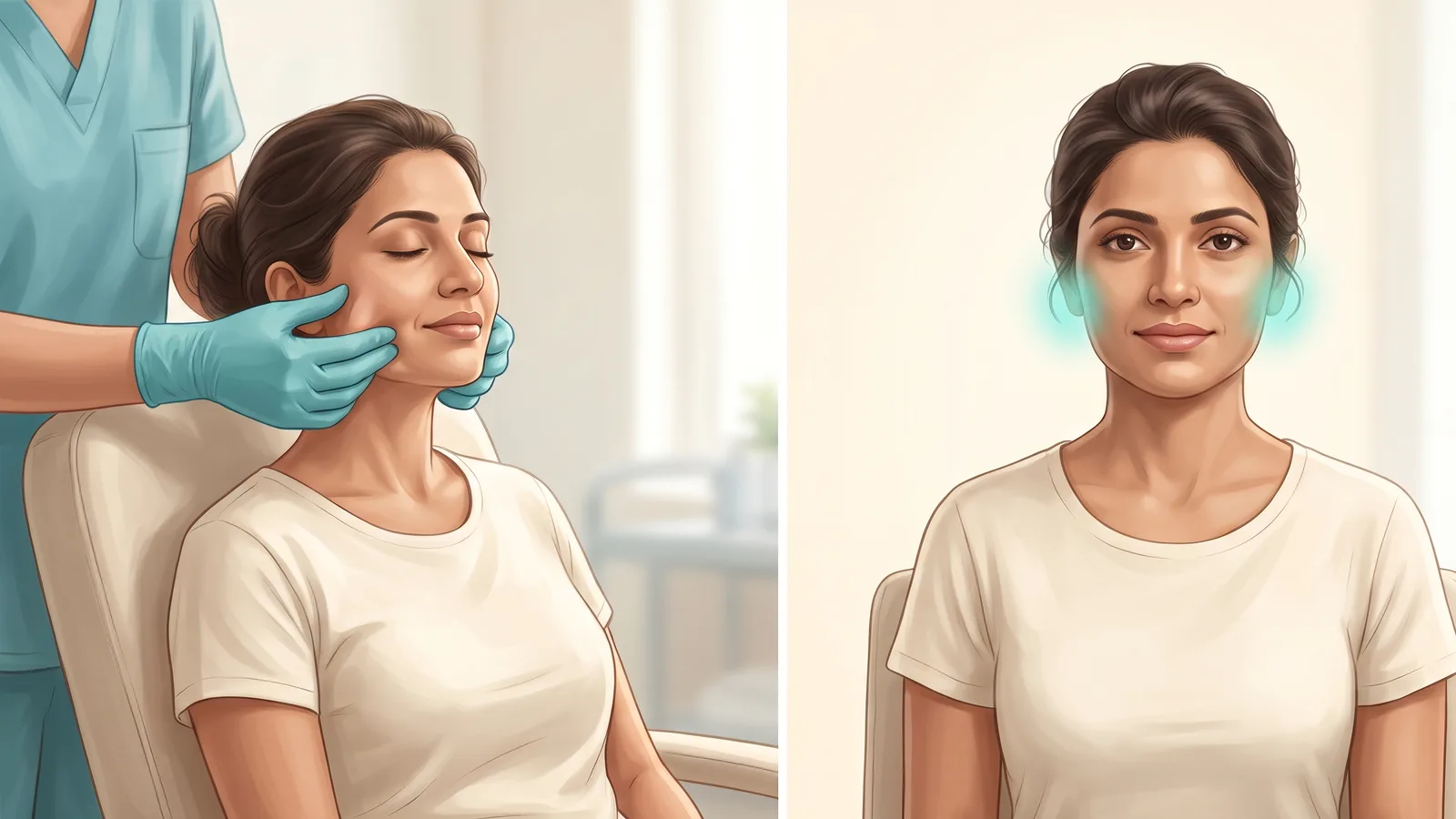
NIDCR describes a history (when the clenching or grinding happens, jaw symptoms, stressors, and whether a sleeping partner has heard grinding), then an examination of the teeth and restorations for damage and of the jaw and face for tenderness. A sleep study is considered in selected cases and is not routine for everyone with a sore jaw in the morning (NIDCR). Regular dental visits help spot signs of bruxism and monitor wear (NIDCR).
When should you get assessed, and when is it urgent?
Arrange an assessment if jaw pain persists, worsens or keeps returning, or if teeth look worn or damaged. An NHS pharmacy dental factsheet advises reassessing jaw pain that persists or worsens despite self-care (NHS HEE). Treatments that permanently change the teeth or bite should generally be avoided in TMD (NIDCR TMD).
Seek urgent help if you cannot eat or drink, have difficulty opening your mouth fully or your jaw locks, have frequent severe headaches, have pain or tenderness at the side of the head or scalp, or have vision problems such as double vision or loss of vision (NHS). The same factsheet separates jaw pain with chest symptoms on exertion, which it lists as an alert sign (angina) to raise with a doctor promptly instead of assuming clenching (NHS HEE).
For food and habits during a sore spell, see jaw pain flare-ups: what to eat. If your jaw locks or will not open fully, see what to do about a locked jaw. If your jaw locks or will not open fully, see what to do about a locked jaw. If your jaw also clicks, see jaw clicks without pain. If the pain is one-sided or reaches the ear or temple, see one-sided jaw pain with earache and headache.
Morning jaw pain treatment in Gurgaon
Dr. Supreet Kaur Sawhney, MDS in Oral & Maxillofacial Surgery, assesses jaw-joint and jaw-muscle problems at Dr. Supreet's Dental & Implant Centre in Sector 39, Gurugram. Her TMJ care ranges from non-surgical management to arthroscopy and open joint surgery when a diagnosis requires it. See jaw pain treatment in Gurgaon or contact the clinic; you can also call or WhatsApp +91 9650298009.